Quick support from trusted insurance professionals Call +1 713-777-2886 today!
Quick professional support Call +1 713-777-2886 today!
Quick professional support Call +1 713-777-2886 today!


Table of Content
Title

Let AZ Insurance Help You
Find Affordable Coverage
Connect with our experienced team today & get reliable, affordable insurance designed around your needs.
Contact Us!
Let A-Z Auto Insurance Help You Find Affordable Coverage
Connect with our experienced team today & get reliable, affordable insurance designed around your needs.
Contact Us!
What Is Home Hazard Insurance and What Does It Cover?
What Is Home Hazard Insurance and What Does It Cover?
What Is Home Hazard Insurance and What Does It Cover?
What Is Home Hazard Insurance and What Does It Cover?
What Is Home Hazard Insurance and What Does It Cover?

Quick Answer: Home hazard insurance is the part of a homeowner's policy that pays to repair or rebuild your house after damage from a covered peril — fire, windstorm, hail, lightning, or vandalism, among others. It's not a standalone product; it's the dwelling protection built into policies like homeowners insurance through AZ Insurance Agency. It does not cover flood or earthquake damage, which needs separate policies.
A lot of Houston homeowners ask us this with a slightly confused look: "Is home hazard insurance a different policy, or is it something I already have?" Fair question. The term gets thrown around loosely in mortgage paperwork, and it's rarely explained in plain language.
Here's the thing most people miss: homeowners' hazard insurance isn't a separate product sitting next to your regular policy. It's a piece of the policy you probably already own, the part that responds when a storm tears off shingles or a kitchen fire damages your walls. Knowing exactly what that piece covers, and where it stops, is what protects you when a claim happens.
What Is Home Hazard Insurance?
Home hazard insurance refers to the dwelling coverage section of a standard homeowner's policy, often an HO-3 in Texas. It pays to repair or rebuilds the physical structure of your home when it's damaged by a peril by your policy names, or in the case of open-peril dwelling forms, by any because that isn't specifically excluded.
Mortgage lenders use the phrase "hazard insurance" constantly because it's the piece of your policy they care about most. Their collateral is the house itself, not your furniture or your liability exposure, so loan documents ask you to prove hazard coverage is in place before closing. When your lender says that they mean your dwelling coverage, the same coverage built into the homeowners insurance policy you'd buy from any licensed agent.
How Does Home Hazard Insurance Fit into a Homeowners Policy?
A full homeowner policy is built from several coverage types stacked together, and hazard coverage is just one layer of that structure. Picture it as the foundation the rest of your protection sits on.
A typical HO-3 policy, the most common form written in Texas, includes:
Dwelling coverage (Coverage A): the hazard insurance portion, covering the structure itself
Other structures coverage (Coverage B): detached garages, fences, sheds
Personal property coverage (Coverage C): your belongings inside the home
Loss of use / additional living expenses (Coverage D): hotel and food costs if you're displaced
Personal liability (Coverage E): legal costs if someone is hurt on your property
When people search "what is home hazard insurance," they're almost always asking about Coverage A specifically. If you want to see how all five pieces work together in a real policy, our homeowner's insurance page breaks down each layer in more detail.
What Does Home Hazard Insurance Actually Cover?
This is where the policy earns its keep. Named-peril hazard coverage, the version most Texas homeowners carry, pays damage caused by a specific list of events.
Standard covered perils typically include:
Fire and lightning
Windstorm and hail
Explosion
Riot or civil commotion
Damage from aircraft or vehicles
Smoke damage
Vandalism or malicious mischief
Theft
Falling objects (like a tree limb through the roof)
Weight of ice, snow, or sleet
Sudden and accidental water discharge (a burst pipe, not a slow leak)
Freezing of plumbing, heating, or air conditioning systems
That windstorm and hail line matters more in Houston than almost anywhere else in the country. Harris County sees severe thunderstorms and tropical systems on a near-annual basis, and roof damage from wind-driven hail is consistently one of the most common claims we help clients file. If you're unsure whether your roof's current condition affects your hazard coverage, our post on how roof age impacts Texas home insurance walks through what insurers actually look at.
What Hazards Does Home Hazard Insurance NOT Cover?
Here's where it gets interesting, and where the biggest coverage gaps show up. A standard hazard policy is built around a specific list of perils, and anything outside that list is your responsibility unless you buy separate coverage for it.
The most common exclusions Texas homeowners run into:
Flood damage. Rising water, storm surge, or an overflowing bayou is never covered by a standard homeowner's policy. You need a policy through the National Flood Insurance Program or a private flood carrier, and coastal counties may also require TWIA windstorm coverage as a separate line.
Earthquake and earth movement. Foundation shifting caused by Houston's clay-heavy soil is typically excluded too, not just seismic events.
Sewer and drain backup. This needs a specific endorsement added to your policy, it isn't automatic.
Normal wear and tears. Hazard insurance responds to sudden, accidental events, not gradual deterioration like an aging roof failing on its own.
Neglect or lack of maintenance. If damage happens because a known problem went unaddressed, insurers can deny the claim.
Mold from long-term moisture. Sudden water damage is covered; mold from a leak you ignored for months usually isn't.
That flood exclusion catches people off guard more than any other. Texas Department of Insurance consumer bulletins have repeatedly flagged that a large share of flood-related claims after major storms come from homeowners who assumed their standard policy already included it. It doesn't, and it never has.

How Much Home Hazard Insurance Coverage Do You Need?
Your dwelling coverage limit should reflect the actual cost of rebuilding your home at current construction prices, not its market value or purchase price. Confusing those numbers is one of the most expensive mistakes a homeowner can make.
Three factors drive that number:
Square footage and construction type. Brick and stone rebuild at different rates than vinyl siding.
Local labor and material costs. Houston rebuilds costs have climbed steadily since 2020 due to material and labor inflation.
Custom features. Upgraded kitchens, custom trim, or high-end flooring push replacement cost above a generic estimate.
Our guide on how much dwelling coverage a Houston home actually needs walks through a simple way to estimate this yourself before your renewal. It's also worth understanding the difference between actual cash value and replacement cost, since that setting quietly changes how much you'd actually receive on a claim.
Named Perils vs. Open Perils: What's the Difference?
Not every hazard policy works the same way, and this distinction trips up more homeowners than anything else in their paperwork.
Feature | Named-Peril Coverage | Open-Peril (All-Risk) Coverage |
How it works | Covers only perils specifically listed in the policy | Covers all causes of loss except those specifically excluded |
Burden of proof | You must show the damage matches a listed peril | Insurer must show the damage falls under an exclusion |
Common policy type | HO-2 | HO-3, HO-5 |
Typical premium | Lower | Higher |
Best for | Budget-conscious buyers with straightforward risk | Homeowners wanting broader default protection |
Most Texas homeowners carry an HO-3, which applies open-peril coverage to the dwelling itself and named-peril coverage to personal property inside it. If you've seen the terms HO-A, HO-B, and HO-3 used interchangeably and found it confusing, our breakdown of HO-A vs. HO-B vs. HO-3 in Texas untangles the naming conventions insurers use.
How Do Texas Storms Affect Home Hazard Insurance?
Living on the Gulf Coast changes the math on hazard coverage in ways homeowners in other states don't think about. Wind, hail, and hurricane exposure are baked into how Texas insurers price and structure these policies.
A mistake worth acknowledging plenty of homeowners to assume their regular deductible applies to every claim, including storm damage. It often doesn't. Many Texas policies apply a separate percentage-based windstorm or hurricane deductible that can run 1% to 5% of your dwelling coverage limit, a very different number than a flat $1,000 deductible. Our article on how the Texas storm deductible actually works shows how that percentage plays out in real dollars.
If you're renting rather than owning, hazard coverage for the structure isn't your concern, your landlord carries that. What you need instead is protection for your belongings and liability, which is exactly what a renters insurance policy is built for.
How Do You Get the Right Hazard Coverage for Your Home?
Reading peril lists and exclusions is a start, but it doesn't replace a conversation with someone who knows your address, roof age, and flood zone. AZ Insurance Agency has helped Houston-area homeowners sort through this exact decision since 2003, through bilingual agents at 15 local offices rather than a call center script.
Getting a quote takes a few minutes:
Request an free homeowners insurance quote online
Call an agent directly to walk through your dwelling coverage limit
Visit one of us Houston-area office locations in person
Start an general quote request if you're bundling home coverage with auto or umbrella protection
If you already have questions about a specific coverage gap, our team is easy to reach through the contact page, and you can read what other homeowners have said about working with us on ours testimonials page.
Frequently Asked Questions
Q: What is home hazard insurance?
A: Home hazard insurance is the dwelling coverage portion of a homeowner's policy that pays to repair or rebuild your home's structure after damage from a covered peril like fire, windstorm, or hail.
Q: Is homeowners hazard insurance the same as homeowners' insurance?
A: Not exactly. Hazard insurance is one component, dwelling protection, inside a full homeowner policy, which also includes personal property, liability, and additional living expense coverage.
Q: Does home hazard insurance cover flood damage?
A: No. Flood damage is excluded from every standard homeowner's hazard policy in Texas and requires a separate flood policy, typically through the NFIP or a private flood carrier.
Q: Why do mortgage lenders require hazard insurance?
A: Lenders require it to protect their financial interest in the property. If the home is destroyed and uninsured, their collateral disappears, so proof of coverage is a standard closing requirement.
Q: How much hazard insurance coverage do I need on my home?
A: Enough to cover the full cost of rebuilding at current local construction prices, not market value or purchase price. Review this figure at every renewal as material and labor costs shift.
Quick Answer: Home hazard insurance is the part of a homeowner's policy that pays to repair or rebuild your house after damage from a covered peril — fire, windstorm, hail, lightning, or vandalism, among others. It's not a standalone product; it's the dwelling protection built into policies like homeowners insurance through AZ Insurance Agency. It does not cover flood or earthquake damage, which needs separate policies.
A lot of Houston homeowners ask us this with a slightly confused look: "Is home hazard insurance a different policy, or is it something I already have?" Fair question. The term gets thrown around loosely in mortgage paperwork, and it's rarely explained in plain language.
Here's the thing most people miss: homeowners' hazard insurance isn't a separate product sitting next to your regular policy. It's a piece of the policy you probably already own, the part that responds when a storm tears off shingles or a kitchen fire damages your walls. Knowing exactly what that piece covers, and where it stops, is what protects you when a claim happens.
What Is Home Hazard Insurance?
Home hazard insurance refers to the dwelling coverage section of a standard homeowner's policy, often an HO-3 in Texas. It pays to repair or rebuilds the physical structure of your home when it's damaged by a peril by your policy names, or in the case of open-peril dwelling forms, by any because that isn't specifically excluded.
Mortgage lenders use the phrase "hazard insurance" constantly because it's the piece of your policy they care about most. Their collateral is the house itself, not your furniture or your liability exposure, so loan documents ask you to prove hazard coverage is in place before closing. When your lender says that they mean your dwelling coverage, the same coverage built into the homeowners insurance policy you'd buy from any licensed agent.
How Does Home Hazard Insurance Fit into a Homeowners Policy?
A full homeowner policy is built from several coverage types stacked together, and hazard coverage is just one layer of that structure. Picture it as the foundation the rest of your protection sits on.
A typical HO-3 policy, the most common form written in Texas, includes:
Dwelling coverage (Coverage A): the hazard insurance portion, covering the structure itself
Other structures coverage (Coverage B): detached garages, fences, sheds
Personal property coverage (Coverage C): your belongings inside the home
Loss of use / additional living expenses (Coverage D): hotel and food costs if you're displaced
Personal liability (Coverage E): legal costs if someone is hurt on your property
When people search "what is home hazard insurance," they're almost always asking about Coverage A specifically. If you want to see how all five pieces work together in a real policy, our homeowner's insurance page breaks down each layer in more detail.
What Does Home Hazard Insurance Actually Cover?
This is where the policy earns its keep. Named-peril hazard coverage, the version most Texas homeowners carry, pays damage caused by a specific list of events.
Standard covered perils typically include:
Fire and lightning
Windstorm and hail
Explosion
Riot or civil commotion
Damage from aircraft or vehicles
Smoke damage
Vandalism or malicious mischief
Theft
Falling objects (like a tree limb through the roof)
Weight of ice, snow, or sleet
Sudden and accidental water discharge (a burst pipe, not a slow leak)
Freezing of plumbing, heating, or air conditioning systems
That windstorm and hail line matters more in Houston than almost anywhere else in the country. Harris County sees severe thunderstorms and tropical systems on a near-annual basis, and roof damage from wind-driven hail is consistently one of the most common claims we help clients file. If you're unsure whether your roof's current condition affects your hazard coverage, our post on how roof age impacts Texas home insurance walks through what insurers actually look at.
What Hazards Does Home Hazard Insurance NOT Cover?
Here's where it gets interesting, and where the biggest coverage gaps show up. A standard hazard policy is built around a specific list of perils, and anything outside that list is your responsibility unless you buy separate coverage for it.
The most common exclusions Texas homeowners run into:
Flood damage. Rising water, storm surge, or an overflowing bayou is never covered by a standard homeowner's policy. You need a policy through the National Flood Insurance Program or a private flood carrier, and coastal counties may also require TWIA windstorm coverage as a separate line.
Earthquake and earth movement. Foundation shifting caused by Houston's clay-heavy soil is typically excluded too, not just seismic events.
Sewer and drain backup. This needs a specific endorsement added to your policy, it isn't automatic.
Normal wear and tears. Hazard insurance responds to sudden, accidental events, not gradual deterioration like an aging roof failing on its own.
Neglect or lack of maintenance. If damage happens because a known problem went unaddressed, insurers can deny the claim.
Mold from long-term moisture. Sudden water damage is covered; mold from a leak you ignored for months usually isn't.
That flood exclusion catches people off guard more than any other. Texas Department of Insurance consumer bulletins have repeatedly flagged that a large share of flood-related claims after major storms come from homeowners who assumed their standard policy already included it. It doesn't, and it never has.
How Much Home Hazard Insurance Coverage Do You Need?
Your dwelling coverage limit should reflect the actual cost of rebuilding your home at current construction prices, not its market value or purchase price. Confusing those numbers is one of the most expensive mistakes a homeowner can make.
Three factors drive that number:
Square footage and construction type. Brick and stone rebuild at different rates than vinyl siding.
Local labor and material costs. Houston rebuilds costs have climbed steadily since 2020 due to material and labor inflation.
Custom features. Upgraded kitchens, custom trim, or high-end flooring push replacement cost above a generic estimate.
Our guide on how much dwelling coverage a Houston home actually needs walks through a simple way to estimate this yourself before your renewal. It's also worth understanding the difference between actual cash value and replacement cost, since that setting quietly changes how much you'd actually receive on a claim.
Named Perils vs. Open Perils: What's the Difference?
Not every hazard policy works the same way, and this distinction trips up more homeowners than anything else in their paperwork.
Feature | Named-Peril Coverage | Open-Peril (All-Risk) Coverage |
How it works | Covers only perils specifically listed in the policy | Covers all causes of loss except those specifically excluded |
Burden of proof | You must show the damage matches a listed peril | Insurer must show the damage falls under an exclusion |
Common policy type | HO-2 | HO-3, HO-5 |
Typical premium | Lower | Higher |
Best for | Budget-conscious buyers with straightforward risk | Homeowners wanting broader default protection |
Most Texas homeowners carry an HO-3, which applies open-peril coverage to the dwelling itself and named-peril coverage to personal property inside it. If you've seen the terms HO-A, HO-B, and HO-3 used interchangeably and found it confusing, our breakdown of HO-A vs. HO-B vs. HO-3 in Texas untangles the naming conventions insurers use.
How Do Texas Storms Affect Home Hazard Insurance?
Living on the Gulf Coast changes the math on hazard coverage in ways homeowners in other states don't think about. Wind, hail, and hurricane exposure are baked into how Texas insurers price and structure these policies.
A mistake worth acknowledging plenty of homeowners to assume their regular deductible applies to every claim, including storm damage. It often doesn't. Many Texas policies apply a separate percentage-based windstorm or hurricane deductible that can run 1% to 5% of your dwelling coverage limit, a very different number than a flat $1,000 deductible. Our article on how the Texas storm deductible actually works shows how that percentage plays out in real dollars.
If you're renting rather than owning, hazard coverage for the structure isn't your concern, your landlord carries that. What you need instead is protection for your belongings and liability, which is exactly what a renters insurance policy is built for.
How Do You Get the Right Hazard Coverage for Your Home?
Reading peril lists and exclusions is a start, but it doesn't replace a conversation with someone who knows your address, roof age, and flood zone. AZ Insurance Agency has helped Houston-area homeowners sort through this exact decision since 2003, through bilingual agents at 15 local offices rather than a call center script.
Getting a quote takes a few minutes:
Request an free homeowners insurance quote online
Call an agent directly to walk through your dwelling coverage limit
Visit one of us Houston-area office locations in person
Start an general quote request if you're bundling home coverage with auto or umbrella protection
If you already have questions about a specific coverage gap, our team is easy to reach through the contact page, and you can read what other homeowners have said about working with us on ours testimonials page.
Frequently Asked Questions
Q: What is home hazard insurance?
A: Home hazard insurance is the dwelling coverage portion of a homeowner's policy that pays to repair or rebuild your home's structure after damage from a covered peril like fire, windstorm, or hail.
Q: Is homeowners hazard insurance the same as homeowners' insurance?
A: Not exactly. Hazard insurance is one component, dwelling protection, inside a full homeowner policy, which also includes personal property, liability, and additional living expense coverage.
Q: Does home hazard insurance cover flood damage?
A: No. Flood damage is excluded from every standard homeowner's hazard policy in Texas and requires a separate flood policy, typically through the NFIP or a private flood carrier.
Q: Why do mortgage lenders require hazard insurance?
A: Lenders require it to protect their financial interest in the property. If the home is destroyed and uninsured, their collateral disappears, so proof of coverage is a standard closing requirement.
Q: How much hazard insurance coverage do I need on my home?
A: Enough to cover the full cost of rebuilding at current local construction prices, not market value or purchase price. Review this figure at every renewal as material and labor costs shift.
Latest Blogs

Certificate Holder or Additional Insured? The Difference That Decides Who Pays Your Defense
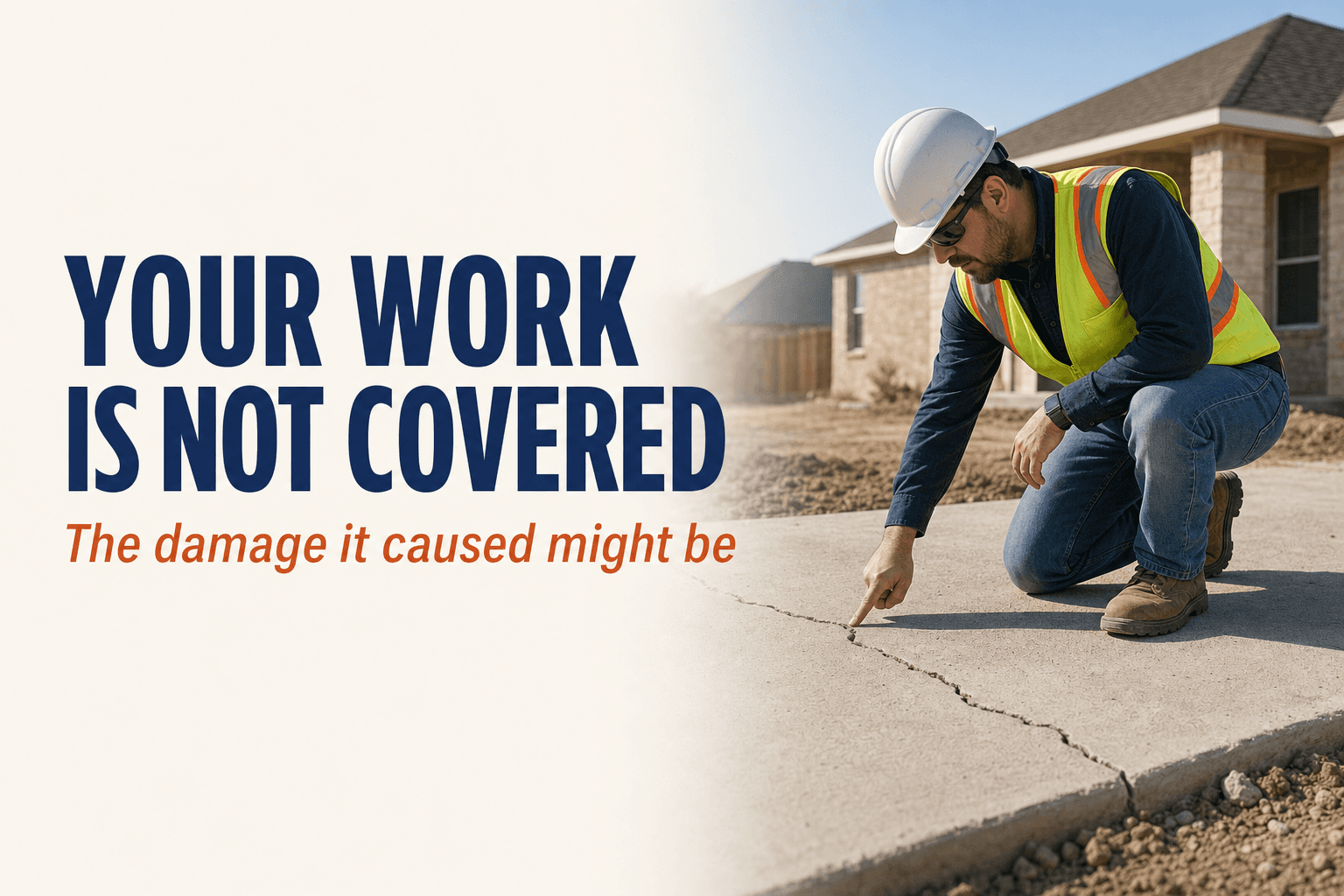
Does General Liability Cover Your Own Faulty Workmanship? What Texas Contractors Get Wrong

Buying a Car in Houston? What Insurance You Need Before You Drive Off the Lot

Landscaping Insurance in Houston: The Three Gaps Your Personal Policy Leaves Open

A Storm Hits Before Your Renewal: The Texas Claim Timeline, and the New Right You Have in 2026

A Storm Claim Cannot Raise Your Texas Home Insurance Rate. A Broken Pipe Can.
Let A-Z Auto Insurance Help You Find Affordable Coverage
Connect with our experienced team today & get reliable, affordable insurance designed around your needs.
Contact Us!
Let A-Z Auto Insurance Help
You Find Affordable Coverage
Connect with our experienced team today & get reliable, affordable insurance designed around your needs.
Contact Us!
Let A-Z Auto
Insurance Help You
Find Affordable Coverage
Connect with our experienced team today & get reliable, affordable insurance designed around your needs.
Contact Us!
Let A-Z Auto Insurance Help
You Find Affordable Coverage
Connect with our experienced team today & get reliable, affordable insurance designed around your needs.
Contact Us!
Latest New & Blogs
Latest New & Blogs
Related Blog Posts
Related Blog Posts
Buying a Car in Houston? What Insurance You Need Before You Drive Off the Lot
Buying a car in Houston today? You need insurance before you can drive it off the lot. Here is exactly what the dealership and lender require, and how to get proof the same day.
Buying a Car in Houston? What Insurance You Need Before You Drive Off the Lot
Buying a car in Houston today? You need insurance before you can drive it off the lot. Here is exactly what the dealership and lender require, and how to get proof the same day.
Buying a Car in Houston? What Insurance You Need Before You Drive Off the Lot
Buying a car in Houston today? You need insurance before you can drive it off the lot. Here is exactly what the dealership and lender require, and how to get proof the same day.
Landscaping Insurance in Houston: The Three Gaps Your Personal Policy Leaves Open
The truck, the equipment and the customer's property. Where a personal policy stops paying for a Houston lawn care crew, and what covers each piece.
Landscaping Insurance in Houston: The Three Gaps Your Personal Policy Leaves Open
The truck, the equipment and the customer's property. Where a personal policy stops paying for a Houston lawn care crew, and what covers each piece.
Landscaping Insurance in Houston: The Three Gaps Your Personal Policy Leaves Open
The truck, the equipment and the customer's property. Where a personal policy stops paying for a Houston lawn care crew, and what covers each piece.
A Storm Hits Before Your Renewal: The Texas Claim Timeline, and the New Right You Have in 2026
The deadlines your Texas insurer must meet on a storm claim, the appraisal right added for 2026, and what a claim does to your renewal in Fort Bend.
A Storm Hits Before Your Renewal: The Texas Claim Timeline, and the New Right You Have in 2026
The deadlines your Texas insurer must meet on a storm claim, the appraisal right added for 2026, and what a claim does to your renewal in Fort Bend.
A Storm Hits Before Your Renewal: The Texas Claim Timeline, and the New Right You Have in 2026
The deadlines your Texas insurer must meet on a storm claim, the appraisal right added for 2026, and what a claim does to your renewal in Fort Bend.
Buying a Car in Houston? What Insurance You Need Before You Drive Off the Lot
Buying a car in Houston today? You need insurance before you can drive it off the lot. Here is exactly what the dealership and lender require, and how to get proof the same day.
Landscaping Insurance in Houston: The Three Gaps Your Personal Policy Leaves Open
The truck, the equipment and the customer's property. Where a personal policy stops paying for a Houston lawn care crew, and what covers each piece.