Soporte rápido de profesionales de seguros de confianza Llame +1 713-777-2886 hoy!
¡Llame hoy al +1 713-777-2886 para obtener un soporte profesional rápido!


Tabla de Contenido
Título

Deje que AZ Insurance le ayude
a encontrar una cobertura asequible
Conéctate con nuestro equipo experimentado hoy y obtén un seguro confiable y asequible diseñado a tu medida.
¡Contáctanos!

Deja que A-Z Auto Insurance te ayude a encontrar una cobertura asequible
Conéctate con nuestro equipo experimentado hoy y obtén un seguro confiable y asequible diseñado a tu medida.
¡Contáctanos!
Average Hazard Insurance Cost: What Homeowners Can Expect
Average Hazard Insurance Cost: What Homeowners Can Expect
Average Hazard Insurance Cost: What Homeowners Can Expect
Average Hazard Insurance Cost: What Homeowners Can Expect
Average Hazard Insurance Cost: What Homeowners Can Expect
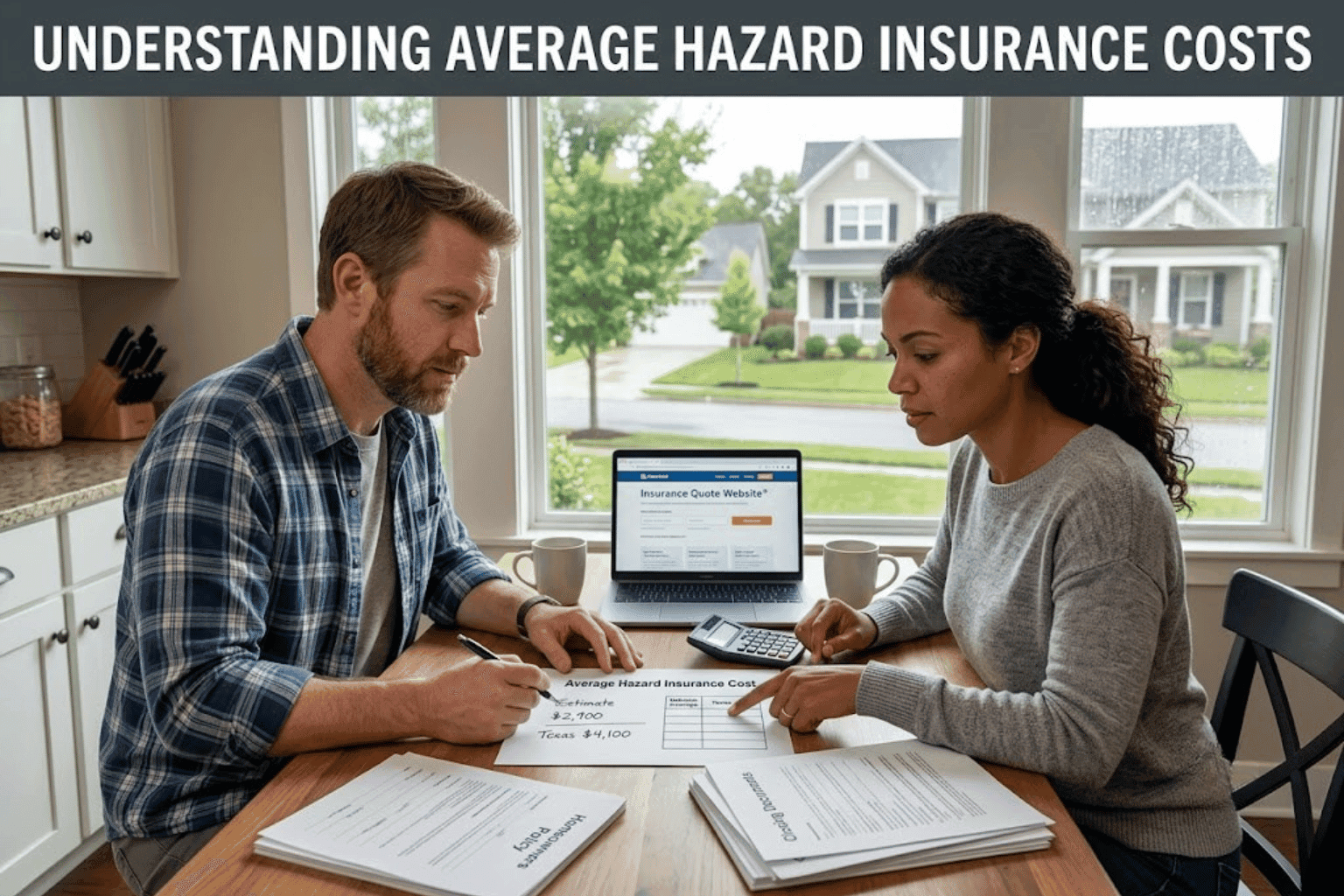
Quick Answer: The average hazard insurance cost for U.S. homeowners runs roughly $2,500 to $2,900 a year for $300,000 in dwelling coverage, but Texas homeowners pay closer to $3,900 to $4,350 annually because of hail, hurricane, and rebuilding-cost risk. Your actual homeowners' hazard insurance cost depends on your home location, age, roof condition, and coverage limits you choose.
What Is Hazard Insurance, and How Does It Differ from Homeowners Insurance?
Hazard insurance isn't a separate policy sitting next to your homeowner's insurance — it's the piece of your homeowners insurance policy that pays to rebuild your house after a covered event like fire, windstorm, hail, or a falling tree. Mortgage lenders use the term "hazard insurance" specifically because they care about one thing: whether the structure backing their loan is protected. Homeowners insurance is the broader umbrella. It bundles hazard (dwelling) coverage with liability protection, personal property coverage, and additional living expenses if you're displaced.
Here's the thing most people miss: when your lender asks for "proof hazard insurance" before closing, they're really asking for proof that your dwelling coverage meets or exceeds your loan balance. A full homeowners' insurance policy satisfies that requirement automatically, since dwelling coverage is one of its core components.
How Much Does the Average Hazard Insurance Cost Run for Homeowners?
Nationally, homeowners pay somewhere between $2,500 and $2,900 a year for a policy with $300,000 in dwelling coverage, according to 2026 data from Insurance.com and Insurify. That figure moves a lot depending on where you live. Texas sits well above that midpoint — Insurance.com puts the statewide average at $4,085 a year, while other 2026 carrier analyses land between $3,900 and $4,350. In Houston specifically, NerdWallet's 2026 metro data show average annual premiums climbing toward $6,370, driven by hurricane exposure and higher rebuilding costs.
Coverage Area | Average Annual Cost (2026) | Average Monthly Cost |
U.S. national average ($300K dwelling) | $2,543–$2,872 | $212–$239 |
Texas statewide average | $3,908–$4,350 | $326–$360 |
Houston metro average | ~$6,370 | ~$530 |
Austin metro average | ~$3,400 | ~$283 |
Dallas metro average | ~$4,945 | ~$412 |
Figures reflect $300,000 in dwelling coverage with a standard $1,000 deductible; wind/hail deductibles in coastal Texas counties can change the math significantly. If you want a number tied to your actual address, a free home insurance quote will get you there faster than any table.
What Factors Push the Average Hazard Insurance Cost Up or Down?
Your premium isn't pulled from a single statewide number — it's built line by line from your property and your profile. In most cases, these are the variables doing the heaviest lifting:
Dwelling coverage amount. The more it costs to rebuild your home at current lumber, labor, and material prices, the higher your premium. Our guide on how much dwelling coverage a Houston home needs breaks down how to calculate this correctly instead of guessing.
Roof age and material. Insurers treat a 20-year-old roof very differently than a five-year-old impact-resistant one. See our breakdown of how roof age affects Texas home insurance for specifics.
Location and storm exposure. Homes near the Gulf Coast or in hail-prone corridors pay more because insurers price in expected annual loss, not just past claims.
Claims history. Filing multiple claims in a short window, even small ones, tends to raise renewal premiums across the board.
Credit-based insurance score. In most states, including Texas, insurers legally factor credit history into pricing.
Deductible choice. A higher deductible lowers your premium, but it also raises what you pay out of pocket after a loss.
Home age and construction type. Older wiring, plumbing, or foundation issues can push rates up until they're addressed or disclosed clearly.
This works well as a checklist, but it breaks down if you try to fix all seven variables at once. Start with the one or two that are actually within your control — usually roof condition and deductible — before shopping quotes.
How Does the Average Hazard Insurance Cost in Texas Compare to the National Number?
Texas consistently ranks among the five most expensive states for home insurance, alongside Oklahoma, Nebraska, Kansas, and Florida. The gap isn't small: Texas homeowners typically pay 55% to 90% more than the national average, according to multiple 2026 carrier analyses. Texas 2036's research found that average premiums in the state rose more than 55% between 2019 and 2024 alone.
That's not just a Houston story, either. It's worth being specific here — homeowners in Fort Worth and Dallas often see averages north of $4,900 a year, while cities further inland like El Paso can run closer to $2,000. If you're comparing your renewal notice to a "national average" figure you found online, you're comparing yourself to the wrong benchmark. Texas rates, and even Texas ZIP codes, don't move together. Checking current premiums by service area is a more useful starting point than a national chart.

What Does Hazard Insurance Actually Cover — and What Does It Leave Out?
A standard HO-3 policy, the most common form sold in Texas, covers your dwelling on an "open perils" basis, meaning it protects against every cause of loss except the ones specifically excluded. Fire, windstorms, hail, lightning, and falling objects are typically covered. Flood and, in most cases, foundation movement from soil expansion are not — those require separate policies or endorsements. Our article on HO-A vs. HO-B vs. HO-3 policies in Texas walks through how these forms differ if you're comparing quotes side by side.
Two related distinctions trip up a lot of homeowners. First, hazard coverage pays out differently depending on whether your policy uses replacement cost or actual cash value — our replacement cost vs. actual cash value guide explains why that difference can mean tens of thousands of dollars after a total loss. Second, flood damage is never included in standard hazard coverage, even along the Gulf Coast. If you're near a floodplain, read our breakdown of flood coverage under Texas homeowners policies before assuming you're protected.
Coastal and near-coastal homeowners face one more layer: wind and hail coverage in TWIA-designated counties is often written separately from the base policy. Our guide on whether your Houston home needs TWIA windstorm insurance is worth reading before you assume your quote already includes it.
How Can Homeowners Lower the Average Hazard Insurance Cost Without Cutting Real Protection?
You can't change your ZIP code, but you can influence a real chunk of your premium. The most reliable levers, in the order most agents recommend tackling them, are:
Bundle your home and auto insurance with the same carrier — this typically saves 5% to 15%.
Raise your deductible if you have the cash reserves to cover it comfortably.
Ask about discounts for monitored security systems, storm shutters, or a recently replaced roof.
Improve your credit profile, since insurers in most states use it as a pricing factor.
Shop your policy for every renewal instead of auto-renewing — carrier pricing shifts more than most homeowners realize.
Confirm your dwelling coverage matches actual rebuild cost, not market value — being over-insured wastes money and being under-insured triggers coinsurance penalties at claim time.
None of these require sacrificing coverage. What they require is a policy review with someone who can compare carriers on your behalf rather than a single quote from one company. That's really the fastest way to find out what you homeowners hazard insurance cost should actually look like.
If you're a renter rather than a homeowner, the math and the coverage are different — our renters insurance page covers what that policy protects instead.
Frequently Asked Questions
Q: What is hazard insurance?
A: Hazard insurance is the part of a homeowner's policy that pays to repair or rebuild your home's structure after a covered event like fire, wind, or hail. It's the component mortgage lenders require before closing on a loan.
Q: How much does hazard insurance cost on average?
A: Nationally, homeowners pay roughly $2,500 to $2,900 a year for $300,000 in dwelling coverage. Texas homeowners average closer to $3,900 to $4,350 a year because of storm and rebuilding cost risk.
Q: Is hazard insurance the same as homeowners' insurance?
A: Not exactly. Hazard insurance is one part of a homeowner's policy — dwelling coverage. A full homeowner's policy also includes liability, personal property, and loss-of-use coverage.
Q: Does hazard insurance cover flood damage?
A: No. Standard hazard and homeowners' coverage exclude flood damage. Homeowners in flood-prone areas need a separate flood policy through the NFIP or a private flood insurer.
Q: How can I lower my hazard insurance premium?
A: Raising your deductible, bundling policies, improving your roof, and shopping quotes annually are the most effective ways to reduce costs without dropping coverage.
Every homeowner's rebuild cost, roof condition, and storm exposure is different, which is exactly why the averages above are a starting point and not a quote. If you want a number built around your actual home, request a personalized home insurance quote or contact our team directly.
Quick Answer: The average hazard insurance cost for U.S. homeowners runs roughly $2,500 to $2,900 a year for $300,000 in dwelling coverage, but Texas homeowners pay closer to $3,900 to $4,350 annually because of hail, hurricane, and rebuilding-cost risk. Your actual homeowners' hazard insurance cost depends on your home location, age, roof condition, and coverage limits you choose.
What Is Hazard Insurance, and How Does It Differ from Homeowners Insurance?
Hazard insurance isn't a separate policy sitting next to your homeowner's insurance — it's the piece of your homeowners insurance policy that pays to rebuild your house after a covered event like fire, windstorm, hail, or a falling tree. Mortgage lenders use the term "hazard insurance" specifically because they care about one thing: whether the structure backing their loan is protected. Homeowners insurance is the broader umbrella. It bundles hazard (dwelling) coverage with liability protection, personal property coverage, and additional living expenses if you're displaced.
Here's the thing most people miss: when your lender asks for "proof hazard insurance" before closing, they're really asking for proof that your dwelling coverage meets or exceeds your loan balance. A full homeowners' insurance policy satisfies that requirement automatically, since dwelling coverage is one of its core components.
How Much Does the Average Hazard Insurance Cost Run for Homeowners?
Nationally, homeowners pay somewhere between $2,500 and $2,900 a year for a policy with $300,000 in dwelling coverage, according to 2026 data from Insurance.com and Insurify. That figure moves a lot depending on where you live. Texas sits well above that midpoint — Insurance.com puts the statewide average at $4,085 a year, while other 2026 carrier analyses land between $3,900 and $4,350. In Houston specifically, NerdWallet's 2026 metro data show average annual premiums climbing toward $6,370, driven by hurricane exposure and higher rebuilding costs.
Coverage Area | Average Annual Cost (2026) | Average Monthly Cost |
U.S. national average ($300K dwelling) | $2,543–$2,872 | $212–$239 |
Texas statewide average | $3,908–$4,350 | $326–$360 |
Houston metro average | ~$6,370 | ~$530 |
Austin metro average | ~$3,400 | ~$283 |
Dallas metro average | ~$4,945 | ~$412 |
Figures reflect $300,000 in dwelling coverage with a standard $1,000 deductible; wind/hail deductibles in coastal Texas counties can change the math significantly. If you want a number tied to your actual address, a free home insurance quote will get you there faster than any table.
What Factors Push the Average Hazard Insurance Cost Up or Down?
Your premium isn't pulled from a single statewide number — it's built line by line from your property and your profile. In most cases, these are the variables doing the heaviest lifting:
Dwelling coverage amount. The more it costs to rebuild your home at current lumber, labor, and material prices, the higher your premium. Our guide on how much dwelling coverage a Houston home needs breaks down how to calculate this correctly instead of guessing.
Roof age and material. Insurers treat a 20-year-old roof very differently than a five-year-old impact-resistant one. See our breakdown of how roof age affects Texas home insurance for specifics.
Location and storm exposure. Homes near the Gulf Coast or in hail-prone corridors pay more because insurers price in expected annual loss, not just past claims.
Claims history. Filing multiple claims in a short window, even small ones, tends to raise renewal premiums across the board.
Credit-based insurance score. In most states, including Texas, insurers legally factor credit history into pricing.
Deductible choice. A higher deductible lowers your premium, but it also raises what you pay out of pocket after a loss.
Home age and construction type. Older wiring, plumbing, or foundation issues can push rates up until they're addressed or disclosed clearly.
This works well as a checklist, but it breaks down if you try to fix all seven variables at once. Start with the one or two that are actually within your control — usually roof condition and deductible — before shopping quotes.
How Does the Average Hazard Insurance Cost in Texas Compare to the National Number?
Texas consistently ranks among the five most expensive states for home insurance, alongside Oklahoma, Nebraska, Kansas, and Florida. The gap isn't small: Texas homeowners typically pay 55% to 90% more than the national average, according to multiple 2026 carrier analyses. Texas 2036's research found that average premiums in the state rose more than 55% between 2019 and 2024 alone.
That's not just a Houston story, either. It's worth being specific here — homeowners in Fort Worth and Dallas often see averages north of $4,900 a year, while cities further inland like El Paso can run closer to $2,000. If you're comparing your renewal notice to a "national average" figure you found online, you're comparing yourself to the wrong benchmark. Texas rates, and even Texas ZIP codes, don't move together. Checking current premiums by service area is a more useful starting point than a national chart.
What Does Hazard Insurance Actually Cover — and What Does It Leave Out?
A standard HO-3 policy, the most common form sold in Texas, covers your dwelling on an "open perils" basis, meaning it protects against every cause of loss except the ones specifically excluded. Fire, windstorms, hail, lightning, and falling objects are typically covered. Flood and, in most cases, foundation movement from soil expansion are not — those require separate policies or endorsements. Our article on HO-A vs. HO-B vs. HO-3 policies in Texas walks through how these forms differ if you're comparing quotes side by side.
Two related distinctions trip up a lot of homeowners. First, hazard coverage pays out differently depending on whether your policy uses replacement cost or actual cash value — our replacement cost vs. actual cash value guide explains why that difference can mean tens of thousands of dollars after a total loss. Second, flood damage is never included in standard hazard coverage, even along the Gulf Coast. If you're near a floodplain, read our breakdown of flood coverage under Texas homeowners policies before assuming you're protected.
Coastal and near-coastal homeowners face one more layer: wind and hail coverage in TWIA-designated counties is often written separately from the base policy. Our guide on whether your Houston home needs TWIA windstorm insurance is worth reading before you assume your quote already includes it.
How Can Homeowners Lower the Average Hazard Insurance Cost Without Cutting Real Protection?
You can't change your ZIP code, but you can influence a real chunk of your premium. The most reliable levers, in the order most agents recommend tackling them, are:
Bundle your home and auto insurance with the same carrier — this typically saves 5% to 15%.
Raise your deductible if you have the cash reserves to cover it comfortably.
Ask about discounts for monitored security systems, storm shutters, or a recently replaced roof.
Improve your credit profile, since insurers in most states use it as a pricing factor.
Shop your policy for every renewal instead of auto-renewing — carrier pricing shifts more than most homeowners realize.
Confirm your dwelling coverage matches actual rebuild cost, not market value — being over-insured wastes money and being under-insured triggers coinsurance penalties at claim time.
None of these require sacrificing coverage. What they require is a policy review with someone who can compare carriers on your behalf rather than a single quote from one company. That's really the fastest way to find out what you homeowners hazard insurance cost should actually look like.
If you're a renter rather than a homeowner, the math and the coverage are different — our renters insurance page covers what that policy protects instead.
Frequently Asked Questions
Q: What is hazard insurance?
A: Hazard insurance is the part of a homeowner's policy that pays to repair or rebuild your home's structure after a covered event like fire, wind, or hail. It's the component mortgage lenders require before closing on a loan.
Q: How much does hazard insurance cost on average?
A: Nationally, homeowners pay roughly $2,500 to $2,900 a year for $300,000 in dwelling coverage. Texas homeowners average closer to $3,900 to $4,350 a year because of storm and rebuilding cost risk.
Q: Is hazard insurance the same as homeowners' insurance?
A: Not exactly. Hazard insurance is one part of a homeowner's policy — dwelling coverage. A full homeowner's policy also includes liability, personal property, and loss-of-use coverage.
Q: Does hazard insurance cover flood damage?
A: No. Standard hazard and homeowners' coverage exclude flood damage. Homeowners in flood-prone areas need a separate flood policy through the NFIP or a private flood insurer.
Q: How can I lower my hazard insurance premium?
A: Raising your deductible, bundling policies, improving your roof, and shopping quotes annually are the most effective ways to reduce costs without dropping coverage.
Every homeowner's rebuild cost, roof condition, and storm exposure is different, which is exactly why the averages above are a starting point and not a quote. If you want a number built around your actual home, request a personalized home insurance quote or contact our team directly.
Últimos Blogs

What Is Home Hazard Insurance and What Does It Cover?

¿Tenedor de certificado o asegurado adicional? La diferencia que decide quién paga tu defensa
¿Cubre la responsabilidad civil general tu propio trabajo defectuoso? En lo que se equivocan los contratistas de Texas

¿Vas a comprar un auto en Houston? Qué seguro necesitas antes de salir del concesionario

Landscaping Insurance in Houston: The Three Gaps Your Personal Policy Leaves Open

Una tormenta azota antes de tu renovación: el cronograma de reclamos en Texas y el nuevo derecho que tendrás en 2026
Deja que A-Z Auto Insurance te ayude a encontrar una cobertura asequible
Conéctate con nuestro equipo experimentado hoy y obtén un seguro confiable y asequible diseñado a tu medida.
¡Contáctanos!
Deje que A-Z Auto Insurance le ayude
A encontrar una cobertura asequible
Conéctate con nuestro equipo experimentado hoy y obtén un seguro confiable y asequible diseñado a tu medida.
¡Contáctanos!
Deja que A-Z Auto
Seguros te
ayude a encontrar cobertura asequible
Conéctate con nuestro equipo experimentado hoy y obtén un seguro confiable y asequible diseñado a tu medida.
¡Contáctanos!
Deje que A-Z Auto Insurance le ayude
A encontrar una cobertura asequible
Conéctate con nuestro equipo experimentado hoy y obtén un seguro confiable y asequible diseñado a tu medida.
¡Contáctanos!
Últimas noticias y blogs
Últimas noticias y blogs
Publicaciones de blog relacionadas
Publicaciones de blog relacionadas
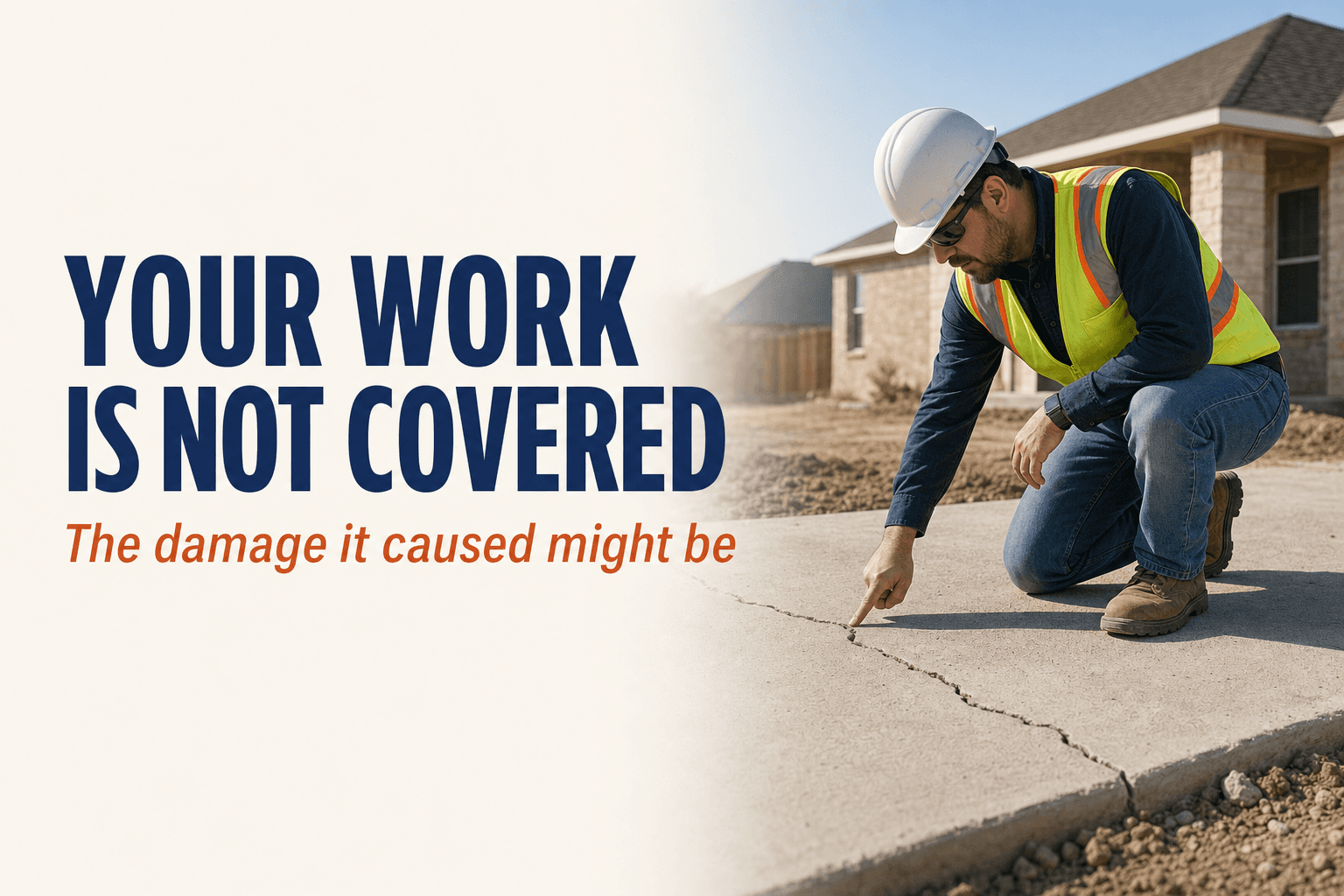
¿Cubre la responsabilidad civil general tu propio trabajo defectuoso? En lo que se equivocan los contratistas de Texas
Tu póliza no pagará por rehacer el trabajo que hiciste mal. En Texas, aún podría pagar por los daños que ese trabajo haya causado. Aquí te mostramos exactamente dónde se define el límite.
¿Cubre la responsabilidad civil general tu propio trabajo defectuoso? En lo que se equivocan los contratistas de Texas
Tu póliza no pagará por rehacer el trabajo que hiciste mal. En Texas, aún podría pagar por los daños que ese trabajo haya causado. Aquí te mostramos exactamente dónde se define el límite.
¿Cubre la responsabilidad civil general tu propio trabajo defectuoso? En lo que se equivocan los contratistas de Texas
Tu póliza no pagará por rehacer el trabajo que hiciste mal. En Texas, aún podría pagar por los daños que ese trabajo haya causado. Aquí te mostramos exactamente dónde se define el límite.
¿Vas a comprar un auto en Houston? Qué seguro necesitas antes de salir del concesionario
¿Vas a comprar un auto en Houston hoy? Necesitas un seguro antes de poder sacarlo del lote de venta. Esto es exactamente lo que exigen el concesionario y el prestamista, y cómo obtener el comprobante el mismo día.
¿Vas a comprar un auto en Houston? Qué seguro necesitas antes de salir del concesionario
¿Vas a comprar un auto en Houston hoy? Necesitas un seguro antes de poder sacarlo del lote de venta. Esto es exactamente lo que exigen el concesionario y el prestamista, y cómo obtener el comprobante el mismo día.
¿Vas a comprar un auto en Houston? Qué seguro necesitas antes de salir del concesionario
¿Vas a comprar un auto en Houston hoy? Necesitas un seguro antes de poder sacarlo del lote de venta. Esto es exactamente lo que exigen el concesionario y el prestamista, y cómo obtener el comprobante el mismo día.
Landscaping Insurance in Houston: The Three Gaps Your Personal Policy Leaves Open
The truck, the equipment and the customer's property. Where a personal policy stops paying for a Houston lawn care crew, and what covers each piece.
Landscaping Insurance in Houston: The Three Gaps Your Personal Policy Leaves Open
The truck, the equipment and the customer's property. Where a personal policy stops paying for a Houston lawn care crew, and what covers each piece.
Landscaping Insurance in Houston: The Three Gaps Your Personal Policy Leaves Open
The truck, the equipment and the customer's property. Where a personal policy stops paying for a Houston lawn care crew, and what covers each piece.
¿Cubre la responsabilidad civil general tu propio trabajo defectuoso? En lo que se equivocan los contratistas de Texas
Tu póliza no pagará por rehacer el trabajo que hiciste mal. En Texas, aún podría pagar por los daños que ese trabajo haya causado. Aquí te mostramos exactamente dónde se define el límite.
¿Vas a comprar un auto en Houston? Qué seguro necesitas antes de salir del concesionario
¿Vas a comprar un auto en Houston hoy? Necesitas un seguro antes de poder sacarlo del lote de venta. Esto es exactamente lo que exigen el concesionario y el prestamista, y cómo obtener el comprobante el mismo día.