Soporte rápido de profesionales de seguros de confianza Llame +1 713-777-2886 hoy!
¡Llame hoy al +1 713-777-2886 para obtener un soporte profesional rápido!


Tabla de Contenido
Título

Deje que AZ Insurance le ayude
a encontrar una cobertura asequible
Conéctate con nuestro equipo experimentado hoy y obtén un seguro confiable y asequible diseñado a tu medida.
¡Contáctanos!

Deja que A-Z Auto Insurance te ayude a encontrar una cobertura asequible
Conéctate con nuestro equipo experimentado hoy y obtén un seguro confiable y asequible diseñado a tu medida.
¡Contáctanos!
Daños por agua frente a inundación: qué cubre el seguro de hogar en Houston
Daños por agua frente a inundación: qué cubre el seguro de hogar en Houston
Daños por agua frente a inundación: qué cubre el seguro de hogar en Houston
Daños por agua frente a inundación: qué cubre el seguro de hogar en Houston
Daños por agua frente a inundación: qué cubre el seguro de hogar en Houston
Revisado por AZ Insurance Agency, aseguradora con licencia en Texas, sirviendo a Houston desde 2003.
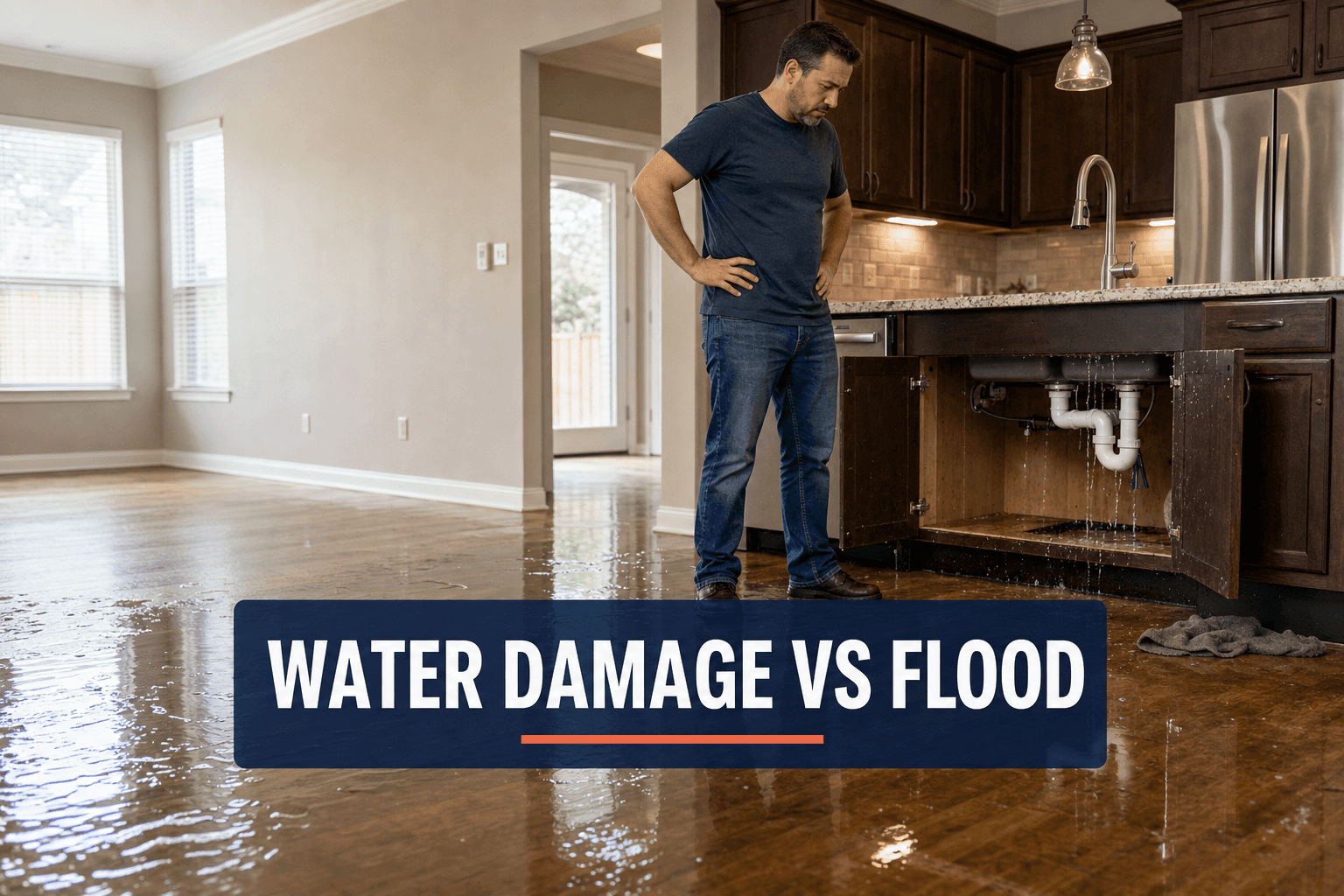
Cada propietario de vivienda en Houston aprende la diferencia entre daños por agua e inundación de la manera difícil, generalmente de pie en una habitación húmeda preguntándose si se pagará el reclamo. Las palabras suenan intercambiables, pero para su póliza de seguro son tres categorías separadas con tres resultados distintos. Saber cuál es cuál, antes de que aparezca el agua, es la diferencia entre una pérdida cubierta y una factura que nunca vio venir. Comienza por entender qué cubre y qué no cubre realmente su póliza de propietario de vivienda.
Respuesta corta: Una póliza estándar de propietario de vivienda en Houston cubre daños por agua repentinos y accidentales dentro de su hogar, como la ruptura de una tubería o el desbordamiento de un electrodoméstico, pero no cubre los daños por inundación causados por el aumento de agua externa. La inundación es una póliza separada a través del Programa Nacional de Seguro contra Inundaciones (NFIP, por sus siglas en inglés) o una aseguradora privada. Una tercera categoría, el respaldo de agua de alcantarillas y desagües, generalmente necesita su propio endoso. Llámenos al 713-777-2886 o visite aztexas.com para cerrar las brechas antes de la próxima tormenta.
Puntos Clave
Su póliza de propietario de vivienda cubre daños por agua repentinos y accidentales, como la ruptura de una tubería o la falla de la manguera de una lavadora, pero no las filtraciones graduales relacionadas con la falta de mantenimiento.
Inundación significa agua que sube y entra desde el exterior y desde el suelo hacia arriba, y nunca está cubierta por una póliza estándar de propietario de vivienda. Requiere una póliza de inundación separada del NFIP o privada.
El respaldo de agua de alcantarillas y desagües es una tercera categoría que la mayoría de las pólizas estándar excluyen y que las pólizas de inundación no cubren, por lo que necesita su propio endoso.
Una pulgada de agua dentro de una casa puede causar más de $26,000 en daños, y el reclamo promedio por inundación del NFIP ronda los $68,000, según el Departamento de Seguros de Texas (TDI) citando datos del NFIP.
Las pólizas de inundación del NFIP conllevan un período de espera de 30 días, por lo que la cobertura contra inundaciones no se puede tramitar la semana en que una tormenta ingresa al Golfo.
Un endoso de respaldo de agua generalmente cuesta entre $50 y $250 al año y comienza con una cobertura de alrededor de $5,000, un costo mínimo en comparación con una limpieza profesional de aguas residuales.
En las tormentas, el viento y la inundación son a menudo dos reclamos separados: el viento bajo su póliza de propietario de vivienda y el agua que sube bajo su póliza de inundación.
Qué cuenta como daño por agua
Según el Departamento de Seguros de Texas, la mayoría de las pólizas de propietario de vivienda cubren daños por agua repentinos y accidentales. Los ejemplos clásicos incluyen:
Una tubería que se rompe dentro de una pared
Un inodoro que se desborda debido a un sanitario obstruido
La manguera de una lavadora que se rompe e inunda el cuarto de lavado
La línea de suministro de un lavavajillas que falla y empapa el piso de la cocina
Si se desarrolla moho en artículos dañados por un evento repentino cubierto, ese daño por moho generalmente también está cubierto. Su póliza paga para reparar la estructura y reemplazar los bienes personales, hasta los límites de su cobertura.
La palabra clave es repentino. El daño debe ocurrir de manera rápida e inesperada, no lentamente durante semanas o meses. Un techo que deja entrar agua lentamente a lo largo de los años, una tubería que goteó detrás de un gabinete durante meses o la filtración a través de una pared generalmente se excluyen. El TDI es explícito al respecto: las pólizas usualmente no cubrirán daños por fugas graduales o filtraciones.
Qué cuenta como una inundación
En términos de seguros, una inundación significa agua que sube, se origina fuera de su hogar y entra desde el suelo hacia arriba. Piense en:
Un pantano o arroyo que se desborda y llega a su losa o cimientos
Agua de lluvia a nivel de la calle que se acumula más rápido de lo que el drenaje puede manejar y entra por puertas o aberturas bajas
La marejada ciclónica de un huracán que empuja el agua hacia el interior
Un lago, estanque de retención o canal de drenaje que supera sus márgenes
Aquí es precisamente donde se detiene su póliza estándar de propietario de vivienda. El TDI confirma que las pólizas de hogar no cubren las inundaciones. Necesita una póliza de inundación separada, ya sea a través del Programa Nacional de Seguro contra Inundaciones (NFIP) o de una aseguradora de inundaciones privada.
Dos cifras ponen esto en perspectiva: solo una pulgada de agua dentro de una casa puede causar más de $26,000 en daños, y el pago promedio de un reclamo por inundación del NFIP es de alrededor de $68,000, según el TDI citando datos del NFIP. Estas no son pérdidas menores.
Un detalle crítico para los propietarios de viviendas en Houston: las pólizas de inundación del NFIP conllevan un período de espera de 30 días antes de que la cobertura entre en vigor. Una vez que se pronostica que una tormenta con nombre ingresará al Golfo, la mayoría de las aseguradoras dejan de emitir o modificar pólizas. La cobertura contra inundaciones no es algo que se organice la semana antes de un huracán. Para obtener más información sobre cómo elegir entre opciones federales y privadas, consulte nuestra publicación sobre NFIP frente a seguro privado de inundación en Houston, y si renta en lugar de ser propietario, cómo maneja el seguro de inquilinos las inundaciones en Houston.

La zona gris: fugas graduales y mantenimiento
Entre lo repentino y accidental y la inundación se encuentra una categoría que toma por sorpresa a muchos propietarios de viviendas: la intrusión lenta de agua relacionada con la falta de mantenimiento.
Estas situaciones casi siempre están excluidas:
Una tubería que goteó dentro de una pared durante meses antes de causar podredumbre o moho
La base de una ducha que se filtró lentamente en el entrepiso durante un año
Filtración en los cimientos que ocurrió en cada tormenta de lluvia durante años
Acumulación de condensación de una unidad de aire acondicionado que fallaba y pasó desapercibida
Las aseguradoras excluyen estas pérdidas porque una póliza de propietario de vivienda no es un acuerdo de mantenimiento. La expectativa es que los propietarios inspeccionen, mantengan y reparen. Si el daño se pudo prevenir mediante un mantenimiento razonable y usted no actuó, es probable que se rechace el reclamo. Inspeccione su hogar regularmente, atienda los goteos pequeños antes de que se conviertan en grandes reparaciones y documente cualquier trabajo de mantenimiento que realice. Si alguna vez surge un reclamo, esa documentación es importante.
Respaldo de agua de alcantarillas y desagües: la cobertura que la mayoría de los propietarios en Houston omiten
Este es un escenario que muchos propietarios de viviendas en Houston han enfrentado de primera mano: una fuerte tormenta de lluvia satura el sistema de alcantarillado municipal, las aguas residuales invierten su dirección y regresan a través de un desagüe del piso bajo, inodoro o lavabo de servicio. El resultado es una habitación llena de agua contaminada.
Ese escenario no está cubierto por el seguro contra inundaciones. Las pólizas del NFIP y de inundaciones privadas cubren el agua externa que sube, no las aguas residuales que regresan a través de las tuberías de su hogar. Tampoco está cubierto por una póliza estándar de propietario de vivienda. El TDI confirma que el hecho de que se cubran los daños por respaldo de alcantarillado depende de su póliza específica, y la mayoría de las pólizas estándar lo excluyen.
Para cubrir este riesgo, necesita un endoso de respaldo de agua de alcantarillas y desagües. Este complemento opcional cubre:
Aguas residuales que regresan desde una tubería principal de la ciudad hacia sus desagües
Desbordamiento o falla de la bomba de sumidero
Respaldo en el desagüe causado por una línea obstruida o saturada fuera de su propiedad
Según Farmers Insurance, los límites de cobertura para el respaldo de agua generalmente comienzan en $5,000 y aumentan a partir de ahí. La prima anual generalmente oscila entre $50 y $250, dependiendo de su límite de cobertura, la antigüedad de la casa y la infraestructura de alcantarillado local, según The Hanover Insurance Group. Lo que el endoso no cubre: el costo de reparar la bomba de sumidero rota o la tubería de alcantarillado dañada en sí, ni los daños por inundación causados por el agua externa que sube, los cuales aún requieren una póliza de inundación separada.
Tabla de escenarios de cobertura
Situación | ¿Cubierto por propietario estándar? | ¿Cubierto por póliza de inundación? | ¿Necesita endoso por separado? |
|---|---|---|---|
Tubería rota inunda la cocina | Sí | No | No |
Manguera de lavadora se rompe y desborda | Sí | No | No |
Techo falla repentinamente en tormenta, entra lluvia | Por lo general, sí | No | No |
Fuga lenta en el techo que pasa desapercibida por meses | No | No | No (exclusión por mantenimiento) |
La inundación de un pantano o de la calle entra a la casa | No | Sí (NFIP o privado) | Se requiere póliza de inundación separada |
Marejada ciclónica de huracán entra a la casa | No | Sí (NFIP o privado) | Se requiere póliza de inundación separada |
Alcantarillado de la ciudad regresa por inodoro o desagüe | No (póliza estándar) | No | Sí (endoso de respaldo de agua) |
Bomba de sumidero falla durante lluvia intensa | No (póliza estándar) | No | Sí (endoso de respaldo de agua) |
Filtración lenta en el sótano a lo largo de los años | No | No | No (exclusión por mantenimiento) |
Por qué esto importa más en Houston que en casi cualquier otro lugar
Houston se asienta sobre un suelo arcilloso y plano con pocos cambios naturales de elevación. El sistema de pantanos que cruza la zona metropolitana se ha desbordado repetidamente durante eventos de lluvias intensas. Grandes porciones de la ciudad se encuentran en o cerca de zonas de inundación designadas por FEMA, y las casas fuera de esas zonas también se han inundado. Desde 1996, el 99% de los condados de EE. UU. han experimentado al menos un evento de inundación, según el TDI. La inundación no se queda ordenadamente dentro de los límites de las zonas.
La envejecida infraestructura de alcantarillado de Houston añade otra capa de riesgo. Durante eventos de lluvias intensas, los sistemas de alcantarillado municipal pueden alcanzar su capacidad máxima y empujar el agua hacia las conexiones residenciales. Un endoso de respaldo de agua que cuesta entre $50 y $250 por año se ve muy diferente después de cotizar una remediación profesional de aguas residuales, que puede costar miles de dólares.
También hay una realidad de tiempos específica de la temporada de huracanes. Si espera a que una tormenta esté en el Golfo para pensar en el seguro contra inundaciones, ya es demasiado tarde. El período de espera de 30 días significa que la ventana para protegerse se cierra mucho antes de que una tormenta toque tierra, razón por la cual es importante tener su hogar listo antes de la temporada de huracanes. Para una visión más amplia de lo que incluye su póliza, consulte si el seguro de propietario de vivienda cubre inundaciones en Texas.
Cómo cerrar las brechas
Tres pasos concretos para los propietarios de viviendas en Houston:
Paso 1: Confirme exactamente qué cubre su póliza de propietario actual. Revise su página de declaraciones y busque específicamente exclusiones de inundación y exclusiones de respaldo de agua. No asuma. Llame a su agente y pregúntele, en un lenguaje sencillo, si el respaldo de alcantarillado está cubierto y si el agua que sube está cubierta.
Paso 2: Agregue un endoso de respaldo de agua. Para la mayoría de los propietarios de viviendas en Houston, el costo anual es bajo en relación con el riesgo. Pregunte a su agente sobre los límites de cobertura que reflejen el valor de lo que almacena en los espacios de las plantas bajas y el costo de la limpieza profesional de aguas residuales.
Paso 3: Compre una póliza de inundación separada. Si su casa está en una zona de inundación de alto riesgo designada por FEMA, es probable que su prestamista hipotecario lo requiera. Si no está en una zona de alto riesgo, aun así puede comprar la cobertura de inundación del NFIP. El seguro privado contra inundaciones también está disponible y puede ofrecer límites más altos, períodos de espera más cortos o definiciones de cobertura más amplias.
¿Necesita ayuda para revisar su cobertura? AZ Insurance Agency es una agencia independiente que sirve a Houston y al área de Dallas desde 2003, con 15 oficinas y un equipo bilingüe listo para comparar opciones entre múltiples aseguradoras para su dirección y situación específicas. Llámenos al 713-777-2886 o explore sus opciones en aztexas.com/homeowners-insurance.
Preguntas Frecuentes
P: ¿Mi seguro de propietario de vivienda en Houston cubre las inundaciones por huracanes?
No. Las inundaciones causadas por la marejada ciclónica de un huracán o la acumulación de lluvia que ingresa desde el exterior no están cubiertas por una póliza estándar de propietario de vivienda. Necesita una póliza de inundación separada a través del NFIP o de una aseguradora privada. Su póliza de propietario de vivienda generalmente sí cubre los daños causados por el viento a la estructura a consecuencia de la misma tormenta, por lo que es común que las víctimas de tormentas tengan dos reclamos separados: uno por viento bajo la póliza de propietario y otro por inundación bajo su póliza de inundación.
P: ¿Qué es un endoso de respaldo de agua y lo necesito en Houston?
Un endoso de respaldo de agua es una adición opcional a su póliza de propietario de vivienda que cubre los daños causados por aguas residuales o de drenaje que regresan a través de las tuberías de su hogar. Las pólizas estándar de propietario excluyen esto. Dados los desafíos de infraestructura de alcantarillado de Houston y la frecuencia de eventos de lluvias intensas que saturan los sistemas de la ciudad, vale la pena considerar seriamente este endoso para la mayoría de los propietarios de viviendas en Houston, especialmente aquellos con baños en la planta baja, niveles inferiores terminados o tuberías más antiguas.
P: ¿Cuánto cuesta el seguro contra inundaciones en Houston?
Las primas del seguro contra inundaciones del NFIP varían según la designación de la zona de inundación de su propiedad, elevación, tipo de estructura y límites de cobertura seleccionados. Las casas en zonas de alto riesgo conllevan primas más altas. El seguro privado de inundación puede tener un precio más alto o más bajo dependiendo de la aseguradora y del perfil de su propiedad. Use la herramienta de cotización de NFIP en FloodSmart.gov o hable con un agente independiente para comparar sus opciones antes de comprar.
P: ¿Cuál es la diferencia entre el NFIP y el seguro de inundación privado?
El NFIP es el programa federal de seguro contra inundaciones administrado por FEMA y vendido a través de agentes autorizados en todo el país. Ofrece cobertura estandarizada con límites establecidos: hasta $250,000 para la estructura y hasta $100,000 para el contenido. El seguro de inundación privado es ofrecido por aseguradoras privadas y puede proporcionar límites más altos, definiciones más amplias de pérdidas cubiertas o períodos de espera más cortos que la ventana estándar de 30 días del NFIP. Ambas son opciones legítimas. Cuál tiene más sentido depende de la ubicación de su propiedad, su valor y su perfil de riesgo.
P: ¿Están cubiertos los daños graduales por agua causados por una fuga lenta?
Generalmente no. Tanto las pautas del TDI como el lenguaje estándar de las pólizas de propietario de vivienda excluyen los daños por fugas graduales, filtraciones o daños resultantes de la falta de mantenimiento. Si una línea de suministro debajo de un lavabo se corroyó lentamente y goteó durante varios meses, es muy probable que se rechace el moho o la rotura resultantes. El estándar para que el daño por agua esté cubierto es que este sea repentino y accidental.
Artículos Relacionados
Revisado por AZ Insurance Agency, aseguradora con licencia en Texas, sirviendo a Houston desde 2003.
Cada propietario de vivienda en Houston aprende la diferencia entre daños por agua e inundación de la manera difícil, generalmente de pie en una habitación húmeda preguntándose si se pagará el reclamo. Las palabras suenan intercambiables, pero para su póliza de seguro son tres categorías separadas con tres resultados distintos. Saber cuál es cuál, antes de que aparezca el agua, es la diferencia entre una pérdida cubierta y una factura que nunca vio venir. Comienza por entender qué cubre y qué no cubre realmente su póliza de propietario de vivienda.
Respuesta corta: Una póliza estándar de propietario de vivienda en Houston cubre daños por agua repentinos y accidentales dentro de su hogar, como la ruptura de una tubería o el desbordamiento de un electrodoméstico, pero no cubre los daños por inundación causados por el aumento de agua externa. La inundación es una póliza separada a través del Programa Nacional de Seguro contra Inundaciones (NFIP, por sus siglas en inglés) o una aseguradora privada. Una tercera categoría, el respaldo de agua de alcantarillas y desagües, generalmente necesita su propio endoso. Llámenos al 713-777-2886 o visite aztexas.com para cerrar las brechas antes de la próxima tormenta.
Puntos Clave
Su póliza de propietario de vivienda cubre daños por agua repentinos y accidentales, como la ruptura de una tubería o la falla de la manguera de una lavadora, pero no las filtraciones graduales relacionadas con la falta de mantenimiento.
Inundación significa agua que sube y entra desde el exterior y desde el suelo hacia arriba, y nunca está cubierta por una póliza estándar de propietario de vivienda. Requiere una póliza de inundación separada del NFIP o privada.
El respaldo de agua de alcantarillas y desagües es una tercera categoría que la mayoría de las pólizas estándar excluyen y que las pólizas de inundación no cubren, por lo que necesita su propio endoso.
Una pulgada de agua dentro de una casa puede causar más de $26,000 en daños, y el reclamo promedio por inundación del NFIP ronda los $68,000, según el Departamento de Seguros de Texas (TDI) citando datos del NFIP.
Las pólizas de inundación del NFIP conllevan un período de espera de 30 días, por lo que la cobertura contra inundaciones no se puede tramitar la semana en que una tormenta ingresa al Golfo.
Un endoso de respaldo de agua generalmente cuesta entre $50 y $250 al año y comienza con una cobertura de alrededor de $5,000, un costo mínimo en comparación con una limpieza profesional de aguas residuales.
En las tormentas, el viento y la inundación son a menudo dos reclamos separados: el viento bajo su póliza de propietario de vivienda y el agua que sube bajo su póliza de inundación.
Qué cuenta como daño por agua
Según el Departamento de Seguros de Texas, la mayoría de las pólizas de propietario de vivienda cubren daños por agua repentinos y accidentales. Los ejemplos clásicos incluyen:
Una tubería que se rompe dentro de una pared
Un inodoro que se desborda debido a un sanitario obstruido
La manguera de una lavadora que se rompe e inunda el cuarto de lavado
La línea de suministro de un lavavajillas que falla y empapa el piso de la cocina
Si se desarrolla moho en artículos dañados por un evento repentino cubierto, ese daño por moho generalmente también está cubierto. Su póliza paga para reparar la estructura y reemplazar los bienes personales, hasta los límites de su cobertura.
La palabra clave es repentino. El daño debe ocurrir de manera rápida e inesperada, no lentamente durante semanas o meses. Un techo que deja entrar agua lentamente a lo largo de los años, una tubería que goteó detrás de un gabinete durante meses o la filtración a través de una pared generalmente se excluyen. El TDI es explícito al respecto: las pólizas usualmente no cubrirán daños por fugas graduales o filtraciones.
Qué cuenta como una inundación
En términos de seguros, una inundación significa agua que sube, se origina fuera de su hogar y entra desde el suelo hacia arriba. Piense en:
Un pantano o arroyo que se desborda y llega a su losa o cimientos
Agua de lluvia a nivel de la calle que se acumula más rápido de lo que el drenaje puede manejar y entra por puertas o aberturas bajas
La marejada ciclónica de un huracán que empuja el agua hacia el interior
Un lago, estanque de retención o canal de drenaje que supera sus márgenes
Aquí es precisamente donde se detiene su póliza estándar de propietario de vivienda. El TDI confirma que las pólizas de hogar no cubren las inundaciones. Necesita una póliza de inundación separada, ya sea a través del Programa Nacional de Seguro contra Inundaciones (NFIP) o de una aseguradora de inundaciones privada.
Dos cifras ponen esto en perspectiva: solo una pulgada de agua dentro de una casa puede causar más de $26,000 en daños, y el pago promedio de un reclamo por inundación del NFIP es de alrededor de $68,000, según el TDI citando datos del NFIP. Estas no son pérdidas menores.
Un detalle crítico para los propietarios de viviendas en Houston: las pólizas de inundación del NFIP conllevan un período de espera de 30 días antes de que la cobertura entre en vigor. Una vez que se pronostica que una tormenta con nombre ingresará al Golfo, la mayoría de las aseguradoras dejan de emitir o modificar pólizas. La cobertura contra inundaciones no es algo que se organice la semana antes de un huracán. Para obtener más información sobre cómo elegir entre opciones federales y privadas, consulte nuestra publicación sobre NFIP frente a seguro privado de inundación en Houston, y si renta en lugar de ser propietario, cómo maneja el seguro de inquilinos las inundaciones en Houston.
La zona gris: fugas graduales y mantenimiento
Entre lo repentino y accidental y la inundación se encuentra una categoría que toma por sorpresa a muchos propietarios de viviendas: la intrusión lenta de agua relacionada con la falta de mantenimiento.
Estas situaciones casi siempre están excluidas:
Una tubería que goteó dentro de una pared durante meses antes de causar podredumbre o moho
La base de una ducha que se filtró lentamente en el entrepiso durante un año
Filtración en los cimientos que ocurrió en cada tormenta de lluvia durante años
Acumulación de condensación de una unidad de aire acondicionado que fallaba y pasó desapercibida
Las aseguradoras excluyen estas pérdidas porque una póliza de propietario de vivienda no es un acuerdo de mantenimiento. La expectativa es que los propietarios inspeccionen, mantengan y reparen. Si el daño se pudo prevenir mediante un mantenimiento razonable y usted no actuó, es probable que se rechace el reclamo. Inspeccione su hogar regularmente, atienda los goteos pequeños antes de que se conviertan en grandes reparaciones y documente cualquier trabajo de mantenimiento que realice. Si alguna vez surge un reclamo, esa documentación es importante.
Respaldo de agua de alcantarillas y desagües: la cobertura que la mayoría de los propietarios en Houston omiten
Este es un escenario que muchos propietarios de viviendas en Houston han enfrentado de primera mano: una fuerte tormenta de lluvia satura el sistema de alcantarillado municipal, las aguas residuales invierten su dirección y regresan a través de un desagüe del piso bajo, inodoro o lavabo de servicio. El resultado es una habitación llena de agua contaminada.
Ese escenario no está cubierto por el seguro contra inundaciones. Las pólizas del NFIP y de inundaciones privadas cubren el agua externa que sube, no las aguas residuales que regresan a través de las tuberías de su hogar. Tampoco está cubierto por una póliza estándar de propietario de vivienda. El TDI confirma que el hecho de que se cubran los daños por respaldo de alcantarillado depende de su póliza específica, y la mayoría de las pólizas estándar lo excluyen.
Para cubrir este riesgo, necesita un endoso de respaldo de agua de alcantarillas y desagües. Este complemento opcional cubre:
Aguas residuales que regresan desde una tubería principal de la ciudad hacia sus desagües
Desbordamiento o falla de la bomba de sumidero
Respaldo en el desagüe causado por una línea obstruida o saturada fuera de su propiedad
Según Farmers Insurance, los límites de cobertura para el respaldo de agua generalmente comienzan en $5,000 y aumentan a partir de ahí. La prima anual generalmente oscila entre $50 y $250, dependiendo de su límite de cobertura, la antigüedad de la casa y la infraestructura de alcantarillado local, según The Hanover Insurance Group. Lo que el endoso no cubre: el costo de reparar la bomba de sumidero rota o la tubería de alcantarillado dañada en sí, ni los daños por inundación causados por el agua externa que sube, los cuales aún requieren una póliza de inundación separada.
Tabla de escenarios de cobertura
Situación | ¿Cubierto por propietario estándar? | ¿Cubierto por póliza de inundación? | ¿Necesita endoso por separado? |
|---|---|---|---|
Tubería rota inunda la cocina | Sí | No | No |
Manguera de lavadora se rompe y desborda | Sí | No | No |
Techo falla repentinamente en tormenta, entra lluvia | Por lo general, sí | No | No |
Fuga lenta en el techo que pasa desapercibida por meses | No | No | No (exclusión por mantenimiento) |
La inundación de un pantano o de la calle entra a la casa | No | Sí (NFIP o privado) | Se requiere póliza de inundación separada |
Marejada ciclónica de huracán entra a la casa | No | Sí (NFIP o privado) | Se requiere póliza de inundación separada |
Alcantarillado de la ciudad regresa por inodoro o desagüe | No (póliza estándar) | No | Sí (endoso de respaldo de agua) |
Bomba de sumidero falla durante lluvia intensa | No (póliza estándar) | No | Sí (endoso de respaldo de agua) |
Filtración lenta en el sótano a lo largo de los años | No | No | No (exclusión por mantenimiento) |
Por qué esto importa más en Houston que en casi cualquier otro lugar
Houston se asienta sobre un suelo arcilloso y plano con pocos cambios naturales de elevación. El sistema de pantanos que cruza la zona metropolitana se ha desbordado repetidamente durante eventos de lluvias intensas. Grandes porciones de la ciudad se encuentran en o cerca de zonas de inundación designadas por FEMA, y las casas fuera de esas zonas también se han inundado. Desde 1996, el 99% de los condados de EE. UU. han experimentado al menos un evento de inundación, según el TDI. La inundación no se queda ordenadamente dentro de los límites de las zonas.
La envejecida infraestructura de alcantarillado de Houston añade otra capa de riesgo. Durante eventos de lluvias intensas, los sistemas de alcantarillado municipal pueden alcanzar su capacidad máxima y empujar el agua hacia las conexiones residenciales. Un endoso de respaldo de agua que cuesta entre $50 y $250 por año se ve muy diferente después de cotizar una remediación profesional de aguas residuales, que puede costar miles de dólares.
También hay una realidad de tiempos específica de la temporada de huracanes. Si espera a que una tormenta esté en el Golfo para pensar en el seguro contra inundaciones, ya es demasiado tarde. El período de espera de 30 días significa que la ventana para protegerse se cierra mucho antes de que una tormenta toque tierra, razón por la cual es importante tener su hogar listo antes de la temporada de huracanes. Para una visión más amplia de lo que incluye su póliza, consulte si el seguro de propietario de vivienda cubre inundaciones en Texas.
Cómo cerrar las brechas
Tres pasos concretos para los propietarios de viviendas en Houston:
Paso 1: Confirme exactamente qué cubre su póliza de propietario actual. Revise su página de declaraciones y busque específicamente exclusiones de inundación y exclusiones de respaldo de agua. No asuma. Llame a su agente y pregúntele, en un lenguaje sencillo, si el respaldo de alcantarillado está cubierto y si el agua que sube está cubierta.
Paso 2: Agregue un endoso de respaldo de agua. Para la mayoría de los propietarios de viviendas en Houston, el costo anual es bajo en relación con el riesgo. Pregunte a su agente sobre los límites de cobertura que reflejen el valor de lo que almacena en los espacios de las plantas bajas y el costo de la limpieza profesional de aguas residuales.
Paso 3: Compre una póliza de inundación separada. Si su casa está en una zona de inundación de alto riesgo designada por FEMA, es probable que su prestamista hipotecario lo requiera. Si no está en una zona de alto riesgo, aun así puede comprar la cobertura de inundación del NFIP. El seguro privado contra inundaciones también está disponible y puede ofrecer límites más altos, períodos de espera más cortos o definiciones de cobertura más amplias.
¿Necesita ayuda para revisar su cobertura? AZ Insurance Agency es una agencia independiente que sirve a Houston y al área de Dallas desde 2003, con 15 oficinas y un equipo bilingüe listo para comparar opciones entre múltiples aseguradoras para su dirección y situación específicas. Llámenos al 713-777-2886 o explore sus opciones en aztexas.com/homeowners-insurance.
Preguntas Frecuentes
P: ¿Mi seguro de propietario de vivienda en Houston cubre las inundaciones por huracanes?
No. Las inundaciones causadas por la marejada ciclónica de un huracán o la acumulación de lluvia que ingresa desde el exterior no están cubiertas por una póliza estándar de propietario de vivienda. Necesita una póliza de inundación separada a través del NFIP o de una aseguradora privada. Su póliza de propietario de vivienda generalmente sí cubre los daños causados por el viento a la estructura a consecuencia de la misma tormenta, por lo que es común que las víctimas de tormentas tengan dos reclamos separados: uno por viento bajo la póliza de propietario y otro por inundación bajo su póliza de inundación.
P: ¿Qué es un endoso de respaldo de agua y lo necesito en Houston?
Un endoso de respaldo de agua es una adición opcional a su póliza de propietario de vivienda que cubre los daños causados por aguas residuales o de drenaje que regresan a través de las tuberías de su hogar. Las pólizas estándar de propietario excluyen esto. Dados los desafíos de infraestructura de alcantarillado de Houston y la frecuencia de eventos de lluvias intensas que saturan los sistemas de la ciudad, vale la pena considerar seriamente este endoso para la mayoría de los propietarios de viviendas en Houston, especialmente aquellos con baños en la planta baja, niveles inferiores terminados o tuberías más antiguas.
P: ¿Cuánto cuesta el seguro contra inundaciones en Houston?
Las primas del seguro contra inundaciones del NFIP varían según la designación de la zona de inundación de su propiedad, elevación, tipo de estructura y límites de cobertura seleccionados. Las casas en zonas de alto riesgo conllevan primas más altas. El seguro privado de inundación puede tener un precio más alto o más bajo dependiendo de la aseguradora y del perfil de su propiedad. Use la herramienta de cotización de NFIP en FloodSmart.gov o hable con un agente independiente para comparar sus opciones antes de comprar.
P: ¿Cuál es la diferencia entre el NFIP y el seguro de inundación privado?
El NFIP es el programa federal de seguro contra inundaciones administrado por FEMA y vendido a través de agentes autorizados en todo el país. Ofrece cobertura estandarizada con límites establecidos: hasta $250,000 para la estructura y hasta $100,000 para el contenido. El seguro de inundación privado es ofrecido por aseguradoras privadas y puede proporcionar límites más altos, definiciones más amplias de pérdidas cubiertas o períodos de espera más cortos que la ventana estándar de 30 días del NFIP. Ambas son opciones legítimas. Cuál tiene más sentido depende de la ubicación de su propiedad, su valor y su perfil de riesgo.
P: ¿Están cubiertos los daños graduales por agua causados por una fuga lenta?
Generalmente no. Tanto las pautas del TDI como el lenguaje estándar de las pólizas de propietario de vivienda excluyen los daños por fugas graduales, filtraciones o daños resultantes de la falta de mantenimiento. Si una línea de suministro debajo de un lavabo se corroyó lentamente y goteó durante varios meses, es muy probable que se rechace el moho o la rotura resultantes. El estándar para que el daño por agua esté cubierto es que este sea repentino y accidental.
Artículos Relacionados
Últimos Blogs
¿Cubre la responsabilidad civil general tu propio trabajo defectuoso? En lo que se equivocan los contratistas de Texas

¿Vas a comprar un auto en Houston? Qué seguro necesitas antes de salir del concesionario

Landscaping Insurance in Houston: The Three Gaps Your Personal Policy Leaves Open

Una tormenta azota antes de tu renovación: el cronograma de reclamos en Texas y el nuevo derecho que tendrás en 2026

Un reclamo por tormenta no puede aumentar la tarifa de su seguro de casa en Texas. Una tubería rota sí.

Su techo antes de la tormenta: las cuatro cosas que debe verificar en su póliza mientras todavía pueda
Deja que A-Z Auto Insurance te ayude a encontrar una cobertura asequible
Conéctate con nuestro equipo experimentado hoy y obtén un seguro confiable y asequible diseñado a tu medida.
¡Contáctanos!
Deje que A-Z Auto Insurance le ayude
A encontrar una cobertura asequible
Conéctate con nuestro equipo experimentado hoy y obtén un seguro confiable y asequible diseñado a tu medida.
¡Contáctanos!
Deja que A-Z Auto
Seguros te
ayude a encontrar cobertura asequible
Conéctate con nuestro equipo experimentado hoy y obtén un seguro confiable y asequible diseñado a tu medida.
¡Contáctanos!
Deje que A-Z Auto Insurance le ayude
A encontrar una cobertura asequible
Conéctate con nuestro equipo experimentado hoy y obtén un seguro confiable y asequible diseñado a tu medida.
¡Contáctanos!
Últimas noticias y blogs
Últimas noticias y blogs
Publicaciones de blog relacionadas
Publicaciones de blog relacionadas
Landscaping Insurance in Houston: The Three Gaps Your Personal Policy Leaves Open
The truck, the equipment and the customer's property. Where a personal policy stops paying for a Houston lawn care crew, and what covers each piece.
Landscaping Insurance in Houston: The Three Gaps Your Personal Policy Leaves Open
The truck, the equipment and the customer's property. Where a personal policy stops paying for a Houston lawn care crew, and what covers each piece.
Landscaping Insurance in Houston: The Three Gaps Your Personal Policy Leaves Open
The truck, the equipment and the customer's property. Where a personal policy stops paying for a Houston lawn care crew, and what covers each piece.
Una tormenta azota antes de tu renovación: el cronograma de reclamos en Texas y el nuevo derecho que tendrás en 2026
Los plazos que debe cumplir su aseguradora de Texas en una reclamación por tormenta, el derecho de tasación añadido para 2026 y el efecto que tiene una reclamación en su renovación en Fort Bend.
Una tormenta azota antes de tu renovación: el cronograma de reclamos en Texas y el nuevo derecho que tendrás en 2026
Los plazos que debe cumplir su aseguradora de Texas en una reclamación por tormenta, el derecho de tasación añadido para 2026 y el efecto que tiene una reclamación en su renovación en Fort Bend.
Una tormenta azota antes de tu renovación: el cronograma de reclamos en Texas y el nuevo derecho que tendrás en 2026
Los plazos que debe cumplir su aseguradora de Texas en una reclamación por tormenta, el derecho de tasación añadido para 2026 y el efecto que tiene una reclamación en su renovación en Fort Bend.
Un reclamo por tormenta no puede aumentar la tarifa de su seguro de casa en Texas. Una tubería rota sí.
La ley de Texas protege los reclamos por clima de los aumentos de tarifas y la no renovación. Los reclamos que cuentan en su contra son los de todos los días. Aquí está la línea exacta.
Un reclamo por tormenta no puede aumentar la tarifa de su seguro de casa en Texas. Una tubería rota sí.
La ley de Texas protege los reclamos por clima de los aumentos de tarifas y la no renovación. Los reclamos que cuentan en su contra son los de todos los días. Aquí está la línea exacta.
Un reclamo por tormenta no puede aumentar la tarifa de su seguro de casa en Texas. Una tubería rota sí.
La ley de Texas protege los reclamos por clima de los aumentos de tarifas y la no renovación. Los reclamos que cuentan en su contra son los de todos los días. Aquí está la línea exacta.
Landscaping Insurance in Houston: The Three Gaps Your Personal Policy Leaves Open
The truck, the equipment and the customer's property. Where a personal policy stops paying for a Houston lawn care crew, and what covers each piece.
Una tormenta azota antes de tu renovación: el cronograma de reclamos en Texas y el nuevo derecho que tendrás en 2026
Los plazos que debe cumplir su aseguradora de Texas en una reclamación por tormenta, el derecho de tasación añadido para 2026 y el efecto que tiene una reclamación en su renovación en Fort Bend.