Quick support from trusted insurance professionals Call +1 713-777-2886 today!
Quick professional support Call +1 713-777-2886 today!
Quick professional support Call +1 713-777-2886 today!


Table of Content
Title
Let AZ Insurance Help You
Find Affordable Coverage
Connect with our experienced team today & get reliable, affordable insurance designed around your needs.
Contact Us!
Let A-Z Auto Insurance Help You Find Affordable Coverage
Connect with our experienced team today & get reliable, affordable insurance designed around your needs.
Contact Us!
What Is the Main Purpose of Having Auto Insurance?
What Is the Main Purpose of Having Auto Insurance?
What Is the Main Purpose of Having Auto Insurance?
What Is the Main Purpose of Having Auto Insurance?
What Is the Main Purpose of Having Auto Insurance?
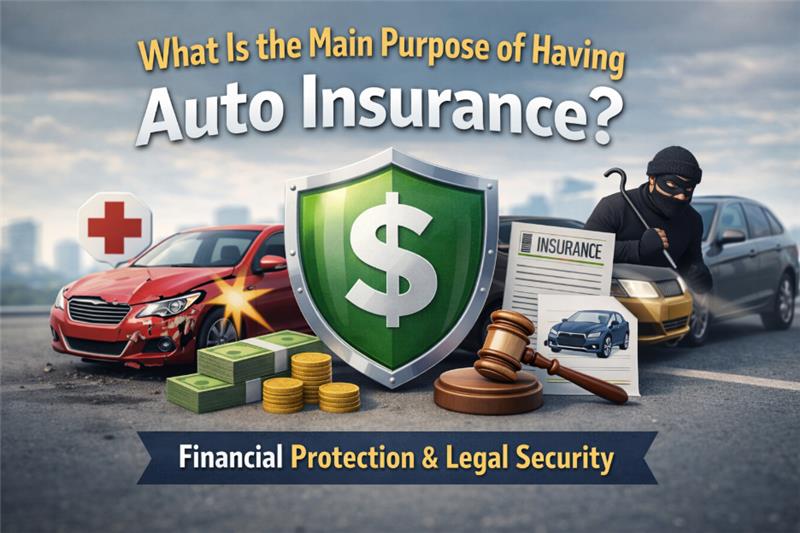
Quick Answer: The main purpose of auto insurance is to protect you financially when accidents, theft, or vehicle damage occur. Car insurance transfers financial risk from you to an insurance company, covering costs that could otherwise run into tens of thousands of dollars. It also fulfills a legal requirement in almost every U.S. state, ensuring that all drivers on the road have a baseline ability to compensate others for harm caused.
Most people buy car insurance because they have to. Their state requires it, their lender demands it, and driving without it feels like tempting fate. But the real purpose of auto insurance goes deeper than compliance - and once you understand it, you stop thinking of your premium as a wasted expense.
The Core Purpose of Car Insurance: Financial Protection Against Unpredictable Risk
Here's the thing most people miss auto insurance isn't really about your car. It's about protecting your financial life.
A single at-fault accident can generate medical bills, legal fees, and property damage costs that easily reach devastating levels. Without insurance, that liability lands directly on you - your savings, your income, potentially your home. The purpose of insurance, in its most fundamental sense, is risk transfer. You pay a predictable premium, so the insurance company absorbs an unpredictable catastrophic loss.
The Insurance Information Institute reports that the average auto liability claim for bodily injury runs well into the tens of thousands of dollars. Collision and comprehensive claims add significantly more. These aren't edge-case scenarios - they happen every day on every road.
Auto insurance is a type of indemnity contract, meaning it's designed to restore you (or the other party) to the financial position you were in before the loss. It doesn't profit you. It protects you.
What Auto Insurance Actually Covers - The Four Core Functions
The purpose of car insurance splits into four distinct protections, each addressing a different kind of financial exposure.
Liability coverage is the foundation of every policy. It pays for damage and injuries you cause to others when you're at fault. This is the coverage that protects your assets from lawsuits. Property damage liability and bodily injury liability together form the legal minimum in most states. If you're unsure what terms like these mean, AZ Insurance's glossary is a helpful place to start.
Collision coverage handles damage to your own vehicle after an accident, regardless of fault. If you rear-end someone or get hit in a parking lot, collision pays for repairs minus your deductible.
Comprehensive coverage is the protection you need when the accident isn't really an "accident" - theft, hail, flooding, a deer running into your door. It covers damage caused by events outside normal driving.
Personal injury protection (PIP) and uninsured motorist coverage round out a solid policy. PIP covers your medical expenses regardless of who caused the crash. Uninsured motorist protection steps in when the at-fault driver has no insurance - which, according to the Insurance Research Council, describes roughly 1 in 8 American drivers.
Auto Insurance Requirements in Texas
If you drive in Texas, state law requires minimum liability coverage known as 30/60/25. Here’s what those numbers mean:
Coverage | Texas Minimum | What It Covers |
Bodily Injury (per person) | $30,000 | Medical costs for one injured person in an accident you cause |
Bodily Injury (per accident) | $60,000 | Total medical costs for all injured parties in one accident |
Property Damage | $25,000 | Repairs to another person’s vehicle or property you damage |
Driving without insurance in Texas is a serious offense. Penalties include:
Fines starting at $175–$350 for a first offense, and up to $1,000 for repeat violations
License and vehicle registration suspension
A $250 annual surcharge for three years added to your license fee
Full personal liability for any damages or injuries you cause - with no insurer to absorb the cost
Texas also has one of the highest rates of uninsured drivers in the country - approximately 1 in 5 Texas drivers are uninsured. That's why adding Uninsured/Underinsured Motorist (UM/UIM) coverage to your policy isn't just smart - it's essential in this state. If an uninsured driver hits you and you don't carry UM coverage, you're left paying out of pocket for your own injuries and repairs.
Important note: Texas's 30/60/25 minimums are a legal floor, not a recommendation. A single serious accident can generate medical bills and legal costs that far exceed these limits. Most insurance professionals recommend carrying at least 100/300/100 in liability coverage for meaningful financial protection.

The Legal Purpose of Car Insurance: Why the State Gets Involved
Every U.S. state except New Hampshire mandates some form of car insurance - and even New Hampshire requires drivers to demonstrate financial responsibility. This isn't bureaucratic overreach. It's a social contract.
When you drive, you're operating a powerful vehicle that carries inherent risks on the road. The purpose of mandatory car insurance is to ensure that if you do cause harm, there's a mechanism to compensate the victims-regardless of whether you happen to have money in the bank. Liability minimums vary by state, but the logic is consistent: protecting the innocent third party.
And this is where it gets interesting. Liability insurance doesn't protect the policyholder - it protects everyone else. You buy it so that your accident doesn't ruin someone else's financial life. That's a civic purpose, not just a personal one. For drivers wondering whether coverage is still necessary even when a vehicle sits idle, this breakdown on whether you need car insurance if you don't drive answers exactly that question.
Frequently Asked Questions
Q: What is the main purpose of having auto insurance?
A: The main purpose is financial protection - for yourself, your passengers, and others on the road. It covers costs from accidents, theft, and damage that would otherwise fall entirely on you.
Q: Is the purpose of car insurance different from other types of insurance?
A: The core purpose of insurance is the same across all types: transfer financial risk from an individual to an insurer. Car insurance applies this specifically to vehicle-related risks like accidents, liability, and theft.
Q: Does car insurance cover me if someone without insurance hits me?
A: Yes - if you carry uninsured motorist coverage. This is why adding it to your policy is often worth the modest cost to increase.
Q: What happens if I drive without meeting the purpose of car insurance legally? A: Driving uninsured risks of license suspension, fines, and personal liability for any accident costs. In most states, a single at-fault accident without coverage can result in a lawsuit that follows you for years.
Q: Does a higher deductible change the purpose of car insurance?
A: No - the purpose stays the same. A higher deductible lowers your premium but increases what you pay out-of-pocket before coverage activates. It's a trade-off, not a change in function. Auto insurance exists because financial catastrophe doesn't announce itself before a collision does. The purpose of car insurance - whether you're thinking legally, financially, or socially - is to make sure that a bad day on the road doesn't become a life-altering financial crisis.
Q: Does commercial auto insurance serve a different purpose than personal auto insurance?
A: Yes — and the difference matters more than most drivers realize. Personal auto insurance is designed to protect you during everyday driving: commuting, errands, personal trips. Commercial auto insurance is built for vehicles used in the course of business — hauling equipment, transporting employees, visiting job sites, or making deliveries. If you use your personal vehicle for work and file a claim after an accident, your personal insurer can deny it on the grounds of commercial use. Commercial auto insurance closes that gap. It also provides higher liability limits, coverage for multiple drivers, and the ability to issue certificates of insurance — something personal policies cannot do. If you run a business in Houston and any vehicle touches your operations, commercial auto insurance is not optional — it is essential.
That's worth understanding before you shop for coverage, not after you need it. At AZ Insurance, we make that process simple. Whether you're looking for basic auto coverage, want to explore roadside protection, or need a quick quote to see your options, our team is ready to help you find the right fit. With 15 locations across Houston and a reputation backed by real customers, AZ Insurance is where protection meets peace of mind. Don't wait for the unexpected - get covered today.
Quick Answer: The main purpose of auto insurance is to protect you financially when accidents, theft, or vehicle damage occur. Car insurance transfers financial risk from you to an insurance company, covering costs that could otherwise run into tens of thousands of dollars. It also fulfills a legal requirement in almost every U.S. state, ensuring that all drivers on the road have a baseline ability to compensate others for harm caused.
Most people buy car insurance because they have to. Their state requires it, their lender demands it, and driving without it feels like tempting fate. But the real purpose of auto insurance goes deeper than compliance - and once you understand it, you stop thinking of your premium as a wasted expense.
The Core Purpose of Car Insurance: Financial Protection Against Unpredictable Risk
Here's the thing most people miss auto insurance isn't really about your car. It's about protecting your financial life.
A single at-fault accident can generate medical bills, legal fees, and property damage costs that easily reach devastating levels. Without insurance, that liability lands directly on you - your savings, your income, potentially your home. The purpose of insurance, in its most fundamental sense, is risk transfer. You pay a predictable premium, so the insurance company absorbs an unpredictable catastrophic loss.
The Insurance Information Institute reports that the average auto liability claim for bodily injury runs well into the tens of thousands of dollars. Collision and comprehensive claims add significantly more. These aren't edge-case scenarios - they happen every day on every road.
Auto insurance is a type of indemnity contract, meaning it's designed to restore you (or the other party) to the financial position you were in before the loss. It doesn't profit you. It protects you.
What Auto Insurance Actually Covers - The Four Core Functions
The purpose of car insurance splits into four distinct protections, each addressing a different kind of financial exposure.
Liability coverage is the foundation of every policy. It pays for damage and injuries you cause to others when you're at fault. This is the coverage that protects your assets from lawsuits. Property damage liability and bodily injury liability together form the legal minimum in most states. If you're unsure what terms like these mean, AZ Insurance's glossary is a helpful place to start.
Collision coverage handles damage to your own vehicle after an accident, regardless of fault. If you rear-end someone or get hit in a parking lot, collision pays for repairs minus your deductible.
Comprehensive coverage is the protection you need when the accident isn't really an "accident" - theft, hail, flooding, a deer running into your door. It covers damage caused by events outside normal driving.
Personal injury protection (PIP) and uninsured motorist coverage round out a solid policy. PIP covers your medical expenses regardless of who caused the crash. Uninsured motorist protection steps in when the at-fault driver has no insurance - which, according to the Insurance Research Council, describes roughly 1 in 8 American drivers.
Auto Insurance Requirements in Texas
If you drive in Texas, state law requires minimum liability coverage known as 30/60/25. Here’s what those numbers mean:
Coverage | Texas Minimum | What It Covers |
Bodily Injury (per person) | $30,000 | Medical costs for one injured person in an accident you cause |
Bodily Injury (per accident) | $60,000 | Total medical costs for all injured parties in one accident |
Property Damage | $25,000 | Repairs to another person’s vehicle or property you damage |
Driving without insurance in Texas is a serious offense. Penalties include:
Fines starting at $175–$350 for a first offense, and up to $1,000 for repeat violations
License and vehicle registration suspension
A $250 annual surcharge for three years added to your license fee
Full personal liability for any damages or injuries you cause - with no insurer to absorb the cost
Texas also has one of the highest rates of uninsured drivers in the country - approximately 1 in 5 Texas drivers are uninsured. That's why adding Uninsured/Underinsured Motorist (UM/UIM) coverage to your policy isn't just smart - it's essential in this state. If an uninsured driver hits you and you don't carry UM coverage, you're left paying out of pocket for your own injuries and repairs.
Important note: Texas's 30/60/25 minimums are a legal floor, not a recommendation. A single serious accident can generate medical bills and legal costs that far exceed these limits. Most insurance professionals recommend carrying at least 100/300/100 in liability coverage for meaningful financial protection.
The Legal Purpose of Car Insurance: Why the State Gets Involved
Every U.S. state except New Hampshire mandates some form of car insurance - and even New Hampshire requires drivers to demonstrate financial responsibility. This isn't bureaucratic overreach. It's a social contract.
When you drive, you're operating a powerful vehicle that carries inherent risks on the road. The purpose of mandatory car insurance is to ensure that if you do cause harm, there's a mechanism to compensate the victims-regardless of whether you happen to have money in the bank. Liability minimums vary by state, but the logic is consistent: protecting the innocent third party.
And this is where it gets interesting. Liability insurance doesn't protect the policyholder - it protects everyone else. You buy it so that your accident doesn't ruin someone else's financial life. That's a civic purpose, not just a personal one. For drivers wondering whether coverage is still necessary even when a vehicle sits idle, this breakdown on whether you need car insurance if you don't drive answers exactly that question.
Frequently Asked Questions
Q: What is the main purpose of having auto insurance?
A: The main purpose is financial protection - for yourself, your passengers, and others on the road. It covers costs from accidents, theft, and damage that would otherwise fall entirely on you.
Q: Is the purpose of car insurance different from other types of insurance?
A: The core purpose of insurance is the same across all types: transfer financial risk from an individual to an insurer. Car insurance applies this specifically to vehicle-related risks like accidents, liability, and theft.
Q: Does car insurance cover me if someone without insurance hits me?
A: Yes - if you carry uninsured motorist coverage. This is why adding it to your policy is often worth the modest cost to increase.
Q: What happens if I drive without meeting the purpose of car insurance legally? A: Driving uninsured risks of license suspension, fines, and personal liability for any accident costs. In most states, a single at-fault accident without coverage can result in a lawsuit that follows you for years.
Q: Does a higher deductible change the purpose of car insurance?
A: No - the purpose stays the same. A higher deductible lowers your premium but increases what you pay out-of-pocket before coverage activates. It's a trade-off, not a change in function. Auto insurance exists because financial catastrophe doesn't announce itself before a collision does. The purpose of car insurance - whether you're thinking legally, financially, or socially - is to make sure that a bad day on the road doesn't become a life-altering financial crisis.
Q: Does commercial auto insurance serve a different purpose than personal auto insurance?
A: Yes — and the difference matters more than most drivers realize. Personal auto insurance is designed to protect you during everyday driving: commuting, errands, personal trips. Commercial auto insurance is built for vehicles used in the course of business — hauling equipment, transporting employees, visiting job sites, or making deliveries. If you use your personal vehicle for work and file a claim after an accident, your personal insurer can deny it on the grounds of commercial use. Commercial auto insurance closes that gap. It also provides higher liability limits, coverage for multiple drivers, and the ability to issue certificates of insurance — something personal policies cannot do. If you run a business in Houston and any vehicle touches your operations, commercial auto insurance is not optional — it is essential.
That's worth understanding before you shop for coverage, not after you need it. At AZ Insurance, we make that process simple. Whether you're looking for basic auto coverage, want to explore roadside protection, or need a quick quote to see your options, our team is ready to help you find the right fit. With 15 locations across Houston and a reputation backed by real customers, AZ Insurance is where protection meets peace of mind. Don't wait for the unexpected - get covered today.
Latest Blogs

Buying a Car in Houston? What Insurance You Need Before You Drive Off the Lot

Landscaping Insurance in Houston: The Three Gaps Your Personal Policy Leaves Open

A Storm Claim Cannot Raise Your Texas Home Insurance Rate. A Broken Pipe Can.

A Storm Hits Before Your Renewal: The Texas Claim Timeline, and the New Right You Have in 2026

Your Roof Before the Storm: The Four Things to Check on Your Policy While You Still Can

Commercial Property Insurance Coverage Explained: What's Protected and What's Not
Let A-Z Auto Insurance Help You Find Affordable Coverage
Connect with our experienced team today & get reliable, affordable insurance designed around your needs.
Contact Us!
Let A-Z Auto Insurance Help
You Find Affordable Coverage
Connect with our experienced team today & get reliable, affordable insurance designed around your needs.
Contact Us!
Let A-Z Auto
Insurance Help You
Find Affordable Coverage
Connect with our experienced team today & get reliable, affordable insurance designed around your needs.
Contact Us!
Let A-Z Auto Insurance Help
You Find Affordable Coverage
Connect with our experienced team today & get reliable, affordable insurance designed around your needs.
Contact Us!
Latest New & Blogs
Latest New & Blogs
Related Blog Posts
Related Blog Posts
A Storm Claim Cannot Raise Your Texas Home Insurance Rate. A Broken Pipe Can.
Texas law protects weather claims from rate increases and nonrenewal. The claims that count against you are the everyday ones. Here is the exact line.
A Storm Claim Cannot Raise Your Texas Home Insurance Rate. A Broken Pipe Can.
Texas law protects weather claims from rate increases and nonrenewal. The claims that count against you are the everyday ones. Here is the exact line.
A Storm Claim Cannot Raise Your Texas Home Insurance Rate. A Broken Pipe Can.
Texas law protects weather claims from rate increases and nonrenewal. The claims that count against you are the everyday ones. Here is the exact line.
A Storm Hits Before Your Renewal: The Texas Claim Timeline, and the New Right You Have in 2026
The deadlines your Texas insurer must meet on a storm claim, the appraisal right added for 2026, and what a claim does to your renewal in Fort Bend.
A Storm Hits Before Your Renewal: The Texas Claim Timeline, and the New Right You Have in 2026
The deadlines your Texas insurer must meet on a storm claim, the appraisal right added for 2026, and what a claim does to your renewal in Fort Bend.
A Storm Hits Before Your Renewal: The Texas Claim Timeline, and the New Right You Have in 2026
The deadlines your Texas insurer must meet on a storm claim, the appraisal right added for 2026, and what a claim does to your renewal in Fort Bend.
Your Roof Before the Storm: The Four Things to Check on Your Policy While You Still Can
Four things to check on your Texas homeowners policy before a storm: settlement basis, deductible percentage, roof age schedule, and cosmetic damage.
Your Roof Before the Storm: The Four Things to Check on Your Policy While You Still Can
Four things to check on your Texas homeowners policy before a storm: settlement basis, deductible percentage, roof age schedule, and cosmetic damage.
Your Roof Before the Storm: The Four Things to Check on Your Policy While You Still Can
Four things to check on your Texas homeowners policy before a storm: settlement basis, deductible percentage, roof age schedule, and cosmetic damage.
A Storm Claim Cannot Raise Your Texas Home Insurance Rate. A Broken Pipe Can.
Texas law protects weather claims from rate increases and nonrenewal. The claims that count against you are the everyday ones. Here is the exact line.
A Storm Hits Before Your Renewal: The Texas Claim Timeline, and the New Right You Have in 2026
The deadlines your Texas insurer must meet on a storm claim, the appraisal right added for 2026, and what a claim does to your renewal in Fort Bend.