Quick support from trusted insurance professionals Call +1 713-777-2886 today!
Quick professional support Call +1 713-777-2886 today!
Quick professional support Call +1 713-777-2886 today!


Table of Content
Title

Let AZ Insurance Help You
Find Affordable Coverage
Connect with our experienced team today & get reliable, affordable insurance designed around your needs.
Contact Us!

Let A-Z Auto Insurance Help You Find Affordable Coverage
Connect with our experienced team today & get reliable, affordable insurance designed around your needs.
Contact Us!
Water Damage vs Flood: What Houston Home Insurance Covers
Water Damage vs Flood: What Houston Home Insurance Covers
Water Damage vs Flood: What Houston Home Insurance Covers
Water Damage vs Flood: What Houston Home Insurance Covers
Water Damage vs Flood: What Houston Home Insurance Covers
Reviewed by AZ Insurance Agency, licensed in Texas, serving Houston since 2003.
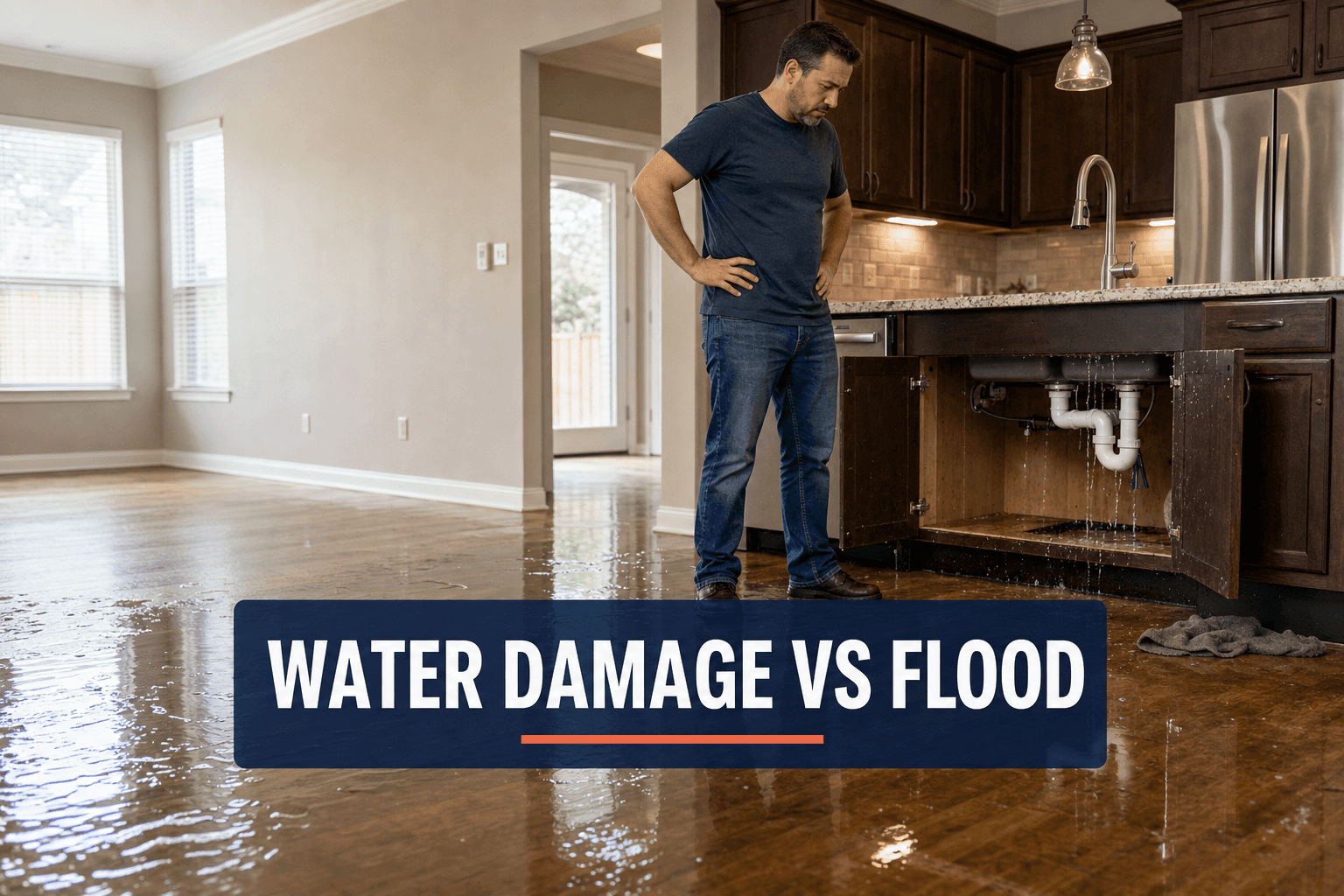
Every Houston homeowner learns the difference between water damage and flood the hard way, usually standing in a wet room wondering whether the claim will be paid. The words sound interchangeable, but to your insurance policy they are three separate categories with three separate outcomes. Knowing which is which, before the water shows up, is the difference between a covered loss and a bill you never saw coming. It starts with understanding what your homeowners policy actually covers and does not cover.
Short answer: A standard Houston homeowners policy covers sudden, accidental water damage inside your home, like a burst pipe or an appliance overflow, but it does not cover flood damage from rising external water. Flood is a separate policy through the National Flood Insurance Program or a private carrier. A third category, water backup of sewers and drains, usually needs its own endorsement. Call us at 713-777-2886 or visit aztexas.com to close the gaps before the next storm.
Key Takeaways
Your homeowners policy covers sudden and accidental water damage, like a burst pipe or a failed washing machine hose, but not gradual leaks tied to deferred maintenance.
Flood means rising water that enters from outside and the ground up, and it is never covered by a standard homeowners policy. It requires a separate NFIP or private flood policy.
Water backup of sewers and drains is a third category that most standard policies exclude and that flood policies do not cover, so it needs its own endorsement.
One inch of water inside a home can cause more than $26,000 in damage, and the average NFIP flood claim runs around $68,000, according to TDI citing NFIP data.
NFIP flood policies carry a 30 day waiting period, so flood coverage cannot be arranged the week a storm enters the Gulf.
A water backup endorsement typically costs $50 to $250 a year and starts around $5,000 in coverage, small next to professional sewage cleanup.
In storms, wind and flood are often two separate claims: wind under your homeowners policy, rising water under your flood policy.
What Counts as Water Damage
According to the Texas Department of Insurance, most homeowners policies cover sudden and accidental water damage. Classic examples include:
A pipe bursts inside a wall
A toilet overflows from a clogged fixture
A washing machine hose breaks and floods the laundry room
A dishwasher supply line fails and soaks the kitchen floor
If mold develops on items damaged by a covered sudden event, that mold damage is typically covered as well. Your policy pays to repair the structure and replace personal property, up to your coverage limits.
The operative word is sudden. The damage must happen quickly and unexpectedly, not slowly over weeks or months. A roof that slowly lets water in over years, a pipe that dripped behind a cabinet for months, or seepage through a wall are all typically excluded. TDI is explicit about this: policies usually will not cover damage from gradual leaks or seepage.
What Counts as a Flood
In insurance terms, a flood means rising water that originates outside your home and enters from the ground up. Think:
A bayou or creek overflows and reaches your slab or foundation
Street level rainwater accumulates faster than drainage can handle and enters through doors or low lying openings
Hurricane storm surge pushes water inland
A lake, retention pond, or drainage channel overtops its banks
This is precisely where your standard homeowners policy stops. TDI confirms that home policies do not cover floods. You need a separate flood policy, either through the National Flood Insurance Program (NFIP) or a private flood carrier.
Two numbers put this in perspective: just one inch of water inside a home can cause over $26,000 in damage, and the average NFIP flood claim payment is around $68,000, according to TDI citing NFIP data. These are not marginal losses.
A critical detail for Houston homeowners: NFIP flood policies carry a 30 day waiting period before coverage takes effect. Once a named storm is forecast to enter the Gulf, most insurers stop writing or changing policies. Flood coverage is not something you arrange the week before a hurricane. For more on choosing between federal and private options, see our post on NFIP vs private flood insurance in Houston, and if you rent rather than own, how renters insurance handles flood in Houston.

The Gray Zone: Gradual Leaks and Maintenance
Between sudden and accidental and flood sits a category that catches many homeowners off guard: slow water intrusion tied to deferred maintenance.
These situations are almost always excluded:
A pipe that dripped inside a wall for months before causing rot or mold
A shower pan that slowly leaked into the subfloor over a year
Foundation seepage that occurred every rainstorm for years
Condensation buildup from a failing HVAC unit that went unnoticed
Insurers exclude these losses because a homeowners policy is not a maintenance agreement. The expectation is that homeowners inspect, maintain, and repair. If damage was preventable through reasonable upkeep and you did not act, a claim will likely be denied. Inspect your home regularly, address small drips before they become big repairs, and document any maintenance work you do. If a claim ever arises, that documentation matters.
Water Backup of Sewers and Drains: The Coverage Most Houston Homeowners Miss
Here is a scenario many Houston homeowners have faced firsthand: a heavy rainstorm overwhelms the city sewer system, sewage reverses direction, and backs up through a ground floor drain, toilet, or utility sink. The result is a room full of contaminated water.
That scenario is not covered by flood insurance. NFIP and private flood policies cover rising external water, not sewage that reverses up through your plumbing. It is also not covered by a standard homeowners policy. TDI confirms that whether sewer backup damage is covered depends on your specific policy, and most standard policies exclude it.
To cover this risk, you need a water backup of sewers and drains endorsement. This optional add on covers:
Sewage backing up from a city main into your drains
Sump pump overflow or failure
Drain backup caused by a clogged or overwhelmed line outside your property
According to Farmers Insurance, water backup coverage limits typically start at $5,000 and go up from there. Annual premium generally ranges from $50 to $250 depending on your coverage limit, home age, and local sewer infrastructure, according to The Hanover Insurance Group. What the endorsement does not cover: the cost to repair the broken sump pump or failed sewer pipe itself, or flood damage from rising external water, which still requires a separate flood policy.
Coverage Scenario Table
Situation | Covered by Standard Homeowners? | Covered by Flood Policy? | Needs Separate Endorsement? |
|---|---|---|---|
Burst pipe floods kitchen | Yes | No | No |
Washing machine hose breaks and overflows | Yes | No | No |
Roof fails suddenly in storm, rain enters | Usually yes | No | No |
Slow roof leak unnoticed for months | No | No | No (maintenance exclusion) |
Bayou or street flooding enters home | No | Yes (NFIP or private) | Separate flood policy required |
Hurricane storm surge enters home | No | Yes (NFIP or private) | Separate flood policy required |
City sewer backs up through toilet or drain | No (standard policy) | No | Yes (water backup endorsement) |
Sump pump fails during heavy rain | No (standard policy) | No | Yes (water backup endorsement) |
Slow basement seepage over years | No | No | No (maintenance exclusion) |
Why This Matters More in Houston Than Almost Anywhere Else
Houston sits on flat, clay heavy soil with limited natural elevation change. The bayou system that crisscrosses the metro has repeatedly overtopped during major rain events. Large portions of the city lie in or near FEMA designated flood zones, and homes outside those zones have flooded too. Since 1996, 99% of U.S. counties have experienced at least one flood event, according to TDI. Flood does not stay neatly inside zone boundaries.
Houston's aging sewer infrastructure adds another layer of risk. During intense rain events, city sewer systems can reach capacity and push water back through residential connections. A water backup endorsement that costs $50 to $250 per year looks very different after you price out professional sewage remediation, which can run into the thousands.
There is also a timing reality specific to hurricane season. If you wait until a storm is in the Gulf to think about flood insurance, it is too late. The 30 day waiting period means the window to protect yourself closes well before a storm makes landfall, which is why getting your home ready before hurricane season matters. For a broader look at what your policy includes, see whether homeowners insurance covers flood in Texas.
How to Close the Gaps
Three concrete steps for Houston homeowners:
Step 1: Confirm exactly what your current homeowners policy covers. Pull your declarations page and look specifically for flood exclusions and water backup exclusions. Do not assume. Call your agent and ask, in plain language, whether sewer backup is covered and whether rising water is covered.
Step 2: Add a water backup endorsement. For most Houston homeowners, the annual cost is low relative to the risk. Ask your agent about coverage limits that reflect the value of what you store in lower level spaces and the cost of professional sewage cleanup.
Step 3: Buy a separate flood policy. If your home is in a FEMA designated high risk flood zone, your mortgage lender likely requires it. If you are not in a high risk zone, you can still purchase NFIP flood coverage. Private flood insurance is also available and may offer higher limits, shorter waiting periods, or broader coverage definitions.
Need help reviewing your coverage? AZ Insurance Agency is an independent agency serving Houston and the Dallas area since 2003, with 15 offices and a bilingual team ready to compare options across multiple carriers for your specific address and situation. Call us at 713-777-2886 or explore your options at aztexas.com/homeowners-insurance.
FAQ
Q: Does my Houston homeowners insurance cover hurricane flooding?
No. Flooding from hurricane storm surge or rainfall accumulation entering from outside is not covered by a standard homeowners policy. You need a separate flood policy through the NFIP or a private carrier. Your homeowners policy does typically cover wind damage to the structure from the same storm, so it is common for storm victims to have two separate claims: one for wind under homeowners and one for flood under their flood policy.
Q: What is a water backup endorsement and do I need one in Houston?
A water backup endorsement is an optional addition to your homeowners policy that covers damage caused by sewage or drain water reversing up through your home's plumbing. Standard homeowners policies exclude this. Given Houston's sewer infrastructure challenges and the frequency of heavy rain events that overwhelm city systems, this endorsement is worth strong consideration for most Houston homeowners, especially those with ground floor bathrooms, finished lower levels, or older plumbing.
Q: How much does flood insurance cost in Houston?
NFIP flood insurance premiums vary based on your property's flood zone designation, elevation, structure type, and coverage limits selected. Homes in high risk zones carry higher premiums. Private flood insurance can be priced higher or lower depending on the carrier and your property profile. Use the NFIP quoting tool at FloodSmart.gov or speak with an independent agent to compare your options before buying.
Q: What is the difference between NFIP and private flood insurance?
The NFIP is the federal flood insurance program administered by FEMA and sold through licensed agents nationwide. It provides standardized coverage with set limits: up to $250,000 for the structure and up to $100,000 for contents. Private flood insurance is offered by private carriers and may provide higher limits, broader definitions of covered losses, or shorter waiting periods than the standard NFIP 30 day window. Both are legitimate options. Which one makes more sense depends on your property's location, value, and risk profile.
Q: Is gradual water damage from a slow leak covered?
Generally no. Both TDI guidance and standard homeowners policy language exclude damage from gradual leaks, seepage, or damage that resulted from a lack of maintenance. If a supply line under a sink slowly corroded and leaked over several months, the resulting mold or rot would likely be denied. The standard for covered water damage is that it must be sudden and accidental.
Related Articles
Reviewed by AZ Insurance Agency, licensed in Texas, serving Houston since 2003.
Every Houston homeowner learns the difference between water damage and flood the hard way, usually standing in a wet room wondering whether the claim will be paid. The words sound interchangeable, but to your insurance policy they are three separate categories with three separate outcomes. Knowing which is which, before the water shows up, is the difference between a covered loss and a bill you never saw coming. It starts with understanding what your homeowners policy actually covers and does not cover.
Short answer: A standard Houston homeowners policy covers sudden, accidental water damage inside your home, like a burst pipe or an appliance overflow, but it does not cover flood damage from rising external water. Flood is a separate policy through the National Flood Insurance Program or a private carrier. A third category, water backup of sewers and drains, usually needs its own endorsement. Call us at 713-777-2886 or visit aztexas.com to close the gaps before the next storm.
Key Takeaways
Your homeowners policy covers sudden and accidental water damage, like a burst pipe or a failed washing machine hose, but not gradual leaks tied to deferred maintenance.
Flood means rising water that enters from outside and the ground up, and it is never covered by a standard homeowners policy. It requires a separate NFIP or private flood policy.
Water backup of sewers and drains is a third category that most standard policies exclude and that flood policies do not cover, so it needs its own endorsement.
One inch of water inside a home can cause more than $26,000 in damage, and the average NFIP flood claim runs around $68,000, according to TDI citing NFIP data.
NFIP flood policies carry a 30 day waiting period, so flood coverage cannot be arranged the week a storm enters the Gulf.
A water backup endorsement typically costs $50 to $250 a year and starts around $5,000 in coverage, small next to professional sewage cleanup.
In storms, wind and flood are often two separate claims: wind under your homeowners policy, rising water under your flood policy.
What Counts as Water Damage
According to the Texas Department of Insurance, most homeowners policies cover sudden and accidental water damage. Classic examples include:
A pipe bursts inside a wall
A toilet overflows from a clogged fixture
A washing machine hose breaks and floods the laundry room
A dishwasher supply line fails and soaks the kitchen floor
If mold develops on items damaged by a covered sudden event, that mold damage is typically covered as well. Your policy pays to repair the structure and replace personal property, up to your coverage limits.
The operative word is sudden. The damage must happen quickly and unexpectedly, not slowly over weeks or months. A roof that slowly lets water in over years, a pipe that dripped behind a cabinet for months, or seepage through a wall are all typically excluded. TDI is explicit about this: policies usually will not cover damage from gradual leaks or seepage.
What Counts as a Flood
In insurance terms, a flood means rising water that originates outside your home and enters from the ground up. Think:
A bayou or creek overflows and reaches your slab or foundation
Street level rainwater accumulates faster than drainage can handle and enters through doors or low lying openings
Hurricane storm surge pushes water inland
A lake, retention pond, or drainage channel overtops its banks
This is precisely where your standard homeowners policy stops. TDI confirms that home policies do not cover floods. You need a separate flood policy, either through the National Flood Insurance Program (NFIP) or a private flood carrier.
Two numbers put this in perspective: just one inch of water inside a home can cause over $26,000 in damage, and the average NFIP flood claim payment is around $68,000, according to TDI citing NFIP data. These are not marginal losses.
A critical detail for Houston homeowners: NFIP flood policies carry a 30 day waiting period before coverage takes effect. Once a named storm is forecast to enter the Gulf, most insurers stop writing or changing policies. Flood coverage is not something you arrange the week before a hurricane. For more on choosing between federal and private options, see our post on NFIP vs private flood insurance in Houston, and if you rent rather than own, how renters insurance handles flood in Houston.
The Gray Zone: Gradual Leaks and Maintenance
Between sudden and accidental and flood sits a category that catches many homeowners off guard: slow water intrusion tied to deferred maintenance.
These situations are almost always excluded:
A pipe that dripped inside a wall for months before causing rot or mold
A shower pan that slowly leaked into the subfloor over a year
Foundation seepage that occurred every rainstorm for years
Condensation buildup from a failing HVAC unit that went unnoticed
Insurers exclude these losses because a homeowners policy is not a maintenance agreement. The expectation is that homeowners inspect, maintain, and repair. If damage was preventable through reasonable upkeep and you did not act, a claim will likely be denied. Inspect your home regularly, address small drips before they become big repairs, and document any maintenance work you do. If a claim ever arises, that documentation matters.
Water Backup of Sewers and Drains: The Coverage Most Houston Homeowners Miss
Here is a scenario many Houston homeowners have faced firsthand: a heavy rainstorm overwhelms the city sewer system, sewage reverses direction, and backs up through a ground floor drain, toilet, or utility sink. The result is a room full of contaminated water.
That scenario is not covered by flood insurance. NFIP and private flood policies cover rising external water, not sewage that reverses up through your plumbing. It is also not covered by a standard homeowners policy. TDI confirms that whether sewer backup damage is covered depends on your specific policy, and most standard policies exclude it.
To cover this risk, you need a water backup of sewers and drains endorsement. This optional add on covers:
Sewage backing up from a city main into your drains
Sump pump overflow or failure
Drain backup caused by a clogged or overwhelmed line outside your property
According to Farmers Insurance, water backup coverage limits typically start at $5,000 and go up from there. Annual premium generally ranges from $50 to $250 depending on your coverage limit, home age, and local sewer infrastructure, according to The Hanover Insurance Group. What the endorsement does not cover: the cost to repair the broken sump pump or failed sewer pipe itself, or flood damage from rising external water, which still requires a separate flood policy.
Coverage Scenario Table
Situation | Covered by Standard Homeowners? | Covered by Flood Policy? | Needs Separate Endorsement? |
|---|---|---|---|
Burst pipe floods kitchen | Yes | No | No |
Washing machine hose breaks and overflows | Yes | No | No |
Roof fails suddenly in storm, rain enters | Usually yes | No | No |
Slow roof leak unnoticed for months | No | No | No (maintenance exclusion) |
Bayou or street flooding enters home | No | Yes (NFIP or private) | Separate flood policy required |
Hurricane storm surge enters home | No | Yes (NFIP or private) | Separate flood policy required |
City sewer backs up through toilet or drain | No (standard policy) | No | Yes (water backup endorsement) |
Sump pump fails during heavy rain | No (standard policy) | No | Yes (water backup endorsement) |
Slow basement seepage over years | No | No | No (maintenance exclusion) |
Why This Matters More in Houston Than Almost Anywhere Else
Houston sits on flat, clay heavy soil with limited natural elevation change. The bayou system that crisscrosses the metro has repeatedly overtopped during major rain events. Large portions of the city lie in or near FEMA designated flood zones, and homes outside those zones have flooded too. Since 1996, 99% of U.S. counties have experienced at least one flood event, according to TDI. Flood does not stay neatly inside zone boundaries.
Houston's aging sewer infrastructure adds another layer of risk. During intense rain events, city sewer systems can reach capacity and push water back through residential connections. A water backup endorsement that costs $50 to $250 per year looks very different after you price out professional sewage remediation, which can run into the thousands.
There is also a timing reality specific to hurricane season. If you wait until a storm is in the Gulf to think about flood insurance, it is too late. The 30 day waiting period means the window to protect yourself closes well before a storm makes landfall, which is why getting your home ready before hurricane season matters. For a broader look at what your policy includes, see whether homeowners insurance covers flood in Texas.
How to Close the Gaps
Three concrete steps for Houston homeowners:
Step 1: Confirm exactly what your current homeowners policy covers. Pull your declarations page and look specifically for flood exclusions and water backup exclusions. Do not assume. Call your agent and ask, in plain language, whether sewer backup is covered and whether rising water is covered.
Step 2: Add a water backup endorsement. For most Houston homeowners, the annual cost is low relative to the risk. Ask your agent about coverage limits that reflect the value of what you store in lower level spaces and the cost of professional sewage cleanup.
Step 3: Buy a separate flood policy. If your home is in a FEMA designated high risk flood zone, your mortgage lender likely requires it. If you are not in a high risk zone, you can still purchase NFIP flood coverage. Private flood insurance is also available and may offer higher limits, shorter waiting periods, or broader coverage definitions.
Need help reviewing your coverage? AZ Insurance Agency is an independent agency serving Houston and the Dallas area since 2003, with 15 offices and a bilingual team ready to compare options across multiple carriers for your specific address and situation. Call us at 713-777-2886 or explore your options at aztexas.com/homeowners-insurance.
FAQ
Q: Does my Houston homeowners insurance cover hurricane flooding?
No. Flooding from hurricane storm surge or rainfall accumulation entering from outside is not covered by a standard homeowners policy. You need a separate flood policy through the NFIP or a private carrier. Your homeowners policy does typically cover wind damage to the structure from the same storm, so it is common for storm victims to have two separate claims: one for wind under homeowners and one for flood under their flood policy.
Q: What is a water backup endorsement and do I need one in Houston?
A water backup endorsement is an optional addition to your homeowners policy that covers damage caused by sewage or drain water reversing up through your home's plumbing. Standard homeowners policies exclude this. Given Houston's sewer infrastructure challenges and the frequency of heavy rain events that overwhelm city systems, this endorsement is worth strong consideration for most Houston homeowners, especially those with ground floor bathrooms, finished lower levels, or older plumbing.
Q: How much does flood insurance cost in Houston?
NFIP flood insurance premiums vary based on your property's flood zone designation, elevation, structure type, and coverage limits selected. Homes in high risk zones carry higher premiums. Private flood insurance can be priced higher or lower depending on the carrier and your property profile. Use the NFIP quoting tool at FloodSmart.gov or speak with an independent agent to compare your options before buying.
Q: What is the difference between NFIP and private flood insurance?
The NFIP is the federal flood insurance program administered by FEMA and sold through licensed agents nationwide. It provides standardized coverage with set limits: up to $250,000 for the structure and up to $100,000 for contents. Private flood insurance is offered by private carriers and may provide higher limits, broader definitions of covered losses, or shorter waiting periods than the standard NFIP 30 day window. Both are legitimate options. Which one makes more sense depends on your property's location, value, and risk profile.
Q: Is gradual water damage from a slow leak covered?
Generally no. Both TDI guidance and standard homeowners policy language exclude damage from gradual leaks, seepage, or damage that resulted from a lack of maintenance. If a supply line under a sink slowly corroded and leaked over several months, the resulting mold or rot would likely be denied. The standard for covered water damage is that it must be sudden and accidental.
Related Articles
Latest Blogs
Does General Liability Cover Your Own Faulty Workmanship? What Texas Contractors Get Wrong

Buying a Car in Houston? What Insurance You Need Before You Drive Off the Lot

Landscaping Insurance in Houston: The Three Gaps Your Personal Policy Leaves Open

A Storm Hits Before Your Renewal: The Texas Claim Timeline, and the New Right You Have in 2026

A Storm Claim Cannot Raise Your Texas Home Insurance Rate. A Broken Pipe Can.

Your Roof Before the Storm: The Four Things to Check on Your Policy While You Still Can
Let A-Z Auto Insurance Help You Find Affordable Coverage
Connect with our experienced team today & get reliable, affordable insurance designed around your needs.
Contact Us!
Let A-Z Auto Insurance Help
You Find Affordable Coverage
Connect with our experienced team today & get reliable, affordable insurance designed around your needs.
Contact Us!
Let A-Z Auto
Insurance Help You
Find Affordable Coverage
Connect with our experienced team today & get reliable, affordable insurance designed around your needs.
Contact Us!
Let A-Z Auto Insurance Help
You Find Affordable Coverage
Connect with our experienced team today & get reliable, affordable insurance designed around your needs.
Contact Us!
Latest New & Blogs
Latest New & Blogs
Related Blog Posts
Related Blog Posts
Landscaping Insurance in Houston: The Three Gaps Your Personal Policy Leaves Open
The truck, the equipment and the customer's property. Where a personal policy stops paying for a Houston lawn care crew, and what covers each piece.
Landscaping Insurance in Houston: The Three Gaps Your Personal Policy Leaves Open
The truck, the equipment and the customer's property. Where a personal policy stops paying for a Houston lawn care crew, and what covers each piece.
Landscaping Insurance in Houston: The Three Gaps Your Personal Policy Leaves Open
The truck, the equipment and the customer's property. Where a personal policy stops paying for a Houston lawn care crew, and what covers each piece.
A Storm Hits Before Your Renewal: The Texas Claim Timeline, and the New Right You Have in 2026
The deadlines your Texas insurer must meet on a storm claim, the appraisal right added for 2026, and what a claim does to your renewal in Fort Bend.
A Storm Hits Before Your Renewal: The Texas Claim Timeline, and the New Right You Have in 2026
The deadlines your Texas insurer must meet on a storm claim, the appraisal right added for 2026, and what a claim does to your renewal in Fort Bend.
A Storm Hits Before Your Renewal: The Texas Claim Timeline, and the New Right You Have in 2026
The deadlines your Texas insurer must meet on a storm claim, the appraisal right added for 2026, and what a claim does to your renewal in Fort Bend.
A Storm Claim Cannot Raise Your Texas Home Insurance Rate. A Broken Pipe Can.
Texas law protects weather claims from rate increases and nonrenewal. The claims that count against you are the everyday ones. Here is the exact line.
A Storm Claim Cannot Raise Your Texas Home Insurance Rate. A Broken Pipe Can.
Texas law protects weather claims from rate increases and nonrenewal. The claims that count against you are the everyday ones. Here is the exact line.
A Storm Claim Cannot Raise Your Texas Home Insurance Rate. A Broken Pipe Can.
Texas law protects weather claims from rate increases and nonrenewal. The claims that count against you are the everyday ones. Here is the exact line.
Landscaping Insurance in Houston: The Three Gaps Your Personal Policy Leaves Open
The truck, the equipment and the customer's property. Where a personal policy stops paying for a Houston lawn care crew, and what covers each piece.
A Storm Hits Before Your Renewal: The Texas Claim Timeline, and the New Right You Have in 2026
The deadlines your Texas insurer must meet on a storm claim, the appraisal right added for 2026, and what a claim does to your renewal in Fort Bend.