Quick support from trusted insurance professionals Call +1 713-777-2886 today! |
Call +1 713-777-2886
Call +1 713-777-2886
Quick support from insurance professionals Call +1 713-777-2886 today! |


Table of Content
Title

Let AZ Insurance Help You
Find Affordable Coverage
Connect with our experienced team today & get reliable, affordable insurance designed around your needs.
Contact Us!

Let A-Z Auto Insurance Help You Find Affordable Coverage
Connect with our experienced team today & get reliable, affordable insurance designed around your needs.
Contact Us!
General Liability Will Not Pay for a Mistake. What Professional Liability Covers in Texas
General Liability Will Not Pay for a Mistake. What Professional Liability Covers in Texas
General Liability Will Not Pay for a Mistake. What Professional Liability Covers in Texas
General Liability Will Not Pay for a Mistake. What Professional Liability Covers in Texas
General Liability Will Not Pay for a Mistake. What Professional Liability Covers in Texas
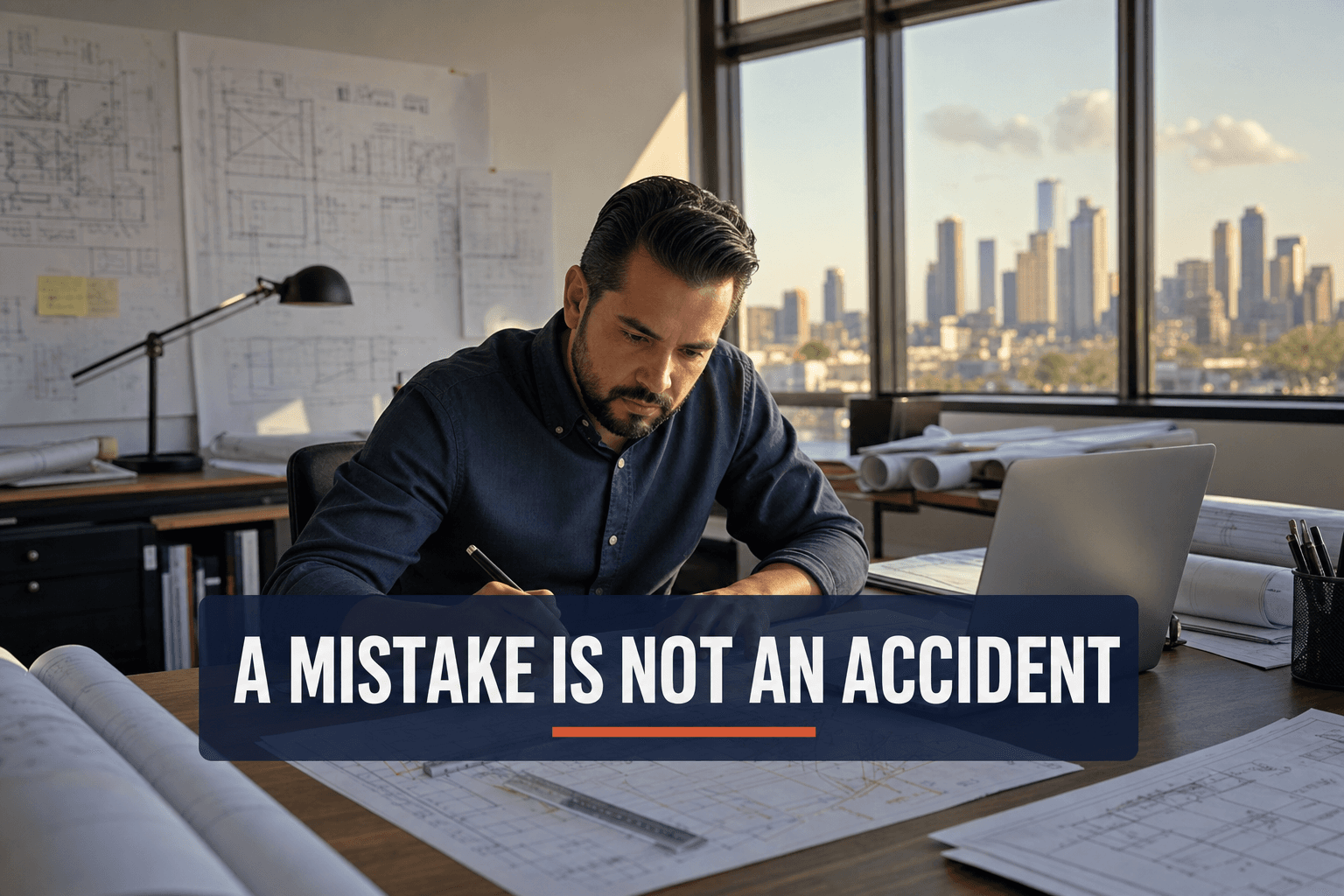
Quick Answer: General liability pays for accidents that injure people or damage property. Professional liability, also called errors and omissions, pays when a mistake in your advice, design or calculation costs a client money. Texas does not require it for most professions, but contracts often do, and design build contractors are the group most likely to be missing it.
What this article covers
Accident or advice. The whole distinction in one question
Who actually needs it in Texas
The design build trap
Claims made, and the trap inside it
The Texas rule that makes suing a designer harder
What it does not cover
How it fits with everything else you carry
Frequently asked questions
A design build remodeler in the Heights draws a beam span himself rather than paying an engineer for a job he has done a hundred times. The beam is undersized. Nothing collapses, but the floor above it deflects enough that the tile cracks and the owner brings in a structural engineer who writes a report.
The claim that arrives is not "your crew damaged my house." It is "your drawing was wrong and now I have to open the ceiling."
He has general liability, and general liability was never built for that sentence.
General liability answers for bodily injury and property damage caused by an accident. Professional liability, also called errors and omissions, answers for financial harm caused by a mistake in the professional service you provided: the advice, the design, the calculation, the plan, the filing. The Texas Department of Insurance describes general liability as covering bodily injury, property damage, and personal and advertising injury. A wrong recommendation that costs somebody money is none of those three. Texas does not generally require professional liability by law, but contracts routinely do, and Texas adds one procedural protection for design professionals that most states do not have.
Key Takeaways
The dividing line is accident versus advice. Physical harm goes to general liability, professional judgment goes to errors and omissions.
Most professional liability is written claims made, not occurrence, which changes everything about how and when you can cancel it.
Claims made policies need tail or prior acts coverage or you create a gap the day you switch carriers.
Texas does not mandate it for most professions. Your contract almost certainly does, and government work usually requires proof at bid.
Texas gives design professionals a real procedural shield: a claimant suing an architect, engineer, landscape architect or land surveyor must file a supporting expert affidavit with the complaint, and failure to do so results in dismissal.
Design build contractors are the most exposed group we see, because they carry a professional exposure while believing they only have a construction one.
Accident or advice. The whole distinction in one question
General liability exists for the accident. Somebody got hurt, or somebody's property got damaged, and it happened because of your operations. The Texas Department of Insurance sets out the three buckets it answers for: bodily injury, property damage, and personal and advertising injury, that last one covering things like slander and false advertising. We went through those in full in what general liability covers, a complete breakdown.
Professional liability exists for the mistake. The advice was wrong. The drawing was wrong. The number was wrong. The filing was late. Nobody fell, nothing burned, and yet the client is measurably worse off in money.
The claim | Which policy | Why |
|---|---|---|
Your ladder goes through a client's window | General liability | Property damage from an accident |
A customer trips over your cable and breaks a wrist | General liability | Bodily injury |
Your structural drawing specified the wrong beam | Professional liability | A professional error, not an accident |
You missed a filing deadline and the client lost a permit window | Professional liability | Financial loss from an omission |
Your installed fixture fails and damages the ceiling below | General liability | Resulting physical damage |
You recommended a system that cannot do what you said | Professional liability | Bad advice, no physical damage |
Redoing your own defective workmanship | Neither, usually | Excluded from both, see below |
That last row catches people, and it is worth being blunt about. The cost of tearing out and redoing your own bad work is generally yours. The damage that bad work caused to other property often is covered, which is the distinction we untangled in does general liability cover faulty workmanship. Professional liability does not rescue that either. It responds to the error in the professional service, not to the cost of your own rework.
Who actually needs it in Texas
The obvious list is the licensed professions: architects, engineers, surveyors, accountants, attorneys, medical practices. But the exposure is much wider than the license list, because the test is not whether you hold a license. It is whether a client is paying you for judgment.
Consultants and advisors of every kind. If somebody acts on your recommendation and loses money, that is the claim.
Information technology and software services. A failed migration that loses a client's data is not property damage in the policy's sense. Data is not tangible property. That is also why cyber liability sits alongside rather than inside it, and the two are frequently confused.
Marketing and creative agencies, where the exposure is usually a missed deadline or a campaign that did not deliver what was promised.
Staffing, bookkeeping and payroll services, where an error transfers straight into someone's money.
Real estate and property management, where a disclosure failure is the classic claim.
Design build contractors, the group most likely to carry this exposure without knowing it, covered on its own below.
Notaries, where the error and omission exposure sits next to the bond rather than inside it. We covered the bond side in how to get a surety bond for a notary.
Texas does not impose a blanket legal requirement for professional liability across these professions. What creates the obligation in practice is the contract. Engineering and architecture firms bidding government work routinely have to show proof of coverage at bid even where no licensing board demands it, and most commercial contracts set a minimum of $1 million per claim, with larger commercial projects often asking for $2 million. Those are contract norms rather than statute, so read your own agreement rather than assuming a standard.
When proof is requested it arrives the same way every other coverage does, on a certificate, and the same caution applies: a certificate confirms a policy existed on a date and shows none of the exclusions underneath it. Our guide to certificates of insurance in Texas covers what that document can and cannot establish.

Get a free professional liability review or call (281) 833-6755. Hablamos Español.
The design build trap
This is the version of the problem we see most often in Houston, and it is the reason this article exists.
A contractor who only builds to someone else's drawings has a construction exposure. A contractor who also designs, specifies, engineers, or value engineers has added a professional exposure on top of it, and the general liability policy did not change when the business did.
It shows up quietly:
You suggest a different beam, joist spacing or footing detail to save money and the substitution fails.
You size the HVAC system yourself rather than having it designed.
You recommend a waterproofing assembly and it does not perform.
You take on a design build contract because the client wanted one throat to choke, and the design half now sits with you.
In each case the allegation is that your professional judgment was wrong. Some carriers will add a contractors professional liability or protective endorsement to a commercial policy; others require a standalone form. Either way it is a deliberate purchase and never a default. If you are being asked for it in a contract, the wording matters as much as the limit, which is the same lesson as certificate holder versus additional insured.
Claims made, and the trap inside it
This is the single most important mechanical difference, and it catches people every time they switch carriers or retire.
The Texas Department of Insurance sets out both structures. An occurrence policy covers claims arising from injury or damage occurring while the policy is in force, regardless of when the claim is first made. A claims made policy covers claims arising from injury or damage occurring during the policy period and reported to the insurer during the policy period.
Most general liability is occurrence. Most professional liability is claims made. That difference has consequences:
Occurrence | Claims made | |
|---|---|---|
What triggers cover | When the event happened | When the claim is reported |
Cancel it and walk away | Past years stay covered | Past years stop being covered |
Switching carriers | Straightforward | Needs prior acts coverage |
Retiring or selling | No action needed | Needs tail coverage |
The Texas Department of Insurance names both fixes directly: run off coverage, usually called tail, and prior acts coverage, usually called nose. Tail extends your reporting window after the policy ends. Nose lets a new policy reach back to cover work you did before it started.
The practical warning: if you let a claims made professional liability policy lapse, you have not just stopped future coverage. You have removed coverage for a decade of past work, because a claim reported next year about a drawing from 2022 needs a policy in force now. This is why a lapse on this policy is categorically worse than a lapse on general liability, and it is worth reading alongside what can actually cancel or void your general liability policy in Texas before you let anything go quiet.
The Texas rule that makes suing a designer harder
Here is the piece almost nobody writing about this mentions, and it genuinely favors Texas design professionals.
Chapter 150 of the Texas Civil Practice and Remedies Code requires a certificate of merit. In an action for damages arising out of the provision of professional services by a licensed or registered professional, the claimant must file, with the complaint, an affidavit from a third party professional who is competent to testify, holds the same license or registration as the defendant, and practices in the same area of practice. The affidavit has to set out the specific negligence or error being alleged.
The consequence of skipping it is not a warning. Failure to file the affidavit in accordance with the statute results in dismissal of the complaint, and an order granting or denying dismissal is immediately appealable.
Two limits worth stating plainly, because overstating this would be its own error. Chapter 150 applies to licensed architects, licensed professional engineers, registered landscape architects and registered professional land surveyors. It is not a general shield for every consultant or contractor. And it does not extend any limitations period, nor does it apply to suits simply for payment of fees.
There is a narrow window in the statute too: where the limitations period would expire within 10 days of filing and the claimant says the affidavit could not be prepared in time, they get 30 days after filing to supplement, extendable by the court for good cause.
What this means in practice is that a frivolous claim against a Texas engineer or architect is more expensive and slower to bring than it would be in many other states, because the claimant has to buy an expert opinion before they can even get started. It does not remove the need for coverage. It does change the economics of the claims you are most likely to face, and it is a reasonable thing to raise with an insurer at renewal.
What it does not cover
Bodily injury and physical property damage. That stays with general liability, and the two policies are meant to be held together rather than chosen between.
Your own rework. Neither policy pays to redo your own defective work.
Deliberate wrongdoing. Fraud and intentional acts are excluded in every form of this coverage.
Employee injuries, which is workers compensation.
Your vehicles and your tools. Different policies again, and the tools one is the gap we wrote about in your tools were stolen off the truck.
A data breach as such. Overlapping but distinct, which is why cyber liability for Texas small businesses is usually bought alongside rather than instead, and what it costs is a separate conversation.
How it fits with everything else you carry
For most Houston businesses the structure looks like this: general liability for the accident, professional liability for the mistake, property or inland marine for your own things, commercial auto for the vehicles, workers compensation or a non subscriber plan for your people, and an umbrella sitting over the top where contracts demand higher limits.
What goes wrong | The policy that answers |
|---|---|
A customer is hurt or their property is damaged | General liability |
A mistake in your advice, design or calculation costs a client money | Professional liability (E and O) |
Your own tools or equipment are stolen or damaged | Inland marine or commercial property |
Your work vehicle is in a wreck | Commercial auto |
An employee is hurt on the job | Workers compensation or a non subscriber plan |
A contract demands higher limits than one policy carries | Commercial umbrella |
Whether the first of those arrives on its own or inside a package is a separate decision, and we worked through it in BOP or general liability, and do you need either with no employees. Pricing works differently across the two as well: general liability is driven largely by trade, payroll and receipts, as we set out in what general liability costs in Houston, while professional liability leans much harder on the specific service and the claims history behind it. For a sole proprietor the professional exposure is often the largest single one and the last to be insured, because it does not feel like a risk until a client puts it in writing. A commercial umbrella does not always sit over professional liability, which is a detail worth confirming rather than assuming.
Frequently asked questions
Q: What is the difference between general liability and professional liability?
General liability covers bodily injury, property damage and personal and advertising injury, meaning physical harm caused by an accident. Professional liability covers financial loss caused by a mistake in the professional service you provided, such as wrong advice, a faulty design or a missed deadline. A dropped ladder is one policy. A wrong calculation is the other.
Q: Is professional liability insurance required in Texas?
Not by general law for most professions. The requirement usually comes from your contract, your client or, for engineering and architecture firms bidding public work, the procurement rules. Some specific license types do carry their own insurance filing requirements, so confirm with your own licensing board rather than relying on a general answer.
Q: What does errors and omissions mean? Is it the same thing?
Yes. Errors and omissions, or E and O, is the same coverage under a different name. Some industries use one term and some the other, and certain professions use more specific names such as malpractice.
Q: What is tail coverage and do I need it?
Tail, or run off coverage, extends the window in which you can report a claim after a claims made policy ends. You need it if you are retiring, selling the business or leaving a carrier without prior acts coverage on the new policy, because otherwise a claim made next year about work you did years ago has no policy to report to.
Q: I am a contractor, not a designer. Do I need this?
If you only build to drawings produced by others, usually not. If you design, specify, engineer, value engineer or take design build contracts, you have a professional exposure and your general liability will not answer for it. This is the most common gap we find on Houston remodelers.
Q: Does professional liability cover me if I get sued for something I did not do wrong?
Generally yes for the defense, which is much of the value. Defending a claim costs money whether or not it has merit. Check whether defense costs sit inside your limit or outside it, because on many professional forms they erode the limit rather than sitting on top of it.
Q: What is a certificate of merit in Texas?
Under Chapter 150 of the Texas Civil Practice and Remedies Code, someone suing a licensed architect, licensed professional engineer, registered landscape architect or registered professional land surveyor over professional services must file an affidavit with the complaint from a third party in the same profession and area of practice, setting out the alleged error. Failure to file results in dismissal.
Q: How much does it cost?
It varies widely by profession, revenue, limit and claims history, far more than general liability does, so a real number needs a real conversation. Call our business line at (281) 833-6755 and tell us what your business actually does, and we will tell you what your trade can obtain.
Related Articles
BOP or general liability, and do you need either with no employees
What general liability insurance covers, a complete breakdown
Why AZ Insurance Stands Apart
Most agencies sell a Houston business general liability and stop, because general liability is the thing the contract asks for by name. We ask the second question, which is whether anyone is paying you for your judgment, because that is the exposure that sits outside the policy you already bought. We are independent, we have been doing this from Houston since 2003, and we compare multiple insurance companies rather than defending one carrier's form.
If a client contract has started asking for errors and omissions, or if your business has quietly moved from building to designing, bring us the contract and your current declarations page. Request a free professional liability review or call our business line at (281) 833-6755, and we will tell you which side of the accident and advice line your real exposure sits on.
Quick Answer: General liability pays for accidents that injure people or damage property. Professional liability, also called errors and omissions, pays when a mistake in your advice, design or calculation costs a client money. Texas does not require it for most professions, but contracts often do, and design build contractors are the group most likely to be missing it.
What this article covers
Accident or advice. The whole distinction in one question
Who actually needs it in Texas
The design build trap
Claims made, and the trap inside it
The Texas rule that makes suing a designer harder
What it does not cover
How it fits with everything else you carry
Frequently asked questions
A design build remodeler in the Heights draws a beam span himself rather than paying an engineer for a job he has done a hundred times. The beam is undersized. Nothing collapses, but the floor above it deflects enough that the tile cracks and the owner brings in a structural engineer who writes a report.
The claim that arrives is not "your crew damaged my house." It is "your drawing was wrong and now I have to open the ceiling."
He has general liability, and general liability was never built for that sentence.
General liability answers for bodily injury and property damage caused by an accident. Professional liability, also called errors and omissions, answers for financial harm caused by a mistake in the professional service you provided: the advice, the design, the calculation, the plan, the filing. The Texas Department of Insurance describes general liability as covering bodily injury, property damage, and personal and advertising injury. A wrong recommendation that costs somebody money is none of those three. Texas does not generally require professional liability by law, but contracts routinely do, and Texas adds one procedural protection for design professionals that most states do not have.
Key Takeaways
The dividing line is accident versus advice. Physical harm goes to general liability, professional judgment goes to errors and omissions.
Most professional liability is written claims made, not occurrence, which changes everything about how and when you can cancel it.
Claims made policies need tail or prior acts coverage or you create a gap the day you switch carriers.
Texas does not mandate it for most professions. Your contract almost certainly does, and government work usually requires proof at bid.
Texas gives design professionals a real procedural shield: a claimant suing an architect, engineer, landscape architect or land surveyor must file a supporting expert affidavit with the complaint, and failure to do so results in dismissal.
Design build contractors are the most exposed group we see, because they carry a professional exposure while believing they only have a construction one.
Accident or advice. The whole distinction in one question
General liability exists for the accident. Somebody got hurt, or somebody's property got damaged, and it happened because of your operations. The Texas Department of Insurance sets out the three buckets it answers for: bodily injury, property damage, and personal and advertising injury, that last one covering things like slander and false advertising. We went through those in full in what general liability covers, a complete breakdown.
Professional liability exists for the mistake. The advice was wrong. The drawing was wrong. The number was wrong. The filing was late. Nobody fell, nothing burned, and yet the client is measurably worse off in money.
The claim | Which policy | Why |
|---|---|---|
Your ladder goes through a client's window | General liability | Property damage from an accident |
A customer trips over your cable and breaks a wrist | General liability | Bodily injury |
Your structural drawing specified the wrong beam | Professional liability | A professional error, not an accident |
You missed a filing deadline and the client lost a permit window | Professional liability | Financial loss from an omission |
Your installed fixture fails and damages the ceiling below | General liability | Resulting physical damage |
You recommended a system that cannot do what you said | Professional liability | Bad advice, no physical damage |
Redoing your own defective workmanship | Neither, usually | Excluded from both, see below |
That last row catches people, and it is worth being blunt about. The cost of tearing out and redoing your own bad work is generally yours. The damage that bad work caused to other property often is covered, which is the distinction we untangled in does general liability cover faulty workmanship. Professional liability does not rescue that either. It responds to the error in the professional service, not to the cost of your own rework.
Who actually needs it in Texas
The obvious list is the licensed professions: architects, engineers, surveyors, accountants, attorneys, medical practices. But the exposure is much wider than the license list, because the test is not whether you hold a license. It is whether a client is paying you for judgment.
Consultants and advisors of every kind. If somebody acts on your recommendation and loses money, that is the claim.
Information technology and software services. A failed migration that loses a client's data is not property damage in the policy's sense. Data is not tangible property. That is also why cyber liability sits alongside rather than inside it, and the two are frequently confused.
Marketing and creative agencies, where the exposure is usually a missed deadline or a campaign that did not deliver what was promised.
Staffing, bookkeeping and payroll services, where an error transfers straight into someone's money.
Real estate and property management, where a disclosure failure is the classic claim.
Design build contractors, the group most likely to carry this exposure without knowing it, covered on its own below.
Notaries, where the error and omission exposure sits next to the bond rather than inside it. We covered the bond side in how to get a surety bond for a notary.
Texas does not impose a blanket legal requirement for professional liability across these professions. What creates the obligation in practice is the contract. Engineering and architecture firms bidding government work routinely have to show proof of coverage at bid even where no licensing board demands it, and most commercial contracts set a minimum of $1 million per claim, with larger commercial projects often asking for $2 million. Those are contract norms rather than statute, so read your own agreement rather than assuming a standard.
When proof is requested it arrives the same way every other coverage does, on a certificate, and the same caution applies: a certificate confirms a policy existed on a date and shows none of the exclusions underneath it. Our guide to certificates of insurance in Texas covers what that document can and cannot establish.
Get a free professional liability review or call (281) 833-6755. Hablamos Español.
The design build trap
This is the version of the problem we see most often in Houston, and it is the reason this article exists.
A contractor who only builds to someone else's drawings has a construction exposure. A contractor who also designs, specifies, engineers, or value engineers has added a professional exposure on top of it, and the general liability policy did not change when the business did.
It shows up quietly:
You suggest a different beam, joist spacing or footing detail to save money and the substitution fails.
You size the HVAC system yourself rather than having it designed.
You recommend a waterproofing assembly and it does not perform.
You take on a design build contract because the client wanted one throat to choke, and the design half now sits with you.
In each case the allegation is that your professional judgment was wrong. Some carriers will add a contractors professional liability or protective endorsement to a commercial policy; others require a standalone form. Either way it is a deliberate purchase and never a default. If you are being asked for it in a contract, the wording matters as much as the limit, which is the same lesson as certificate holder versus additional insured.
Claims made, and the trap inside it
This is the single most important mechanical difference, and it catches people every time they switch carriers or retire.
The Texas Department of Insurance sets out both structures. An occurrence policy covers claims arising from injury or damage occurring while the policy is in force, regardless of when the claim is first made. A claims made policy covers claims arising from injury or damage occurring during the policy period and reported to the insurer during the policy period.
Most general liability is occurrence. Most professional liability is claims made. That difference has consequences:
Occurrence | Claims made | |
|---|---|---|
What triggers cover | When the event happened | When the claim is reported |
Cancel it and walk away | Past years stay covered | Past years stop being covered |
Switching carriers | Straightforward | Needs prior acts coverage |
Retiring or selling | No action needed | Needs tail coverage |
The Texas Department of Insurance names both fixes directly: run off coverage, usually called tail, and prior acts coverage, usually called nose. Tail extends your reporting window after the policy ends. Nose lets a new policy reach back to cover work you did before it started.
The practical warning: if you let a claims made professional liability policy lapse, you have not just stopped future coverage. You have removed coverage for a decade of past work, because a claim reported next year about a drawing from 2022 needs a policy in force now. This is why a lapse on this policy is categorically worse than a lapse on general liability, and it is worth reading alongside what can actually cancel or void your general liability policy in Texas before you let anything go quiet.
The Texas rule that makes suing a designer harder
Here is the piece almost nobody writing about this mentions, and it genuinely favors Texas design professionals.
Chapter 150 of the Texas Civil Practice and Remedies Code requires a certificate of merit. In an action for damages arising out of the provision of professional services by a licensed or registered professional, the claimant must file, with the complaint, an affidavit from a third party professional who is competent to testify, holds the same license or registration as the defendant, and practices in the same area of practice. The affidavit has to set out the specific negligence or error being alleged.
The consequence of skipping it is not a warning. Failure to file the affidavit in accordance with the statute results in dismissal of the complaint, and an order granting or denying dismissal is immediately appealable.
Two limits worth stating plainly, because overstating this would be its own error. Chapter 150 applies to licensed architects, licensed professional engineers, registered landscape architects and registered professional land surveyors. It is not a general shield for every consultant or contractor. And it does not extend any limitations period, nor does it apply to suits simply for payment of fees.
There is a narrow window in the statute too: where the limitations period would expire within 10 days of filing and the claimant says the affidavit could not be prepared in time, they get 30 days after filing to supplement, extendable by the court for good cause.
What this means in practice is that a frivolous claim against a Texas engineer or architect is more expensive and slower to bring than it would be in many other states, because the claimant has to buy an expert opinion before they can even get started. It does not remove the need for coverage. It does change the economics of the claims you are most likely to face, and it is a reasonable thing to raise with an insurer at renewal.
What it does not cover
Bodily injury and physical property damage. That stays with general liability, and the two policies are meant to be held together rather than chosen between.
Your own rework. Neither policy pays to redo your own defective work.
Deliberate wrongdoing. Fraud and intentional acts are excluded in every form of this coverage.
Employee injuries, which is workers compensation.
Your vehicles and your tools. Different policies again, and the tools one is the gap we wrote about in your tools were stolen off the truck.
A data breach as such. Overlapping but distinct, which is why cyber liability for Texas small businesses is usually bought alongside rather than instead, and what it costs is a separate conversation.
How it fits with everything else you carry
For most Houston businesses the structure looks like this: general liability for the accident, professional liability for the mistake, property or inland marine for your own things, commercial auto for the vehicles, workers compensation or a non subscriber plan for your people, and an umbrella sitting over the top where contracts demand higher limits.
What goes wrong | The policy that answers |
|---|---|
A customer is hurt or their property is damaged | General liability |
A mistake in your advice, design or calculation costs a client money | Professional liability (E and O) |
Your own tools or equipment are stolen or damaged | Inland marine or commercial property |
Your work vehicle is in a wreck | Commercial auto |
An employee is hurt on the job | Workers compensation or a non subscriber plan |
A contract demands higher limits than one policy carries | Commercial umbrella |
Whether the first of those arrives on its own or inside a package is a separate decision, and we worked through it in BOP or general liability, and do you need either with no employees. Pricing works differently across the two as well: general liability is driven largely by trade, payroll and receipts, as we set out in what general liability costs in Houston, while professional liability leans much harder on the specific service and the claims history behind it. For a sole proprietor the professional exposure is often the largest single one and the last to be insured, because it does not feel like a risk until a client puts it in writing. A commercial umbrella does not always sit over professional liability, which is a detail worth confirming rather than assuming.
Frequently asked questions
Q: What is the difference between general liability and professional liability?
General liability covers bodily injury, property damage and personal and advertising injury, meaning physical harm caused by an accident. Professional liability covers financial loss caused by a mistake in the professional service you provided, such as wrong advice, a faulty design or a missed deadline. A dropped ladder is one policy. A wrong calculation is the other.
Q: Is professional liability insurance required in Texas?
Not by general law for most professions. The requirement usually comes from your contract, your client or, for engineering and architecture firms bidding public work, the procurement rules. Some specific license types do carry their own insurance filing requirements, so confirm with your own licensing board rather than relying on a general answer.
Q: What does errors and omissions mean? Is it the same thing?
Yes. Errors and omissions, or E and O, is the same coverage under a different name. Some industries use one term and some the other, and certain professions use more specific names such as malpractice.
Q: What is tail coverage and do I need it?
Tail, or run off coverage, extends the window in which you can report a claim after a claims made policy ends. You need it if you are retiring, selling the business or leaving a carrier without prior acts coverage on the new policy, because otherwise a claim made next year about work you did years ago has no policy to report to.
Q: I am a contractor, not a designer. Do I need this?
If you only build to drawings produced by others, usually not. If you design, specify, engineer, value engineer or take design build contracts, you have a professional exposure and your general liability will not answer for it. This is the most common gap we find on Houston remodelers.
Q: Does professional liability cover me if I get sued for something I did not do wrong?
Generally yes for the defense, which is much of the value. Defending a claim costs money whether or not it has merit. Check whether defense costs sit inside your limit or outside it, because on many professional forms they erode the limit rather than sitting on top of it.
Q: What is a certificate of merit in Texas?
Under Chapter 150 of the Texas Civil Practice and Remedies Code, someone suing a licensed architect, licensed professional engineer, registered landscape architect or registered professional land surveyor over professional services must file an affidavit with the complaint from a third party in the same profession and area of practice, setting out the alleged error. Failure to file results in dismissal.
Q: How much does it cost?
It varies widely by profession, revenue, limit and claims history, far more than general liability does, so a real number needs a real conversation. Call our business line at (281) 833-6755 and tell us what your business actually does, and we will tell you what your trade can obtain.
Related Articles
BOP or general liability, and do you need either with no employees
What general liability insurance covers, a complete breakdown
Why AZ Insurance Stands Apart
Most agencies sell a Houston business general liability and stop, because general liability is the thing the contract asks for by name. We ask the second question, which is whether anyone is paying you for your judgment, because that is the exposure that sits outside the policy you already bought. We are independent, we have been doing this from Houston since 2003, and we compare multiple insurance companies rather than defending one carrier's form.
If a client contract has started asking for errors and omissions, or if your business has quietly moved from building to designing, bring us the contract and your current declarations page. Request a free professional liability review or call our business line at (281) 833-6755, and we will tell you which side of the accident and advice line your real exposure sits on.
Latest Blogs

What Does Cyber Insurance Cover (and Not Cover)? Full Guide

How Much Is ATV Insurance? Average Costs and Factors

Your Tools Were Stolen Off the Truck. Which Policy Actually Pays?

What Does an Umbrella Insurance Policy Cover? (And What It Doesn't)
How Much Does Flood Insurance Cost in Texas? (2026 Pricing Guide)

BOP or General Liability? And Do You Need Either With No Employees?
Let A-Z Auto Insurance Help You Find Affordable Coverage
Connect with our experienced team today & get reliable, affordable insurance designed around your needs.
Contact Us!
Let A-Z Auto Insurance Help
You Find Affordable Coverage
Connect with our experienced team today & get reliable, affordable insurance designed around your needs.
Contact Us!
Let A-Z Auto
Insurance Help You
Find Affordable Coverage
Connect with our experienced team today & get reliable, affordable insurance designed around your needs.
Contact Us!
Let A-Z Auto Insurance Help
You Find Affordable Coverage
Connect with our experienced team today & get reliable, affordable insurance designed around your needs.
Contact Us!
Latest New & Blogs
Latest New & Blogs
Related Blog Posts
Related Blog Posts
Your Tools Were Stolen Off the Truck. Which Policy Actually Pays?
General liability covers other people's property. Commercial auto pays for the broken window, not what was inside. Here is the policy that actually replaces your tools.
Your Tools Were Stolen Off the Truck. Which Policy Actually Pays?
General liability covers other people's property. Commercial auto pays for the broken window, not what was inside. Here is the policy that actually replaces your tools.
Your Tools Were Stolen Off the Truck. Which Policy Actually Pays?
General liability covers other people's property. Commercial auto pays for the broken window, not what was inside. Here is the policy that actually replaces your tools.
What Does an Umbrella Insurance Policy Cover? (And What It Doesn't)
Wondering what does an umbrella insurance policy cover? See what's included what's excluded, and if you need extra liability protection.
What Does an Umbrella Insurance Policy Cover? (And What It Doesn't)
Wondering what does an umbrella insurance policy cover? See what's included what's excluded, and if you need extra liability protection.
What Does an Umbrella Insurance Policy Cover? (And What It Doesn't)
Wondering what does an umbrella insurance policy cover? See what's included what's excluded, and if you need extra liability protection.
How Much Does Flood Insurance Cost in Texas? (2026 Pricing Guide)
Wondering how much flood insurance costs in Texas? See average NFIP and private flood rates, what affects pricing, and how to save.
How Much Does Flood Insurance Cost in Texas? (2026 Pricing Guide)
Wondering how much flood insurance costs in Texas? See average NFIP and private flood rates, what affects pricing, and how to save.
How Much Does Flood Insurance Cost in Texas? (2026 Pricing Guide)
Wondering how much flood insurance costs in Texas? See average NFIP and private flood rates, what affects pricing, and how to save.
Your Tools Were Stolen Off the Truck. Which Policy Actually Pays?
General liability covers other people's property. Commercial auto pays for the broken window, not what was inside. Here is the policy that actually replaces your tools.
What Does an Umbrella Insurance Policy Cover? (And What It Doesn't)
Wondering what does an umbrella insurance policy cover? See what's included what's excluded, and if you need extra liability protection.