Quick support from trusted insurance professionals Call +1 713-777-2886 today! |
Call +1 713-777-2886
Call +1 713-777-2886
Quick support from insurance professionals Call +1 713-777-2886 today! |


Table of Content
Title

Let AZ Insurance Help You
Find Affordable Coverage
Connect with our experienced team today & get reliable, affordable insurance designed around your needs.
Contact Us!

Let A-Z Auto Insurance Help You Find Affordable Coverage
Connect with our experienced team today & get reliable, affordable insurance designed around your needs.
Contact Us!
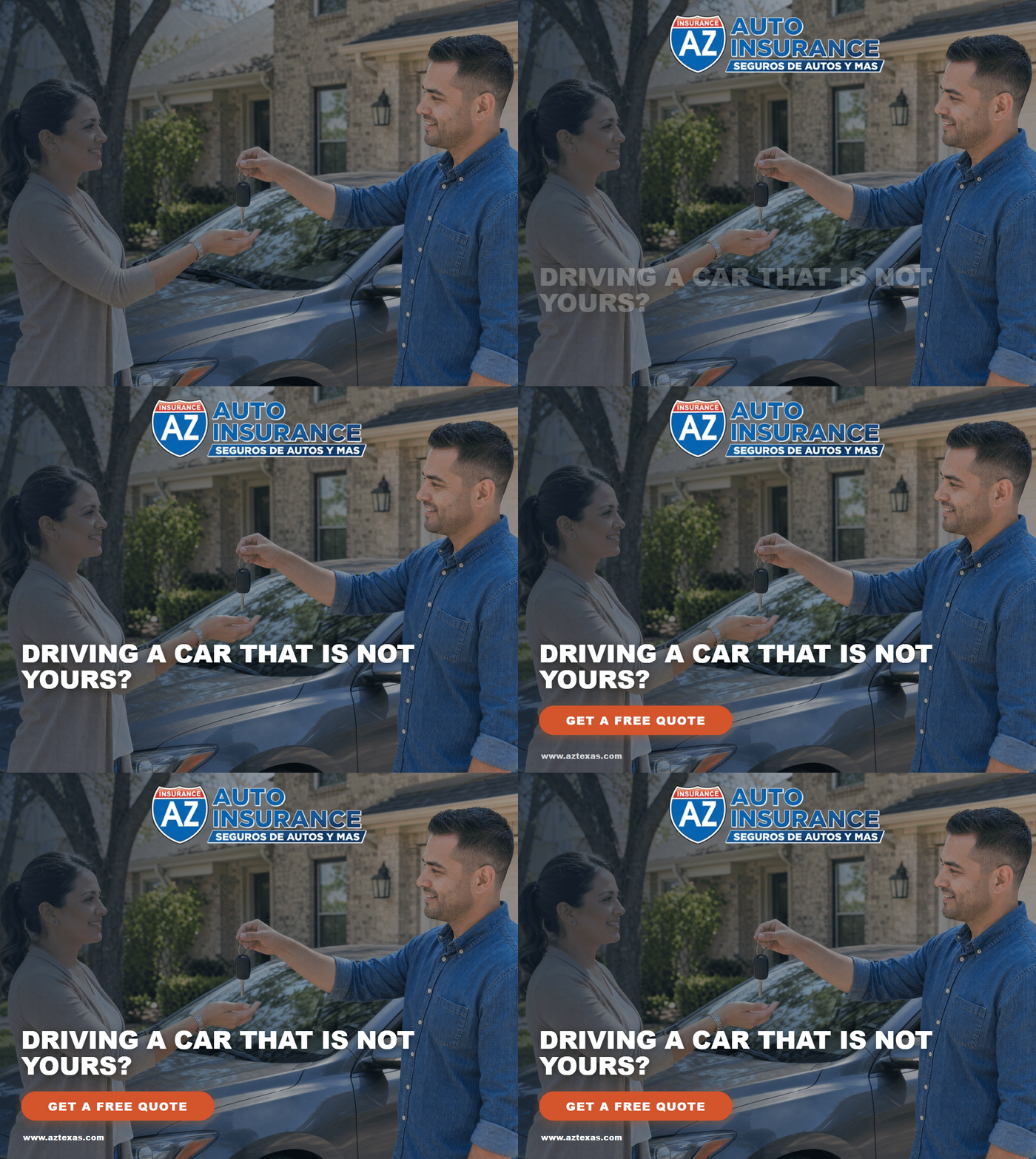
Can You Insure a Car That Is Not in Your Name in Texas?
Can You Insure a Car That Is Not in Your Name in Texas?
Can You Insure a Car That Is Not in Your Name in Texas?
Can You Insure a Car That Is Not in Your Name in Texas?
Can You Insure a Car That Is Not in Your Name in Texas?

Quick Answer: In Texas you can usually insure a car that is not in your name, but only if you have insurable interest, meaning you would suffer a real financial loss if the car were damaged. The cleanest paths are being added as a driver on the owner's policy, being listed as a named insured with the owner's consent, or, if you drive but do not own a car, a non owner policy. A local agent can match you to a carrier that allows your exact situation.
On this page
Can you insure a car that is not in your name?
What is insurable interest?
Common situations and how to cover each one
What is a non owner car insurance policy?
Non owner SR-22: coverage without a car
What you need to get covered in Texas
Frequently asked questions
Key Takeaways
The general rule: you cannot insure a car you have no financial stake in. You need insurable interest in the vehicle.
If you live with the owner and drive the car regularly, the simplest fix is usually being added as a listed driver on their policy.
If the car is financed in a relative's name or you recently bought it but have not retitled it, you may be able to be a named insured with the owner's consent.
A non owner policy covers your liability when you drive cars you do not own, but it does not cover physical damage to a specific vehicle.
Texas requires at least 30/60/25 liability coverage to drive or register a vehicle, so getting this right is not optional.
It is one of the most common questions we get at the counter: "The car is in my mom's name, or my husband's name, or I just bought it and the title is not switched yet. Can I even insure it?" The short answer is usually yes, but the way you do it matters, and doing it wrong can leave a claim denied. Here is how it actually works in Texas, in plain language.
Can you insure a car that is not in your name?
As a general rule, an insurance company will not let you buy a policy on a car you have no financial connection to (Insurance.com). The reason is simple: insurance exists to protect you from a financial loss, so the insurer needs to see that you would actually lose money if the car were wrecked or stolen. That financial stake is called insurable interest.
The good news is that "not in your name" and "no insurable interest" are not the same thing. Plenty of everyday situations give you a real stake in a car the title does not list you on, and in those cases the right carrier will cover you. The trick is structuring the policy correctly, which is exactly where an independent agent earns their keep.
What is insurable interest?
Insurable interest means you would face a genuine financial loss if something happened to the vehicle (Insurance Information Institute). You typically have it if you paid for the car, you make the payments, you depend on it day to day, or you are financially responsible for it even though your name is not on the title.
Do you have insurable interest? | Likely answer |
|---|---|
You bought the car but have not retitled it yet | Yes |
You make the loan or lease payments | Yes |
You live in the household and drive it daily | Usually yes |
You are a co signer or guarantor on the loan | Yes |
It belongs to a friend and you drive it once in a while | Usually no |
You want to insure someone else's car they keep and use | No |
If you land in a "no" row, the answer is usually not to force a policy in your name, but to be added the right way to the policy of the person who does own the car.
Common situations and how to cover each one
Most "not in my name" questions fall into a handful of real life buckets. Here is the clean fix for each.
Your situation | The usual solution |
|---|---|
Car is financed in a parent's or spouse's name, you drive it | Be added as a listed driver on the owner's policy, or be a named insured with their consent |
You just bought a used car, title not switched yet | Insure it now in your name using your bill of sale as proof of insurable interest, then finish the title |
You drive a relative's car and live with them | Get listed as a driver on their existing policy |
You drive different cars you do not own (borrowed, rented) | A non owner policy covers your liability across vehicles |
You need an SR-22 but do not own a car | A non owner SR-22 policy keeps you compliant |
Company or employer car you drive personally | Ask about a named non owner policy for personal use gaps |
The pattern: if you have a stake in one specific car, you insure that car. If you drive cars you do not own, you insure the driver, which is what a non owner policy does.
What is a non owner car insurance policy?
A non owner policy is liability coverage that follows you, the driver, instead of a specific car. It is built for people who drive but do not own a vehicle: you borrow cars, you rent often, or you need to keep continuous coverage on file. Here is what it does and does not do.
Non owner policy | Covered? |
|---|---|
Your liability when you injure someone or damage property driving a car you do not own | Yes |
Legal and medical costs you are responsible for in an at fault accident | Yes |
Keeping continuous coverage so you avoid a lapse | Yes |
Physical damage to the car you are driving (collision or comprehensive) | No |
A car you own or a car in your household | No |
Because it carries no collision or comprehensive coverage, a non owner policy is usually cheaper than a standard auto policy, but it is liability only. If you want the car itself protected, you need a policy on that car, not a non owner policy.
Non owner SR-22: coverage without a car
This is where it ties into something AZ handles every day. If a court or the Texas DPS requires you to file an SR-22 but you do not own a vehicle, you can stay compliant with a non owner SR-22 policy (Progressive). It provides the liability coverage the state requires and lets your insurer file the SR-22 on your behalf, so your license stays valid even without a car in your name.
If you are dealing with an SR-22 requirement, our guide on how much SR-22 insurance costs per month in Texas breaks down the real numbers, and our auto insurance page walks through your options.
What you need to get covered in Texas
Texas requires every driver to carry at least 30/60/25 liability coverage, which is $30,000 per injured person, $60,000 per accident, and $25,000 for property damage (Texas Department of Insurance). To set up coverage on a car that is not in your name, it helps to bring:
The vehicle details (year, make, model, VIN)
Proof of your insurable interest (bill of sale, loan paperwork, or the registration)
The registered owner's information and, when needed, their consent
Your driver license and any SR-22 paperwork if it applies
Every carrier handles these situations a little differently, and some are far more flexible than others. As an independent agency we compare 8 carriers and place you with the one that allows your exact setup, in English or Spanish. You can also read whether you need insurance before registering a car in Texas and the main purpose of having auto insurance for more background.
Frequently Asked Questions
Q1: Can I insure a car that is not in my name in Texas?
Usually yes, as long as you have insurable interest, meaning you would face a real financial loss if the car were damaged. Common qualifying situations include making the payments, recently buying the car, or driving a household member's vehicle daily. Without insurable interest, the better route is to be added as a driver on the owner's policy.
Q2: What is insurable interest?
Insurable interest is a genuine financial stake in the vehicle. You have it if you paid for the car, you make the loan or lease payments, you depend on it daily, or you are financially responsible for it, even if the title is in someone else's name.
Q3: Can I insure a car I just bought before the title is in my name?
Yes. When you buy a used car, you have insurable interest the moment you own it, so you can and should insure it right away using your bill of sale as proof, then complete the title transfer afterward. Texas requires coverage before you drive or register it.
Q4: What is the difference between a non owner policy and insuring someone else's car?
A non owner policy covers your liability as a driver across cars you do not own, with no coverage for the car itself. Insuring someone else's specific car requires insurable interest in that vehicle. If you simply drive cars you do not own, a non owner policy is the right fit.
Q5: Can I get an SR-22 if I do not own a car?
Yes. A non owner SR-22 policy lets you meet a state SR-22 requirement without owning a vehicle. It provides the required liability coverage and your insurer files the SR-22 with the Texas DPS, keeping your license valid.
Q6: Can my name be on the insurance if the car is registered to someone else?
Often yes, if you have insurable interest and the registered owner consents. Many carriers can list you as a named insured while the registration stays in the owner's name. The cleanest approach depends on the carrier, which is why comparing options matters.
Why AZ Insurance Stands Apart
Since 2003, AZ Insurance has helped Houston drivers solve exactly these situations, the financed car in a parent's name, the just bought used car, the SR-22 without a vehicle. Because we are independent, we compare 8 carriers and place you with the one that actually allows your setup, instead of turning you away because one company says no. Our agents explain it all in English or Spanish at any of our 15 offices across Houston and Dallas. Call 713-777-2886 or walk in and we will get you covered the right way.
Related Articles
Quick Answer: In Texas you can usually insure a car that is not in your name, but only if you have insurable interest, meaning you would suffer a real financial loss if the car were damaged. The cleanest paths are being added as a driver on the owner's policy, being listed as a named insured with the owner's consent, or, if you drive but do not own a car, a non owner policy. A local agent can match you to a carrier that allows your exact situation.
On this page
Can you insure a car that is not in your name?
What is insurable interest?
Common situations and how to cover each one
What is a non owner car insurance policy?
Non owner SR-22: coverage without a car
What you need to get covered in Texas
Frequently asked questions
Key Takeaways
The general rule: you cannot insure a car you have no financial stake in. You need insurable interest in the vehicle.
If you live with the owner and drive the car regularly, the simplest fix is usually being added as a listed driver on their policy.
If the car is financed in a relative's name or you recently bought it but have not retitled it, you may be able to be a named insured with the owner's consent.
A non owner policy covers your liability when you drive cars you do not own, but it does not cover physical damage to a specific vehicle.
Texas requires at least 30/60/25 liability coverage to drive or register a vehicle, so getting this right is not optional.
It is one of the most common questions we get at the counter: "The car is in my mom's name, or my husband's name, or I just bought it and the title is not switched yet. Can I even insure it?" The short answer is usually yes, but the way you do it matters, and doing it wrong can leave a claim denied. Here is how it actually works in Texas, in plain language.
Can you insure a car that is not in your name?
As a general rule, an insurance company will not let you buy a policy on a car you have no financial connection to (Insurance.com). The reason is simple: insurance exists to protect you from a financial loss, so the insurer needs to see that you would actually lose money if the car were wrecked or stolen. That financial stake is called insurable interest.
The good news is that "not in your name" and "no insurable interest" are not the same thing. Plenty of everyday situations give you a real stake in a car the title does not list you on, and in those cases the right carrier will cover you. The trick is structuring the policy correctly, which is exactly where an independent agent earns their keep.
What is insurable interest?
Insurable interest means you would face a genuine financial loss if something happened to the vehicle (Insurance Information Institute). You typically have it if you paid for the car, you make the payments, you depend on it day to day, or you are financially responsible for it even though your name is not on the title.
Do you have insurable interest? | Likely answer |
|---|---|
You bought the car but have not retitled it yet | Yes |
You make the loan or lease payments | Yes |
You live in the household and drive it daily | Usually yes |
You are a co signer or guarantor on the loan | Yes |
It belongs to a friend and you drive it once in a while | Usually no |
You want to insure someone else's car they keep and use | No |
If you land in a "no" row, the answer is usually not to force a policy in your name, but to be added the right way to the policy of the person who does own the car.
Common situations and how to cover each one
Most "not in my name" questions fall into a handful of real life buckets. Here is the clean fix for each.
Your situation | The usual solution |
|---|---|
Car is financed in a parent's or spouse's name, you drive it | Be added as a listed driver on the owner's policy, or be a named insured with their consent |
You just bought a used car, title not switched yet | Insure it now in your name using your bill of sale as proof of insurable interest, then finish the title |
You drive a relative's car and live with them | Get listed as a driver on their existing policy |
You drive different cars you do not own (borrowed, rented) | A non owner policy covers your liability across vehicles |
You need an SR-22 but do not own a car | A non owner SR-22 policy keeps you compliant |
Company or employer car you drive personally | Ask about a named non owner policy for personal use gaps |
The pattern: if you have a stake in one specific car, you insure that car. If you drive cars you do not own, you insure the driver, which is what a non owner policy does.
What is a non owner car insurance policy?
A non owner policy is liability coverage that follows you, the driver, instead of a specific car. It is built for people who drive but do not own a vehicle: you borrow cars, you rent often, or you need to keep continuous coverage on file. Here is what it does and does not do.
Non owner policy | Covered? |
|---|---|
Your liability when you injure someone or damage property driving a car you do not own | Yes |
Legal and medical costs you are responsible for in an at fault accident | Yes |
Keeping continuous coverage so you avoid a lapse | Yes |
Physical damage to the car you are driving (collision or comprehensive) | No |
A car you own or a car in your household | No |
Because it carries no collision or comprehensive coverage, a non owner policy is usually cheaper than a standard auto policy, but it is liability only. If you want the car itself protected, you need a policy on that car, not a non owner policy.
Non owner SR-22: coverage without a car
This is where it ties into something AZ handles every day. If a court or the Texas DPS requires you to file an SR-22 but you do not own a vehicle, you can stay compliant with a non owner SR-22 policy (Progressive). It provides the liability coverage the state requires and lets your insurer file the SR-22 on your behalf, so your license stays valid even without a car in your name.
If you are dealing with an SR-22 requirement, our guide on how much SR-22 insurance costs per month in Texas breaks down the real numbers, and our auto insurance page walks through your options.
What you need to get covered in Texas
Texas requires every driver to carry at least 30/60/25 liability coverage, which is $30,000 per injured person, $60,000 per accident, and $25,000 for property damage (Texas Department of Insurance). To set up coverage on a car that is not in your name, it helps to bring:
The vehicle details (year, make, model, VIN)
Proof of your insurable interest (bill of sale, loan paperwork, or the registration)
The registered owner's information and, when needed, their consent
Your driver license and any SR-22 paperwork if it applies
Every carrier handles these situations a little differently, and some are far more flexible than others. As an independent agency we compare 8 carriers and place you with the one that allows your exact setup, in English or Spanish. You can also read whether you need insurance before registering a car in Texas and the main purpose of having auto insurance for more background.
Frequently Asked Questions
Q1: Can I insure a car that is not in my name in Texas?
Usually yes, as long as you have insurable interest, meaning you would face a real financial loss if the car were damaged. Common qualifying situations include making the payments, recently buying the car, or driving a household member's vehicle daily. Without insurable interest, the better route is to be added as a driver on the owner's policy.
Q2: What is insurable interest?
Insurable interest is a genuine financial stake in the vehicle. You have it if you paid for the car, you make the loan or lease payments, you depend on it daily, or you are financially responsible for it, even if the title is in someone else's name.
Q3: Can I insure a car I just bought before the title is in my name?
Yes. When you buy a used car, you have insurable interest the moment you own it, so you can and should insure it right away using your bill of sale as proof, then complete the title transfer afterward. Texas requires coverage before you drive or register it.
Q4: What is the difference between a non owner policy and insuring someone else's car?
A non owner policy covers your liability as a driver across cars you do not own, with no coverage for the car itself. Insuring someone else's specific car requires insurable interest in that vehicle. If you simply drive cars you do not own, a non owner policy is the right fit.
Q5: Can I get an SR-22 if I do not own a car?
Yes. A non owner SR-22 policy lets you meet a state SR-22 requirement without owning a vehicle. It provides the required liability coverage and your insurer files the SR-22 with the Texas DPS, keeping your license valid.
Q6: Can my name be on the insurance if the car is registered to someone else?
Often yes, if you have insurable interest and the registered owner consents. Many carriers can list you as a named insured while the registration stays in the owner's name. The cleanest approach depends on the carrier, which is why comparing options matters.
Why AZ Insurance Stands Apart
Since 2003, AZ Insurance has helped Houston drivers solve exactly these situations, the financed car in a parent's name, the just bought used car, the SR-22 without a vehicle. Because we are independent, we compare 8 carriers and place you with the one that actually allows your setup, instead of turning you away because one company says no. Our agents explain it all in English or Spanish at any of our 15 offices across Houston and Dallas. Call 713-777-2886 or walk in and we will get you covered the right way.
Related Articles
Latest Blogs

Does Homeowners Insurance Cover Foundation Damage in Texas? What Pays, What Does Not, and the Endorsement to Ask For

How to Read Your Texas Home Insurance Declarations Page, Line by Line

How to Lower Car Insurance: 10 Practical Ways to Pay Less

What Is Gap Insurance and What Does It Cover? Do You Need It?

What Is a Deductible in Car Insurance? A Simple Guide

Your Texas Home Insurance Renewal: 4 Rights You Have in 2026 and What to Ask For
Let A-Z Auto Insurance Help You Find Affordable Coverage
Connect with our experienced team today & get reliable, affordable insurance designed around your needs.
Contact Us!
Let A-Z Auto Insurance Help
You Find Affordable Coverage
Connect with our experienced team today & get reliable, affordable insurance designed around your needs.
Contact Us!
Let A-Z Auto
Insurance Help You
Find Affordable Coverage
Connect with our experienced team today & get reliable, affordable insurance designed around your needs.
Contact Us!
Let A-Z Auto Insurance Help
You Find Affordable Coverage
Connect with our experienced team today & get reliable, affordable insurance designed around your needs.
Contact Us!
Latest New & Blogs
Latest New & Blogs
Related Blog Posts
Related Blog Posts
How to Lower Car Insurance: 10 Practical Ways to Pay Less
Learn how to lower car insurance in Texas with 10 proven ways to cut your premium, from discounts and deductibles to shopping smarter at every renewal.
How to Lower Car Insurance: 10 Practical Ways to Pay Less
Learn how to lower car insurance in Texas with 10 proven ways to cut your premium, from discounts and deductibles to shopping smarter at every renewal.
How to Lower Car Insurance: 10 Practical Ways to Pay Less
Learn how to lower car insurance in Texas with 10 proven ways to cut your premium, from discounts and deductibles to shopping smarter at every renewal.
What Is Gap Insurance and What Does It Cover? Do You Need It?
What is gap insurance and what does it cover? Learn how gap coverage pays off your car loan after a total loss, what it costs, and if you need it.
What Is Gap Insurance and What Does It Cover? Do You Need It?
What is gap insurance and what does it cover? Learn how gap coverage pays off your car loan after a total loss, what it costs, and if you need it.
What Is Gap Insurance and What Does It Cover? Do You Need It?
What is gap insurance and what does it cover? Learn how gap coverage pays off your car loan after a total loss, what it costs, and if you need it.
What Is a Deductible in Car Insurance? A Simple Guide
What is a deductible in car insurance? Learn how deductibles work, which coverages have one, and how to pick the right amount for your budget in Texas.
What Is a Deductible in Car Insurance? A Simple Guide
What is a deductible in car insurance? Learn how deductibles work, which coverages have one, and how to pick the right amount for your budget in Texas.
What Is a Deductible in Car Insurance? A Simple Guide
What is a deductible in car insurance? Learn how deductibles work, which coverages have one, and how to pick the right amount for your budget in Texas.
How to Lower Car Insurance: 10 Practical Ways to Pay Less
Learn how to lower car insurance in Texas with 10 proven ways to cut your premium, from discounts and deductibles to shopping smarter at every renewal.
What Is Gap Insurance and What Does It Cover? Do You Need It?
What is gap insurance and what does it cover? Learn how gap coverage pays off your car loan after a total loss, what it costs, and if you need it.