Soporte rápido de profesionales de seguros de confianza Llame +1 713-777-2886 hoy!
¡Llame hoy al +1 713-777-2886 para obtener un soporte profesional rápido!
¡Llame hoy al +1 713-777-2886 para obtener un soporte profesional rápido!


Tabla de Contenido
Título

Deje que AZ Insurance le ayude
a encontrar una cobertura asequible
Conéctate con nuestro equipo experimentado hoy y obtén un seguro confiable y asequible diseñado a tu medida.
¡Contáctanos!

Deja que A-Z Auto Insurance te ayude a encontrar una cobertura asequible
Conéctate con nuestro equipo experimentado hoy y obtén un seguro confiable y asequible diseñado a tu medida.
¡Contáctanos!
What Does Cyber Insurance Cover (and Not Cover)? Full Guide
What Does Cyber Insurance Cover (and Not Cover)? Full Guide
What Does Cyber Insurance Cover (and Not Cover)? Full Guide
What Does Cyber Insurance Cover (and Not Cover)? Full Guide
What Does Cyber Insurance Cover (and Not Cover)? Full Guide
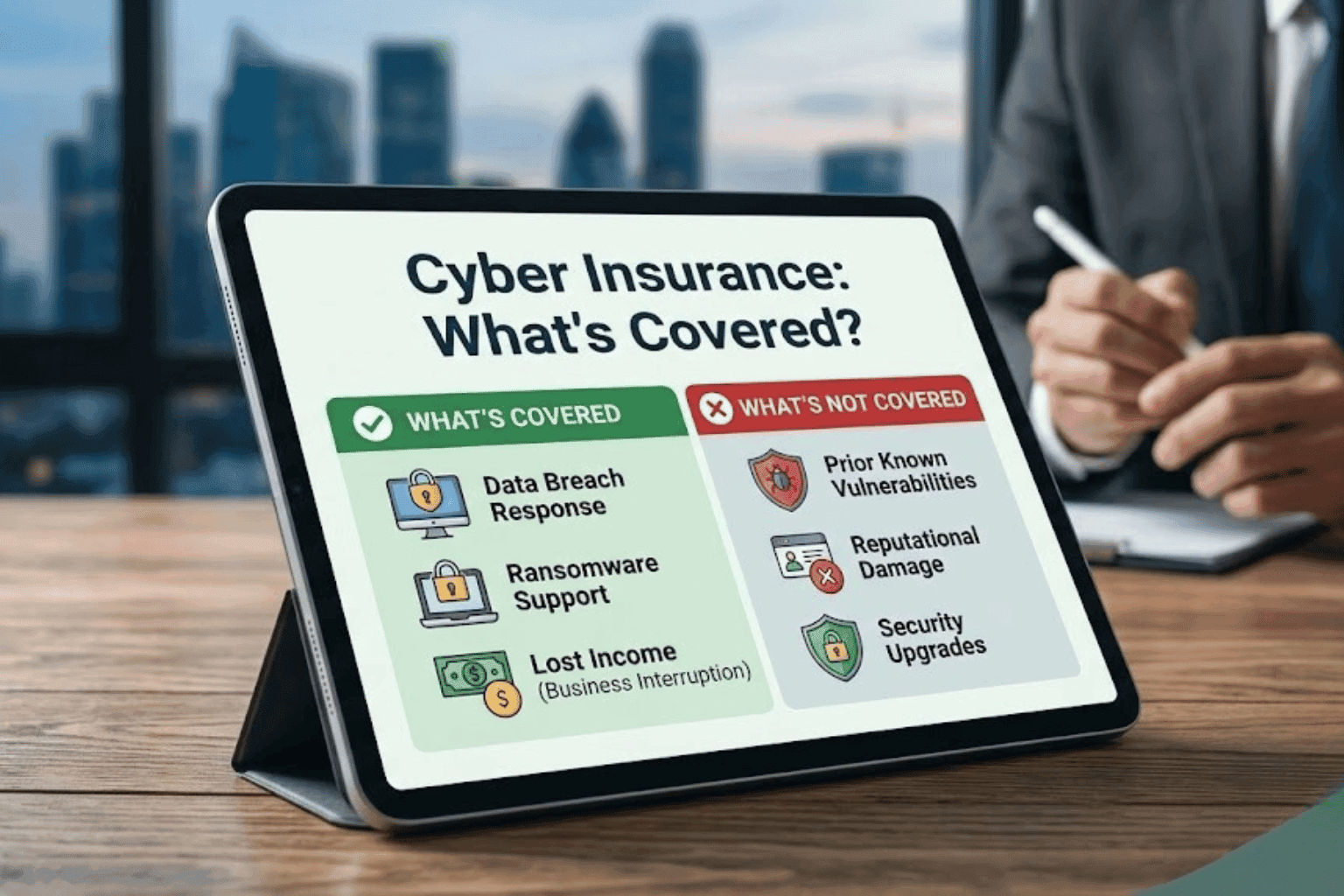
Quick Answer: Cyber insurance covers costs from data breaches, ransomware attacks, and cyberattacks — including customer notification, legal fees, data recovery, and business interruption income. It typically does not cover pre-existing vulnerabilities known before the policy started, reputational damage, or losses caused by failing to maintain basic security practices.
Cyberattacks aren't just a big business problem anymore. Small and mid-sized businesses across Texas are increasingly targeted precisely because attackers assume they have weaker defenses. If you've searched "what does cyber insurance cover," you're likely trying to decide whether a policy is worth adding to your business insurance program.
This guide covers exactly what a typical cyber liability policy includes, what it leaves out, and what does cyber security insurance covers for small businesses specifically — so you can make an informed decision before an incident happens, not after.
What Is Cyber Insurance?
Cyber insurance is a business policy that helps cover the financial fallout of a cyberattack or data breach. It's typically split into two categories: first-party coverage, which pays for your own business's direct losses, and third-party coverage, which pays for claims made against you by customers, vendors, or regulators.
What Does Cyber Insurance Cover?
Coverage Type | What It Includes |
Data breach response | Customer notification costs and credit monitoring for affected individuals |
Ransomware & extortion | Ransom negotiation support and IT forensics to investigate the attack |
Business interruption | Lost income while your systems are down after an attack |
Legal & regulatory | Legal defense costs and, where insurable, regulatory fines |
Data recovery | Cost to restore or recover lost, corrupted, or stolen data |
Third-party liability | Lawsuits from customers or vendors affected by a breach on your systems |
What Does Cyber Insurance NOT Cover?
Exclusion | Why It's Excluded |
Prior or known breaches | Incidents that occurred or were known before the policy started |
Reputational harm | Loss of future business or goodwill is generally not insurable |
Intentional acts or fraud by the insured | Criminal or dishonest acts committed by the business itself |
Security infrastructure upgrades | The cost to improve systems after a breach isn't covered |
Bodily injury or property damage | These fall under general liability, not cyber policies |
War or nation-state attacks | Many policies exclude acts of cyberwarfare or state-sponsored attacks |
What Does Cyber Security Insurance Cover for Small Businesses?
For small businesses specifically, cyber insurance often focuses on the everyday risks that come with running point-of-sale systems, storing customer payment data, or communicating by email. Common small-business scenarios covered include phishing-related fund transfer fraud, point-of-sale system breaches, stolen customer payment information, and email account takeovers used to impersonate the business.
Many small business owners assume general liability insurance already covers cyber incidents. It typically does not — cyber liability is almost always a separate policy or endorsement.
Who Needs Cyber Insurance in Texas?
Any Houston-area business that stores customer data, accepts card payments, or relies on email and cloud software is a potential target. This includes retail shops, restaurants, healthcare and dental offices, contractors who invoice digitally, real estate offices, and professional service firms handling sensitive client information.
Insurance agencies themselves are also frequent targets, since they hold sensitive personal and financial information for large numbers of clients.

How Much Does Cyber Insurance Cost?
Small businesses commonly pay between $500 and $2,000 per year for $1 million in cyber liability coverage, though pricing depends heavily on your revenue, industry, and how much sensitive data you handle. Businesses that process large volumes of payment card data or store extensive personal health information typically pay more.
Prices may vary based on your specific provider, coverage selections, driving/claims history, and other individual factors. The figures above are estimates only and are not a guarantee of your actual rate.
Frequently Asked Questions
What does cyber insurance cover exactly?
It covers costs tied to data breaches and cyberattacks, including customer notification, legal defense, data recovery, ransomware response, and lost income from business interruption.
What does cyber insurance cover?
It generally excludes known prior breaches, reputational harm, intentional acts by the business, security upgrade costs, and bodily injury or property damage claims.
What does cyber security insurance cover for a small business?
For small businesses, it typically covers point-of-sale breaches, phishing-related fraud, stolen customer payment data, and email account takeovers, along with the notification and legal costs that follow.
Do I need cyber insurance if I use cloud software?
Yes. Using cloud software doesn't eliminate your liability if customer data is exposed — you're still responsible for notification and legal costs even if a vendor's system was breached.
Does general liability insurance cover cyberattack?
No. Standard general liability policies exclude cyber-related losses. Cyber liability requires a separate policy or endorsement.
How much does cyber insurance cost for a small business?
Most small businesses pay $500–$2,000 per year for $1 million in coverage, though your exact cost depends on revenue, industry, and the volume of sensitive data you handle.
Get a Quote in Houston Today
AZ Insurance Agency helps Texas families and business owners find the right coverage at the right price, with bilingual support at 15 Houston-area locations plus Plano and Lewisville.
Quick Answer: Cyber insurance covers costs from data breaches, ransomware attacks, and cyberattacks — including customer notification, legal fees, data recovery, and business interruption income. It typically does not cover pre-existing vulnerabilities known before the policy started, reputational damage, or losses caused by failing to maintain basic security practices.
Cyberattacks aren't just a big business problem anymore. Small and mid-sized businesses across Texas are increasingly targeted precisely because attackers assume they have weaker defenses. If you've searched "what does cyber insurance cover," you're likely trying to decide whether a policy is worth adding to your business insurance program.
This guide covers exactly what a typical cyber liability policy includes, what it leaves out, and what does cyber security insurance covers for small businesses specifically — so you can make an informed decision before an incident happens, not after.
What Is Cyber Insurance?
Cyber insurance is a business policy that helps cover the financial fallout of a cyberattack or data breach. It's typically split into two categories: first-party coverage, which pays for your own business's direct losses, and third-party coverage, which pays for claims made against you by customers, vendors, or regulators.
What Does Cyber Insurance Cover?
Coverage Type | What It Includes |
Data breach response | Customer notification costs and credit monitoring for affected individuals |
Ransomware & extortion | Ransom negotiation support and IT forensics to investigate the attack |
Business interruption | Lost income while your systems are down after an attack |
Legal & regulatory | Legal defense costs and, where insurable, regulatory fines |
Data recovery | Cost to restore or recover lost, corrupted, or stolen data |
Third-party liability | Lawsuits from customers or vendors affected by a breach on your systems |
What Does Cyber Insurance NOT Cover?
Exclusion | Why It's Excluded |
Prior or known breaches | Incidents that occurred or were known before the policy started |
Reputational harm | Loss of future business or goodwill is generally not insurable |
Intentional acts or fraud by the insured | Criminal or dishonest acts committed by the business itself |
Security infrastructure upgrades | The cost to improve systems after a breach isn't covered |
Bodily injury or property damage | These fall under general liability, not cyber policies |
War or nation-state attacks | Many policies exclude acts of cyberwarfare or state-sponsored attacks |
What Does Cyber Security Insurance Cover for Small Businesses?
For small businesses specifically, cyber insurance often focuses on the everyday risks that come with running point-of-sale systems, storing customer payment data, or communicating by email. Common small-business scenarios covered include phishing-related fund transfer fraud, point-of-sale system breaches, stolen customer payment information, and email account takeovers used to impersonate the business.
Many small business owners assume general liability insurance already covers cyber incidents. It typically does not — cyber liability is almost always a separate policy or endorsement.
Who Needs Cyber Insurance in Texas?
Any Houston-area business that stores customer data, accepts card payments, or relies on email and cloud software is a potential target. This includes retail shops, restaurants, healthcare and dental offices, contractors who invoice digitally, real estate offices, and professional service firms handling sensitive client information.
Insurance agencies themselves are also frequent targets, since they hold sensitive personal and financial information for large numbers of clients.
How Much Does Cyber Insurance Cost?
Small businesses commonly pay between $500 and $2,000 per year for $1 million in cyber liability coverage, though pricing depends heavily on your revenue, industry, and how much sensitive data you handle. Businesses that process large volumes of payment card data or store extensive personal health information typically pay more.
Prices may vary based on your specific provider, coverage selections, driving/claims history, and other individual factors. The figures above are estimates only and are not a guarantee of your actual rate.
Frequently Asked Questions
What does cyber insurance cover exactly?
It covers costs tied to data breaches and cyberattacks, including customer notification, legal defense, data recovery, ransomware response, and lost income from business interruption.
What does cyber insurance cover?
It generally excludes known prior breaches, reputational harm, intentional acts by the business, security upgrade costs, and bodily injury or property damage claims.
What does cyber security insurance cover for a small business?
For small businesses, it typically covers point-of-sale breaches, phishing-related fraud, stolen customer payment data, and email account takeovers, along with the notification and legal costs that follow.
Do I need cyber insurance if I use cloud software?
Yes. Using cloud software doesn't eliminate your liability if customer data is exposed — you're still responsible for notification and legal costs even if a vendor's system was breached.
Does general liability insurance cover cyberattack?
No. Standard general liability policies exclude cyber-related losses. Cyber liability requires a separate policy or endorsement.
How much does cyber insurance cost for a small business?
Most small businesses pay $500–$2,000 per year for $1 million in coverage, though your exact cost depends on revenue, industry, and the volume of sensitive data you handle.
Get a Quote in Houston Today
AZ Insurance Agency helps Texas families and business owners find the right coverage at the right price, with bilingual support at 15 Houston-area locations plus Plano and Lewisville.
Últimos Blogs

¿El seguro de vivienda cubre los daños en los cimientos en Texas? Qué se cubre, qué no y el endoso que debes solicitar

Cómo leer la página de declaraciones de su seguro de casa en Texas, línea por línea

How to Lower Car Insurance: 10 Practical Ways to Pay Less

What Is Gap Insurance and What Does It Cover? Do You Need It?

What Is a Deductible in Car Insurance? A Simple Guide

Renovación de tu seguro de casa en Texas: 4 derechos que tienes en 2026 y qué solicitar
Deja que A-Z Auto Insurance te ayude a encontrar una cobertura asequible
Conéctate con nuestro equipo experimentado hoy y obtén un seguro confiable y asequible diseñado a tu medida.
¡Contáctanos!
Deje que A-Z Auto Insurance le ayude
A encontrar una cobertura asequible
Conéctate con nuestro equipo experimentado hoy y obtén un seguro confiable y asequible diseñado a tu medida.
¡Contáctanos!
Deja que A-Z Auto
Seguros te
ayude a encontrar cobertura asequible
Conéctate con nuestro equipo experimentado hoy y obtén un seguro confiable y asequible diseñado a tu medida.
¡Contáctanos!
Deje que A-Z Auto Insurance le ayude
A encontrar una cobertura asequible
Conéctate con nuestro equipo experimentado hoy y obtén un seguro confiable y asequible diseñado a tu medida.
¡Contáctanos!
Últimas noticias y blogs
Últimas noticias y blogs
Publicaciones de blog relacionadas
Publicaciones de blog relacionadas
How to Lower Car Insurance: 10 Practical Ways to Pay Less
Learn how to lower car insurance in Texas with 10 proven ways to cut your premium, from discounts and deductibles to shopping smarter at every renewal.
How to Lower Car Insurance: 10 Practical Ways to Pay Less
Learn how to lower car insurance in Texas with 10 proven ways to cut your premium, from discounts and deductibles to shopping smarter at every renewal.
How to Lower Car Insurance: 10 Practical Ways to Pay Less
Learn how to lower car insurance in Texas with 10 proven ways to cut your premium, from discounts and deductibles to shopping smarter at every renewal.
What Is Gap Insurance and What Does It Cover? Do You Need It?
What is gap insurance and what does it cover? Learn how gap coverage pays off your car loan after a total loss, what it costs, and if you need it.
What Is Gap Insurance and What Does It Cover? Do You Need It?
What is gap insurance and what does it cover? Learn how gap coverage pays off your car loan after a total loss, what it costs, and if you need it.
What Is Gap Insurance and What Does It Cover? Do You Need It?
What is gap insurance and what does it cover? Learn how gap coverage pays off your car loan after a total loss, what it costs, and if you need it.
What Is a Deductible in Car Insurance? A Simple Guide
What is a deductible in car insurance? Learn how deductibles work, which coverages have one, and how to pick the right amount for your budget in Texas.
What Is a Deductible in Car Insurance? A Simple Guide
What is a deductible in car insurance? Learn how deductibles work, which coverages have one, and how to pick the right amount for your budget in Texas.
What Is a Deductible in Car Insurance? A Simple Guide
What is a deductible in car insurance? Learn how deductibles work, which coverages have one, and how to pick the right amount for your budget in Texas.
How to Lower Car Insurance: 10 Practical Ways to Pay Less
Learn how to lower car insurance in Texas with 10 proven ways to cut your premium, from discounts and deductibles to shopping smarter at every renewal.
What Is Gap Insurance and What Does It Cover? Do You Need It?
What is gap insurance and what does it cover? Learn how gap coverage pays off your car loan after a total loss, what it costs, and if you need it.