Quick support from trusted insurance professionals Call +1 713-777-2886 today!
Quick professional support Call +1 713-777-2886 today!
Quick professional support Call +1 713-777-2886 today!


Table of Content
Title

Let AZ Insurance Help You
Find Affordable Coverage
Connect with our experienced team today & get reliable, affordable insurance designed around your needs.
Contact Us!

Let A-Z Auto Insurance Help You Find Affordable Coverage
Connect with our experienced team today & get reliable, affordable insurance designed around your needs.
Contact Us!
Your Roof Before the Storm: The Four Things to Check on Your Policy While You Still Can
Your Roof Before the Storm: The Four Things to Check on Your Policy While You Still Can
Your Roof Before the Storm: The Four Things to Check on Your Policy While You Still Can
Your Roof Before the Storm: The Four Things to Check on Your Policy While You Still Can
Your Roof Before the Storm: The Four Things to Check on Your Policy While You Still Can

Quick Answer: Four things decide what your roof actually gets paid: whether your policy settles at replacement cost or actual cash value, what your wind and hail deductible percentage works out to in dollars, whether your roof has aged into a reduced payout schedule, and whether cosmetic damage is excluded. All four are printed on your policy and all four can be changed before a storm, not after.
Table of Contents
Why you check this before, not after
Check 1: Does your policy pay replacement cost or actual cash value?
Check 2: What is your deductible in actual dollars?
Check 3: Has your roof aged into a different payout?
Check 4: Is cosmetic damage excluded?
Putting the four together
What a home policy never covers, no matter what
How to do this in ten minutes
Key Takeaways
Frequently asked questions
Why you check this before, not after
Because after a storm, every one of these four things is already decided.
Most Houston homeowners find out how their roof coverage works during a claim, which is the worst possible moment to learn it. The adjuster's number comes back, it is smaller than the roofing estimate, and the explanation arrives as a paragraph of policy language nobody has read in five years.
None of that is a denial. In most cases the claim was covered exactly as written. The gap between what the homeowner expected and what arrived was built into the policy the whole time, and it was changeable right up until the damage happened.
So this article is not about filing a claim. It is the ten minute version of reading your own policy, done in the order that actually matters. If you want the post loss side instead, we cover what happens when a storm hits before your renewal separately.
Check 1: Does your policy pay replacement cost or actual cash value?
This is the one that moves the most money, and it is the one most homeowners get wrong.
The Texas Department of Insurance puts the distinction plainly: "Some policies pay for the full cost to repair your roof at current prices. This is known as replacement cost coverage. Some policies pay less if the roof is older or shows wear. This is known as actual cash value coverage."
Replacement cost pays what it costs to put the roof back today. Actual cash value pays what your roof was worth on the day it was damaged, which means age and wear come out of the number first.
On an older roof that difference is not small. It is often the difference between a repair you can afford and one you cannot.
There is a second thing about replacement cost that catches people, and TDI states it directly: "If you have replacement cost coverage, the company will pay you two checks. The first check is a partial payment. Your company will send you the rest of the claim amount after repairs begin."
That is what the industry calls recoverable depreciation. The first check is the depreciated amount. The rest is held back until the work is actually underway and documented. Homeowners who take the first check, do a patch job, and pocket the difference do not just lose the second check. They also carry a roof that a future claim will look at very differently.
We go deeper on the mechanics in actual cash value versus replacement cost in Texas.
Actual cash value | Replacement cost | |
|---|---|---|
What it pays | What the roof is worth today | What the repair costs today |
Age and wear | Deducted from the payment | Held back, then paid after work starts |
How it arrives | One payment | Two payments |
Who covers the gap | You | The policy, once repairs begin |
Premium | Lower | Higher |
Where to find it: your declarations page, usually under "Loss Settlement" or as an endorsement referencing the roof surfacing. If the words "actual cash value", "ACV" or "roof surfacing schedule" appear anywhere near the dwelling coverage, that is your answer.
Check 2: What is your deductible in actual dollars?
In Texas, your wind and hail deductible is almost never a flat amount. It is a percentage of the insured value of your home, not a percentage of the repair.
That distinction is the single most expensive misunderstanding in Texas homeowners insurance, and we have written a full explainer on it at Texas storm deductible explained.
Here is the short version. A 5 percent deductible on a home insured for $150,000 is $7,500. Against a $6,500 hail repair, that policy pays nothing at all. A $500 flat deductible on the same repair pays $6,000. Same damage, same house, two different policies.
The reason percentage deductibles exist is that they lower the premium. That is a legitimate trade and plenty of homeowners make it on purpose. The problem is making it by accident.
Insured value | 1% deductible | 2% deductible | 5% deductible |
|---|---|---|---|
$150,000 | $1,500 | $3,000 | $7,500 |
$250,000 | $2,500 | $5,000 | $12,500 |
$400,000 | $4,000 | $8,000 | $20,000 |
Do the multiplication once, write the number down, and keep it somewhere you can find it. If that number is larger than what you could put your hands on in a week, that is the conversation to have now.
Where to find it: the declarations page, usually as a separate line from your all other perils deductible. Look for "Windstorm or Hail Deductible" or "Named Storm Deductible" written as a percentage.
One more piece worth knowing while you are in there: whether your wind coverage sits on your homeowners policy at all. In a small number of Texas coastal areas it does not, and it comes from the Texas Windstorm Insurance Association instead. That is a geography question with a surprisingly precise answer, and we walk through it in does your Houston home actually need TWIA.
Check 3: Has your roof aged into a different payout?
A roof that was on replacement cost when you bought the policy is not guaranteed to still be on replacement cost today.
TDI is explicit that this happens: "As the roof gets older, some companies will switch coverage to actual cash value." Some carriers apply it through a roof surfacing payment schedule that reduces the payout by a set percentage per year of roof age. Others handle it at renewal. Either way, the change can happen without a conversation.
The important part is that roof age affects more than the payout. It also affects whether a carrier will keep writing the policy at all. That is a bigger topic and we handle it in your roof and Texas home insurance: age, depreciation and nonrenewal.
What to do about it: know your roof's install year. If you do not, the previous owner's disclosure, a permit search, or a roofer's inspection will get you there. Then ask your agent one question: at this roof's age, on this policy, what is the settlement basis today?
That question takes an agent about a minute to answer and it is the single most useful thing in this article.

Get a free roof coverage check or call (281) 833-5060. Hablamos Español.
Check 4: Is cosmetic damage excluded?
Some Texas policies carry a cosmetic damage exclusion for roof surfaces. Under one, hail that dents metal or marks shingles without affecting how the roof sheds water is not a covered loss.
This is not hidden and it is not unusual. It is another premium trade, and for some roof types it is a perfectly sensible one. But it turns a hail claim you expected to be paid into one that is correctly denied, and the homeowner almost never knew the endorsement was on the policy.
Where to find it: look through the endorsement list on the declarations page for anything naming cosmetic damage, cosmetic loss, or roof surface appearance. If you are not sure, this is another one minute question for your agent.
Putting the four together
Here is why checking them individually is not enough. They stack.
Scenario | Without checking | After a ten minute review |
|---|---|---|
Hail marks a 14 year old shingle roof | ACV settlement on an aged roof, 5% deductible, cosmetic exclusion applies. Payment is very likely zero | You already knew the exposure and either bought the deductible down, moved to replacement cost, or budgeted for it |
A limb punctures the roof in a windstorm | Covered, but the ACV payment leaves a gap you fund yourself | Replacement cost pays the repair, in two checks, once work begins |
Wind lifts shingles on a 6 year old roof | Likely covered near full value, if the damage clears the deductible | Same outcome, but you knew the deductible number before you called |
The pattern is the same in every row. The check does not change what is covered. It changes whether the number is a surprise.
What a home policy never covers, no matter what
While you have the policy open, one thing is worth confirming because it is the largest gap in Houston and no amount of roof coverage touches it.
Flood is not in a homeowners policy. Anywhere in Texas. Ever. Rising water that comes from outside the home is a separate policy, and it is the exclusion that produces the worst surprises in this metro.
Water that comes down through a storm damaged roof is generally a homeowners claim. Water that rises from the street is not. That line is genuinely confusing and we drew it carefully in water damage versus flood in Houston, with the coverage question itself in does homeowners insurance cover flood in Texas.
If you do not carry flood and you have been meaning to look at it, note that a new flood policy generally does not take effect immediately. NFIP and private flood options for Houston covers the differences, and renters have their own version of the question in does renters insurance cover flood in Houston.
Two other gaps worth a glance while you are in the document: whether your dwelling limit could actually rebuild the house at today's construction prices, which we sized in how much dwelling coverage your Houston home needs, and what your policy form is, because HO-A, HO-B and HO-3 in Texas behave differently on exactly this kind of loss. A broader map of the boundaries is in what homeowners insurance covers and does not cover, and the plumbing question, which comes up constantly after a storm, is answered in does homeowners insurance cover plumbing.
How to do this in ten minutes
Find your declarations page. It is the two or three page summary at the front of your policy, or a download in your carrier's portal.
Find the loss settlement line. Replacement cost or actual cash value. Write it down.
Find the wind and hail deductible. Multiply the percentage by your dwelling limit. Write the dollar figure down.
Find your roof's age. Compare it to the settlement basis from step 2.
Scan the endorsement list for anything about cosmetic damage.
Confirm whether you carry flood. It is a separate policy, so it will not be on this document at all.
If any of those six take longer than a minute, that is what an agent is for. Bring the declarations page, or any carrier's, and we will read it with you. We do this for people who are not our customers and we will tell you when your current policy is already set up correctly, which happens more often than you would expect.
Ready to renew or shop it properly? Here is what a homeowners quote actually needs from you.
Key Takeaways
Replacement cost pays today's repair price. Actual cash value subtracts age first. On an older roof that difference is usually the whole decision.
Replacement cost arrives in two checks, and the second one only comes after repairs begin. TDI states this directly.
Your wind and hail deductible is a percentage of your home's insured value, not of the repair. Do the multiplication once and know the number.
Roof age can move your settlement basis without a conversation. Know your roof's install year and ask what basis applies at that age.
A cosmetic damage exclusion turns a real hail claim into a correctly denied one. Check the endorsement list.
Flood is never in a home policy, anywhere in Texas. It is the largest gap in Houston and it is a separate purchase.
Frequently asked questions
Q: Will my insurance company pay for a new roof just because mine is old?
No. Wear and age are not covered perils. A policy pays for sudden accidental damage from a covered cause such as wind or hail. A roof at the end of its service life is a maintenance expense, and letting it get there can also affect whether a carrier renews you at all.
Q: What is recoverable depreciation and when do I get it?
It is the portion of a replacement cost claim held back on the first payment. TDI describes it as the company paying two checks, with the rest of the claim amount arriving after repairs begin. In practice the carrier releases it once your contractor's completed work is documented and invoiced.
Q: Can I keep the first check and just patch the roof?
You can, and it usually costs more than it saves. You forfeit the second payment, and you are left with a roof in known poor condition, which affects both future claims and future renewals.
Q: How do I know if my deductible is a percentage or a flat dollar amount?
Look at your declarations page. Texas policies commonly carry a flat all other perils deductible alongside a separate percentage deductible for windstorm, hail or named storms. If you see a percent sign next to a wind or hail line, it is a percentage.
Q: Does a below normal hurricane season forecast mean I can relax?
No, and not for the reason people expect. A seasonal forecast is a probability statement about the whole Atlantic basin, not about your street. More importantly, none of the four checks in this article are seasonal. Settlement basis, deductible, roof age and exclusions are annual policy decisions that a quiet forecast does not change.
Q: My roof is fine. Is there any reason to do this now?
That is exactly when to do it. Every one of these four items can be changed while nothing is wrong and none of them can be changed after damage occurs.
Q: Can you look at my policy if I am not your customer?
Yes. Bring the declarations page from any carrier. We will tell you what it says in plain language and we will tell you when it is already set up well.
Related Articles
Your Roof and Texas Home Insurance: Age, Depreciation, and Nonrenewal
Texas Storm Deductible Explained: Why 2 Percent Does Not Mean $200
This article is general information, not legal advice or a promise of coverage. What your policy covers is governed by that policy. We are happy to read it with you.
Quick Answer: Four things decide what your roof actually gets paid: whether your policy settles at replacement cost or actual cash value, what your wind and hail deductible percentage works out to in dollars, whether your roof has aged into a reduced payout schedule, and whether cosmetic damage is excluded. All four are printed on your policy and all four can be changed before a storm, not after.
Table of Contents
Why you check this before, not after
Check 1: Does your policy pay replacement cost or actual cash value?
Check 2: What is your deductible in actual dollars?
Check 3: Has your roof aged into a different payout?
Check 4: Is cosmetic damage excluded?
Putting the four together
What a home policy never covers, no matter what
How to do this in ten minutes
Key Takeaways
Frequently asked questions
Why you check this before, not after
Because after a storm, every one of these four things is already decided.
Most Houston homeowners find out how their roof coverage works during a claim, which is the worst possible moment to learn it. The adjuster's number comes back, it is smaller than the roofing estimate, and the explanation arrives as a paragraph of policy language nobody has read in five years.
None of that is a denial. In most cases the claim was covered exactly as written. The gap between what the homeowner expected and what arrived was built into the policy the whole time, and it was changeable right up until the damage happened.
So this article is not about filing a claim. It is the ten minute version of reading your own policy, done in the order that actually matters. If you want the post loss side instead, we cover what happens when a storm hits before your renewal separately.
Check 1: Does your policy pay replacement cost or actual cash value?
This is the one that moves the most money, and it is the one most homeowners get wrong.
The Texas Department of Insurance puts the distinction plainly: "Some policies pay for the full cost to repair your roof at current prices. This is known as replacement cost coverage. Some policies pay less if the roof is older or shows wear. This is known as actual cash value coverage."
Replacement cost pays what it costs to put the roof back today. Actual cash value pays what your roof was worth on the day it was damaged, which means age and wear come out of the number first.
On an older roof that difference is not small. It is often the difference between a repair you can afford and one you cannot.
There is a second thing about replacement cost that catches people, and TDI states it directly: "If you have replacement cost coverage, the company will pay you two checks. The first check is a partial payment. Your company will send you the rest of the claim amount after repairs begin."
That is what the industry calls recoverable depreciation. The first check is the depreciated amount. The rest is held back until the work is actually underway and documented. Homeowners who take the first check, do a patch job, and pocket the difference do not just lose the second check. They also carry a roof that a future claim will look at very differently.
We go deeper on the mechanics in actual cash value versus replacement cost in Texas.
Actual cash value | Replacement cost | |
|---|---|---|
What it pays | What the roof is worth today | What the repair costs today |
Age and wear | Deducted from the payment | Held back, then paid after work starts |
How it arrives | One payment | Two payments |
Who covers the gap | You | The policy, once repairs begin |
Premium | Lower | Higher |
Where to find it: your declarations page, usually under "Loss Settlement" or as an endorsement referencing the roof surfacing. If the words "actual cash value", "ACV" or "roof surfacing schedule" appear anywhere near the dwelling coverage, that is your answer.
Check 2: What is your deductible in actual dollars?
In Texas, your wind and hail deductible is almost never a flat amount. It is a percentage of the insured value of your home, not a percentage of the repair.
That distinction is the single most expensive misunderstanding in Texas homeowners insurance, and we have written a full explainer on it at Texas storm deductible explained.
Here is the short version. A 5 percent deductible on a home insured for $150,000 is $7,500. Against a $6,500 hail repair, that policy pays nothing at all. A $500 flat deductible on the same repair pays $6,000. Same damage, same house, two different policies.
The reason percentage deductibles exist is that they lower the premium. That is a legitimate trade and plenty of homeowners make it on purpose. The problem is making it by accident.
Insured value | 1% deductible | 2% deductible | 5% deductible |
|---|---|---|---|
$150,000 | $1,500 | $3,000 | $7,500 |
$250,000 | $2,500 | $5,000 | $12,500 |
$400,000 | $4,000 | $8,000 | $20,000 |
Do the multiplication once, write the number down, and keep it somewhere you can find it. If that number is larger than what you could put your hands on in a week, that is the conversation to have now.
Where to find it: the declarations page, usually as a separate line from your all other perils deductible. Look for "Windstorm or Hail Deductible" or "Named Storm Deductible" written as a percentage.
One more piece worth knowing while you are in there: whether your wind coverage sits on your homeowners policy at all. In a small number of Texas coastal areas it does not, and it comes from the Texas Windstorm Insurance Association instead. That is a geography question with a surprisingly precise answer, and we walk through it in does your Houston home actually need TWIA.
Check 3: Has your roof aged into a different payout?
A roof that was on replacement cost when you bought the policy is not guaranteed to still be on replacement cost today.
TDI is explicit that this happens: "As the roof gets older, some companies will switch coverage to actual cash value." Some carriers apply it through a roof surfacing payment schedule that reduces the payout by a set percentage per year of roof age. Others handle it at renewal. Either way, the change can happen without a conversation.
The important part is that roof age affects more than the payout. It also affects whether a carrier will keep writing the policy at all. That is a bigger topic and we handle it in your roof and Texas home insurance: age, depreciation and nonrenewal.
What to do about it: know your roof's install year. If you do not, the previous owner's disclosure, a permit search, or a roofer's inspection will get you there. Then ask your agent one question: at this roof's age, on this policy, what is the settlement basis today?
That question takes an agent about a minute to answer and it is the single most useful thing in this article.
Get a free roof coverage check or call (281) 833-5060. Hablamos Español.
Check 4: Is cosmetic damage excluded?
Some Texas policies carry a cosmetic damage exclusion for roof surfaces. Under one, hail that dents metal or marks shingles without affecting how the roof sheds water is not a covered loss.
This is not hidden and it is not unusual. It is another premium trade, and for some roof types it is a perfectly sensible one. But it turns a hail claim you expected to be paid into one that is correctly denied, and the homeowner almost never knew the endorsement was on the policy.
Where to find it: look through the endorsement list on the declarations page for anything naming cosmetic damage, cosmetic loss, or roof surface appearance. If you are not sure, this is another one minute question for your agent.
Putting the four together
Here is why checking them individually is not enough. They stack.
Scenario | Without checking | After a ten minute review |
|---|---|---|
Hail marks a 14 year old shingle roof | ACV settlement on an aged roof, 5% deductible, cosmetic exclusion applies. Payment is very likely zero | You already knew the exposure and either bought the deductible down, moved to replacement cost, or budgeted for it |
A limb punctures the roof in a windstorm | Covered, but the ACV payment leaves a gap you fund yourself | Replacement cost pays the repair, in two checks, once work begins |
Wind lifts shingles on a 6 year old roof | Likely covered near full value, if the damage clears the deductible | Same outcome, but you knew the deductible number before you called |
The pattern is the same in every row. The check does not change what is covered. It changes whether the number is a surprise.
What a home policy never covers, no matter what
While you have the policy open, one thing is worth confirming because it is the largest gap in Houston and no amount of roof coverage touches it.
Flood is not in a homeowners policy. Anywhere in Texas. Ever. Rising water that comes from outside the home is a separate policy, and it is the exclusion that produces the worst surprises in this metro.
Water that comes down through a storm damaged roof is generally a homeowners claim. Water that rises from the street is not. That line is genuinely confusing and we drew it carefully in water damage versus flood in Houston, with the coverage question itself in does homeowners insurance cover flood in Texas.
If you do not carry flood and you have been meaning to look at it, note that a new flood policy generally does not take effect immediately. NFIP and private flood options for Houston covers the differences, and renters have their own version of the question in does renters insurance cover flood in Houston.
Two other gaps worth a glance while you are in the document: whether your dwelling limit could actually rebuild the house at today's construction prices, which we sized in how much dwelling coverage your Houston home needs, and what your policy form is, because HO-A, HO-B and HO-3 in Texas behave differently on exactly this kind of loss. A broader map of the boundaries is in what homeowners insurance covers and does not cover, and the plumbing question, which comes up constantly after a storm, is answered in does homeowners insurance cover plumbing.
How to do this in ten minutes
Find your declarations page. It is the two or three page summary at the front of your policy, or a download in your carrier's portal.
Find the loss settlement line. Replacement cost or actual cash value. Write it down.
Find the wind and hail deductible. Multiply the percentage by your dwelling limit. Write the dollar figure down.
Find your roof's age. Compare it to the settlement basis from step 2.
Scan the endorsement list for anything about cosmetic damage.
Confirm whether you carry flood. It is a separate policy, so it will not be on this document at all.
If any of those six take longer than a minute, that is what an agent is for. Bring the declarations page, or any carrier's, and we will read it with you. We do this for people who are not our customers and we will tell you when your current policy is already set up correctly, which happens more often than you would expect.
Ready to renew or shop it properly? Here is what a homeowners quote actually needs from you.
Key Takeaways
Replacement cost pays today's repair price. Actual cash value subtracts age first. On an older roof that difference is usually the whole decision.
Replacement cost arrives in two checks, and the second one only comes after repairs begin. TDI states this directly.
Your wind and hail deductible is a percentage of your home's insured value, not of the repair. Do the multiplication once and know the number.
Roof age can move your settlement basis without a conversation. Know your roof's install year and ask what basis applies at that age.
A cosmetic damage exclusion turns a real hail claim into a correctly denied one. Check the endorsement list.
Flood is never in a home policy, anywhere in Texas. It is the largest gap in Houston and it is a separate purchase.
Frequently asked questions
Q: Will my insurance company pay for a new roof just because mine is old?
No. Wear and age are not covered perils. A policy pays for sudden accidental damage from a covered cause such as wind or hail. A roof at the end of its service life is a maintenance expense, and letting it get there can also affect whether a carrier renews you at all.
Q: What is recoverable depreciation and when do I get it?
It is the portion of a replacement cost claim held back on the first payment. TDI describes it as the company paying two checks, with the rest of the claim amount arriving after repairs begin. In practice the carrier releases it once your contractor's completed work is documented and invoiced.
Q: Can I keep the first check and just patch the roof?
You can, and it usually costs more than it saves. You forfeit the second payment, and you are left with a roof in known poor condition, which affects both future claims and future renewals.
Q: How do I know if my deductible is a percentage or a flat dollar amount?
Look at your declarations page. Texas policies commonly carry a flat all other perils deductible alongside a separate percentage deductible for windstorm, hail or named storms. If you see a percent sign next to a wind or hail line, it is a percentage.
Q: Does a below normal hurricane season forecast mean I can relax?
No, and not for the reason people expect. A seasonal forecast is a probability statement about the whole Atlantic basin, not about your street. More importantly, none of the four checks in this article are seasonal. Settlement basis, deductible, roof age and exclusions are annual policy decisions that a quiet forecast does not change.
Q: My roof is fine. Is there any reason to do this now?
That is exactly when to do it. Every one of these four items can be changed while nothing is wrong and none of them can be changed after damage occurs.
Q: Can you look at my policy if I am not your customer?
Yes. Bring the declarations page from any carrier. We will tell you what it says in plain language and we will tell you when it is already set up well.
Related Articles
Your Roof and Texas Home Insurance: Age, Depreciation, and Nonrenewal
Texas Storm Deductible Explained: Why 2 Percent Does Not Mean $200
This article is general information, not legal advice or a promise of coverage. What your policy covers is governed by that policy. We are happy to read it with you.
Latest Blogs

A Storm Hits Before Your Renewal: The Texas Claim Timeline, and the New Right You Have in 2026

Commercial Property Insurance Coverage Explained: What's Protected and What's Not

Texas Non Subscriber: What Actually Happens When You Opt Out of Workers Comp
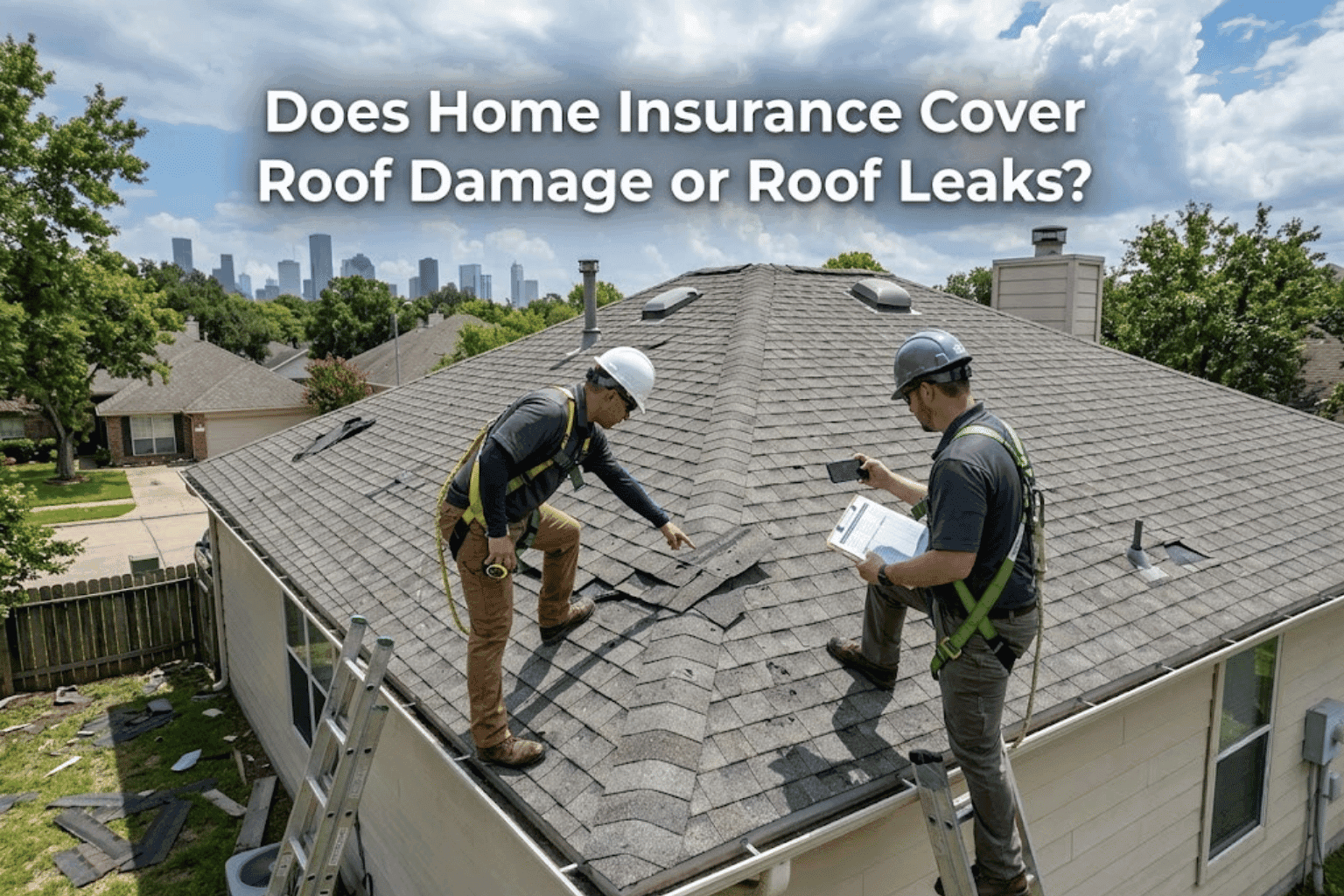
Does Home Insurance Cover Roof Damage or Roof Leaks? Understanding Roof Replacement Coverage

The $5 Million Clause: How a Commercial Umbrella Actually Satisfies a Contract Requirement

Does Commercial Property Insurance Cover Fire? What Texas Business Owners Should Know
Let A-Z Auto Insurance Help You Find Affordable Coverage
Connect with our experienced team today & get reliable, affordable insurance designed around your needs.
Contact Us!
Let A-Z Auto Insurance Help
You Find Affordable Coverage
Connect with our experienced team today & get reliable, affordable insurance designed around your needs.
Contact Us!
Let A-Z Auto
Insurance Help You
Find Affordable Coverage
Connect with our experienced team today & get reliable, affordable insurance designed around your needs.
Contact Us!
Let A-Z Auto Insurance Help
You Find Affordable Coverage
Connect with our experienced team today & get reliable, affordable insurance designed around your needs.
Contact Us!
Latest New & Blogs
Latest New & Blogs
Related Blog Posts
Related Blog Posts
Texas Non Subscriber: What Actually Happens When You Opt Out of Workers Comp
Texas lets most private employers skip workers comp. The state still requires an annual filing, a posted notice, and injury reports, and you give up three legal defenses.
Texas Non Subscriber: What Actually Happens When You Opt Out of Workers Comp
Texas lets most private employers skip workers comp. The state still requires an annual filing, a posted notice, and injury reports, and you give up three legal defenses.
Texas Non Subscriber: What Actually Happens When You Opt Out of Workers Comp
Texas lets most private employers skip workers comp. The state still requires an annual filing, a posted notice, and injury reports, and you give up three legal defenses.
Does Home Insurance Cover Roof Damage or Roof Leaks? Understanding Roof Replacement Coverage
Learn when home insurance covers roof damage, leaks, and replacement in Texas. Understand covered causes, exclusions, deductibles, and more.
Does Home Insurance Cover Roof Damage or Roof Leaks? Understanding Roof Replacement Coverage
Learn when home insurance covers roof damage, leaks, and replacement in Texas. Understand covered causes, exclusions, deductibles, and more.
Does Home Insurance Cover Roof Damage or Roof Leaks? Understanding Roof Replacement Coverage
Learn when home insurance covers roof damage, leaks, and replacement in Texas. Understand covered causes, exclusions, deductibles, and more.
The $5 Million Clause: How a Commercial Umbrella Actually Satisfies a Contract Requirement
A contract asking for $5 million does not mean buying a $5 million policy. Here is how underlying limits and an umbrella layer stack to satisfy the clause.
The $5 Million Clause: How a Commercial Umbrella Actually Satisfies a Contract Requirement
A contract asking for $5 million does not mean buying a $5 million policy. Here is how underlying limits and an umbrella layer stack to satisfy the clause.
The $5 Million Clause: How a Commercial Umbrella Actually Satisfies a Contract Requirement
A contract asking for $5 million does not mean buying a $5 million policy. Here is how underlying limits and an umbrella layer stack to satisfy the clause.
Texas Non Subscriber: What Actually Happens When You Opt Out of Workers Comp
Texas lets most private employers skip workers comp. The state still requires an annual filing, a posted notice, and injury reports, and you give up three legal defenses.
Does Home Insurance Cover Roof Damage or Roof Leaks? Understanding Roof Replacement Coverage
Learn when home insurance covers roof damage, leaks, and replacement in Texas. Understand covered causes, exclusions, deductibles, and more.