Quick support from trusted insurance professionals Call +1 713-777-2886 today!
Quick professional support Call +1 713-777-2886 today!
Quick professional support Call +1 713-777-2886 today!


Table of Content
Title
Let AZ Insurance Help You
Find Affordable Coverage
Connect with our experienced team today & get reliable, affordable insurance designed around your needs.
Contact Us!
Let A-Z Auto Insurance Help You Find Affordable Coverage
Connect with our experienced team today & get reliable, affordable insurance designed around your needs.
Contact Us!
How to Choose the Right Insurance for Your Retail Store
How to Choose the Right Insurance for Your Retail Store
How to Choose the Right Insurance for Your Retail Store
How to Choose the Right Insurance for Your Retail Store
How to Choose the Right Insurance for Your Retail Store

Quick Answer: Retail stores face a unique combination of risks — customer injuries, inventory theft, property damage, and product liability. The right insurance for a retail store typically includes a Business Owner's Policy (BOP) covering general liability and commercial property, plus additional coverages like commercial auto, workers' compensation, and product liability depending on your store's size and products sold.
Running a retail store in Houston means managing inventory, staff, customers, and a physical location — all of which carry real insurance risks. A single slip-and-fall lawsuit, inventory theft, or storm-related property loss can threaten a business that took years to build. If you want to compare your options directly, you can also start with a business insurance quote built specifically for Texas retailers.
In this guide, we explain exactly what commercial insurance retailers need, what coverage protects, how much it costs, and how to choose the right policy for your store.
Why Retail Stores Need Specialized Business Insurance
Retail businesses face risks that don't apply to every business type. The most common claims retail stores experience include:
Risk | Potential Cost Without Insurance |
Customer slip-and-fall injury in store | $20,000 – $500,000+ in medical bills and legal costs |
Inventory theft or shoplifting losses | $5,000 – $100,000+ depending on inventory value |
Fire or flood damage to store and inventory | $50,000 – $500,000+ in structural and stock losses |
Product liability claim from a sold item | $10,000 – $1,000,000+ depending on injury severity |
Employee injury on the job | Medical costs, lost wages, and potential lawsuit |
Data breach (if you store customer payment data) | $50,000 – $500,000+ in notification and recovery costs |
Without the right business insurance for retailers, any one of these events could force a store to close permanently.
Essential Coverage Types for Retail Store Insurance
1. Business Owner's Policy (BOP)
A BOP is the foundation of retail store insurance. It bundles two critical coverages into one cost-effective policy:
General Liability — covers customer injuries, property damage, and advertising injury claims
Commercial Property — covers your building (if you own it), fixtures, equipment, and inventory against fire, theft, and weather
For most small to mid-size retail stores, a BOP is the most efficient starting point — covering the two biggest risk categories at a bundled discount. If you're ready to see real numbers, you can request a BOP quote in minutes, and our guide on how a Business Owner's Policy protects small businesses in Texas breaks down exactly what's included.
2. Business Interruption Insurance
If a covered event — such as a fire, hurricane, or major storm — forces your store to close temporarily, business interruption insurance replaces your lost revenue during the shutdown. For Houston retailers, where severe weather is a real and recurring risk, this coverage can be the difference between surviving a closure and losing your business. Rising storm activity is also changing how insurers price this coverage, so it's worth reading how climate risk is affecting commercial insurance before you finalize your limits.
3. Product Liability Insurance
If your store sells physical products — whether manufactured or resold — and a customer is injured by one of those products, product liability coverage protects you from the resulting lawsuit. This is especially important for retailers selling food, toys, tools, cosmetics, or sporting goods. Product liability is usually written alongside a broader general liability insurance policy, so it's worth reviewing both together with your agent.
4. Workers' Compensation
If you have employees — even part-time — Texas law does not require workers' compensation, but most retail operations should carry it. A single employee injury can result in medical costs and lost wage liability that far exceeds the annual premium. You can get a workers' compensation quote for your store's payroll size, and our breakdown of workers' compensation insurance explains how claims are typically handled.
5. Commercial Auto Insurance
If your retail business uses vehicles for deliveries, supply runs, or any business purpose, a commercial auto policy is required. Personal auto insurance will not cover accidents that occur during business use. Retailers that run their own delivery vehicles should request a commercial auto insurance quote, and our article on what commercial auto insurance covers in Texas explains when it's legally required.
6. Cyber Liability Insurance
Retail stores that accept credit cards or store customer data are at risk of data breaches. Cyber liability insurance covers notification costs, credit monitoring, legal fees, and regulatory fines if customer data is compromised. Point-of-sale systems and online checkout pages make small retailers a common target, so many owners choose to get a cyber liability quote alongside their BOP; our guide to cyber liability insurance for Texas small businesses walks through what's typically covered.

How Much Does Insurance for a Retail Store Cost?
Coverage Type | Est. Annual Cost for Retail Stores |
Business Owner's Policy (BOP) | $500 – $3,500/yr |
General Liability only | $400 – $1,500/yr |
Product Liability (standalone) | $300 – $1,500/yr |
Workers' Compensation | $1,000 – $5,000/yr (varies by payroll) |
Business Interruption | Often bundled in BOP |
Cyber Liability | $500 – $2,000/yr |
Commercial Auto | $800 – $2,500/yr |
*Prices may vary based on your specific provider, coverage selections, business size, claims history, and other individual factors. The figures above are estimates only and are not a guarantee of your actual rate.
Your actual premium depends on your store's square footage, annual revenue, inventory value, number of employees, location, and claims history. If your inventory value has grown, a commercial property insurance quote can confirm your building and stock are still covered at the right limit.
How to Choose the Right Retail Store Insurance Policy
Start with a BOP — it covers the two most common retail risks at the best combined price
Add product liability if you sell physical goods — especially consumables, tools, or children's products
Add workers' comp as soon as you hire employees — even one part-time worker creates exposure
Review your inventory value annually — make sure your commercial property limit keeps pace with stock levels
Consider cyber liability if you accept card payments or store customer data online
Work with a licensed commercial insurance agent familiar with Texas retail businesses
Frequently Asked Questions
Q1: What insurance does a retail store need?
Most retail stores need a Business Owner's Policy (BOP) as a foundation — covering general liability and commercial property. Depending on your products and operations, you may also need product liability, workers' compensation, commercial auto, and cyber liability insurance.
Q2: How much is commercial insurance for retailers?
A Business Owner's Policy for a small to mid-size retail store typically costs $500–$3,500 per year. Total insurance costs depend on store size, inventory value, number of employees, and coverage selections. Most small retailers can get comprehensive protection for $1,500–$5,000 annually.
Q3: Is business insurance required for a retail store in Texas?
Texas does not require most retail stores to carry business insurance by law. However, commercial leases almost always require general liability insurance, and workers' compensation becomes important as soon as you hire employees. Beyond requirements, the liability exposure of operating a public-facing retail store makes insurance essential.
Q4: Does retail store insurance cover shoplifting?
Standard commercial property insurance typically covers theft — including shoplifting losses — subject to your deductible and policy terms. However, some policies require evidence of forced entry for theft of claims. Review your policy with your agent to confirm that shoplifting is covered under your specific terms.
Q5: Does a retail store BOP cover online sales?
A standard BOP may provide limited coverage for e-commerce operations, but online sales — especially those involving shipping, product liability, or digital customer data — often require endorsements or additional coverages like cyber liability and product liability. Confirm with your agent that your online sales activities are covered.
Q6: What happens if a customer is injured in my retail store?
The general liability component of your BOP or standalone GL policy responds to customer injury claims. It covers the customer's medical bills, your legal defense costs, and any judgment or settlement — up to your policy limit. Without GL insurance, these costs fall entirely on you personally or as a business. For a closer look at how these claims are typically handled, see our article on whether general liability covers customer property damage.
Get a Business Insurance Quote in Houston Today
At AZ Insurance Agency, we help Houston-area retail store owners build the right commercial insurance package — from a single-location boutique to a multi-location retail operation. Our licensed agents compare rates across multiple carriers and speak English and Spanish. Visit any of our 15 Houston locations for a fast business insurance quote.
Quick Answer: Retail stores face a unique combination of risks — customer injuries, inventory theft, property damage, and product liability. The right insurance for a retail store typically includes a Business Owner's Policy (BOP) covering general liability and commercial property, plus additional coverages like commercial auto, workers' compensation, and product liability depending on your store's size and products sold.
Running a retail store in Houston means managing inventory, staff, customers, and a physical location — all of which carry real insurance risks. A single slip-and-fall lawsuit, inventory theft, or storm-related property loss can threaten a business that took years to build. If you want to compare your options directly, you can also start with a business insurance quote built specifically for Texas retailers.
In this guide, we explain exactly what commercial insurance retailers need, what coverage protects, how much it costs, and how to choose the right policy for your store.
Why Retail Stores Need Specialized Business Insurance
Retail businesses face risks that don't apply to every business type. The most common claims retail stores experience include:
Risk | Potential Cost Without Insurance |
Customer slip-and-fall injury in store | $20,000 – $500,000+ in medical bills and legal costs |
Inventory theft or shoplifting losses | $5,000 – $100,000+ depending on inventory value |
Fire or flood damage to store and inventory | $50,000 – $500,000+ in structural and stock losses |
Product liability claim from a sold item | $10,000 – $1,000,000+ depending on injury severity |
Employee injury on the job | Medical costs, lost wages, and potential lawsuit |
Data breach (if you store customer payment data) | $50,000 – $500,000+ in notification and recovery costs |
Without the right business insurance for retailers, any one of these events could force a store to close permanently.
Essential Coverage Types for Retail Store Insurance
1. Business Owner's Policy (BOP)
A BOP is the foundation of retail store insurance. It bundles two critical coverages into one cost-effective policy:
General Liability — covers customer injuries, property damage, and advertising injury claims
Commercial Property — covers your building (if you own it), fixtures, equipment, and inventory against fire, theft, and weather
For most small to mid-size retail stores, a BOP is the most efficient starting point — covering the two biggest risk categories at a bundled discount. If you're ready to see real numbers, you can request a BOP quote in minutes, and our guide on how a Business Owner's Policy protects small businesses in Texas breaks down exactly what's included.
2. Business Interruption Insurance
If a covered event — such as a fire, hurricane, or major storm — forces your store to close temporarily, business interruption insurance replaces your lost revenue during the shutdown. For Houston retailers, where severe weather is a real and recurring risk, this coverage can be the difference between surviving a closure and losing your business. Rising storm activity is also changing how insurers price this coverage, so it's worth reading how climate risk is affecting commercial insurance before you finalize your limits.
3. Product Liability Insurance
If your store sells physical products — whether manufactured or resold — and a customer is injured by one of those products, product liability coverage protects you from the resulting lawsuit. This is especially important for retailers selling food, toys, tools, cosmetics, or sporting goods. Product liability is usually written alongside a broader general liability insurance policy, so it's worth reviewing both together with your agent.
4. Workers' Compensation
If you have employees — even part-time — Texas law does not require workers' compensation, but most retail operations should carry it. A single employee injury can result in medical costs and lost wage liability that far exceeds the annual premium. You can get a workers' compensation quote for your store's payroll size, and our breakdown of workers' compensation insurance explains how claims are typically handled.
5. Commercial Auto Insurance
If your retail business uses vehicles for deliveries, supply runs, or any business purpose, a commercial auto policy is required. Personal auto insurance will not cover accidents that occur during business use. Retailers that run their own delivery vehicles should request a commercial auto insurance quote, and our article on what commercial auto insurance covers in Texas explains when it's legally required.
6. Cyber Liability Insurance
Retail stores that accept credit cards or store customer data are at risk of data breaches. Cyber liability insurance covers notification costs, credit monitoring, legal fees, and regulatory fines if customer data is compromised. Point-of-sale systems and online checkout pages make small retailers a common target, so many owners choose to get a cyber liability quote alongside their BOP; our guide to cyber liability insurance for Texas small businesses walks through what's typically covered.
How Much Does Insurance for a Retail Store Cost?
Coverage Type | Est. Annual Cost for Retail Stores |
Business Owner's Policy (BOP) | $500 – $3,500/yr |
General Liability only | $400 – $1,500/yr |
Product Liability (standalone) | $300 – $1,500/yr |
Workers' Compensation | $1,000 – $5,000/yr (varies by payroll) |
Business Interruption | Often bundled in BOP |
Cyber Liability | $500 – $2,000/yr |
Commercial Auto | $800 – $2,500/yr |
*Prices may vary based on your specific provider, coverage selections, business size, claims history, and other individual factors. The figures above are estimates only and are not a guarantee of your actual rate.
Your actual premium depends on your store's square footage, annual revenue, inventory value, number of employees, location, and claims history. If your inventory value has grown, a commercial property insurance quote can confirm your building and stock are still covered at the right limit.
How to Choose the Right Retail Store Insurance Policy
Start with a BOP — it covers the two most common retail risks at the best combined price
Add product liability if you sell physical goods — especially consumables, tools, or children's products
Add workers' comp as soon as you hire employees — even one part-time worker creates exposure
Review your inventory value annually — make sure your commercial property limit keeps pace with stock levels
Consider cyber liability if you accept card payments or store customer data online
Work with a licensed commercial insurance agent familiar with Texas retail businesses
Frequently Asked Questions
Q1: What insurance does a retail store need?
Most retail stores need a Business Owner's Policy (BOP) as a foundation — covering general liability and commercial property. Depending on your products and operations, you may also need product liability, workers' compensation, commercial auto, and cyber liability insurance.
Q2: How much is commercial insurance for retailers?
A Business Owner's Policy for a small to mid-size retail store typically costs $500–$3,500 per year. Total insurance costs depend on store size, inventory value, number of employees, and coverage selections. Most small retailers can get comprehensive protection for $1,500–$5,000 annually.
Q3: Is business insurance required for a retail store in Texas?
Texas does not require most retail stores to carry business insurance by law. However, commercial leases almost always require general liability insurance, and workers' compensation becomes important as soon as you hire employees. Beyond requirements, the liability exposure of operating a public-facing retail store makes insurance essential.
Q4: Does retail store insurance cover shoplifting?
Standard commercial property insurance typically covers theft — including shoplifting losses — subject to your deductible and policy terms. However, some policies require evidence of forced entry for theft of claims. Review your policy with your agent to confirm that shoplifting is covered under your specific terms.
Q5: Does a retail store BOP cover online sales?
A standard BOP may provide limited coverage for e-commerce operations, but online sales — especially those involving shipping, product liability, or digital customer data — often require endorsements or additional coverages like cyber liability and product liability. Confirm with your agent that your online sales activities are covered.
Q6: What happens if a customer is injured in my retail store?
The general liability component of your BOP or standalone GL policy responds to customer injury claims. It covers the customer's medical bills, your legal defense costs, and any judgment or settlement — up to your policy limit. Without GL insurance, these costs fall entirely on you personally or as a business. For a closer look at how these claims are typically handled, see our article on whether general liability covers customer property damage.
Get a Business Insurance Quote in Houston Today
At AZ Insurance Agency, we help Houston-area retail store owners build the right commercial insurance package — from a single-location boutique to a multi-location retail operation. Our licensed agents compare rates across multiple carriers and speak English and Spanish. Visit any of our 15 Houston locations for a fast business insurance quote.
Latest Blogs
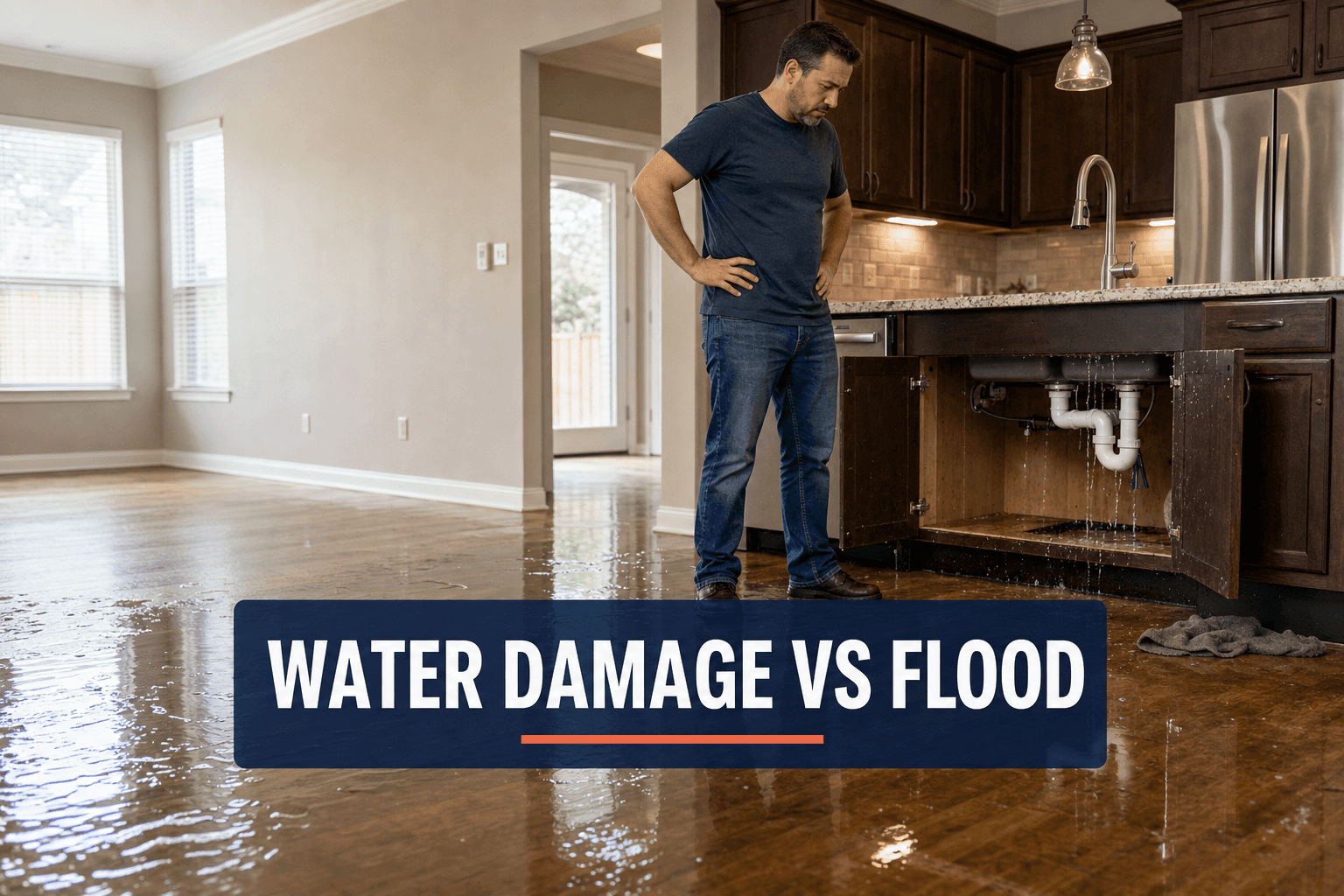
Water Damage vs Flood: What Houston Home Insurance Covers
Are You Underinsured? How Much Dwelling Coverage Your Houston Home Needs

What Is Business Personal Property Insurance Coverage and Why Does It Matter?

Your Roof and Texas Home Insurance: Age, Depreciation, and Nonrenewal

Sole Proprietor Business Insurance: Common Risks and How to Protect Yourself

Actual Cash Value vs Replacement Cost: What Every Texas Homeowner Needs to Know Before the Next Storm
Let A-Z Auto Insurance Help You Find Affordable Coverage
Connect with our experienced team today & get reliable, affordable insurance designed around your needs.
Contact Us!
Let A-Z Auto Insurance Help
You Find Affordable Coverage
Connect with our experienced team today & get reliable, affordable insurance designed around your needs.
Contact Us!
Let A-Z Auto
Insurance Help You
Find Affordable Coverage
Connect with our experienced team today & get reliable, affordable insurance designed around your needs.
Contact Us!
Let A-Z Auto Insurance Help
You Find Affordable Coverage
Connect with our experienced team today & get reliable, affordable insurance designed around your needs.
Contact Us!
Latest New & Blogs
Latest New & Blogs
Related Blog Posts
Related Blog Posts
What Is Business Personal Property Insurance Coverage and Why Does It Matter?
What is business personal property insurance coverage? Learn what it protects, what it excludes, and why every Houston business needs it. Read the full guide.
What Is Business Personal Property Insurance Coverage and Why Does It Matter?
What is business personal property insurance coverage? Learn what it protects, what it excludes, and why every Houston business needs it. Read the full guide.
What Is Business Personal Property Insurance Coverage and Why Does It Matter?
What is business personal property insurance coverage? Learn what it protects, what it excludes, and why every Houston business needs it. Read the full guide.
Your Roof and Texas Home Insurance: Age, Depreciation, and Nonrenewal
Roof age is one of the biggest factors Texas carriers use to set premiums and decide coverage. Here is what Houston homeowners need to know before their next renewal.
Your Roof and Texas Home Insurance: Age, Depreciation, and Nonrenewal
Roof age is one of the biggest factors Texas carriers use to set premiums and decide coverage. Here is what Houston homeowners need to know before their next renewal.
Your Roof and Texas Home Insurance: Age, Depreciation, and Nonrenewal
Roof age is one of the biggest factors Texas carriers use to set premiums and decide coverage. Here is what Houston homeowners need to know before their next renewal.
Sole Proprietor Business Insurance: Common Risks and How to Protect Yourself
What is the sole proprietor for business insurance, and do you need it? Learn the biggest risks, coverage types, & how to protect your Texas sole proprietorship.
Sole Proprietor Business Insurance: Common Risks and How to Protect Yourself
What is the sole proprietor for business insurance, and do you need it? Learn the biggest risks, coverage types, & how to protect your Texas sole proprietorship.
Sole Proprietor Business Insurance: Common Risks and How to Protect Yourself
What is the sole proprietor for business insurance, and do you need it? Learn the biggest risks, coverage types, & how to protect your Texas sole proprietorship.
What Is Business Personal Property Insurance Coverage and Why Does It Matter?
What is business personal property insurance coverage? Learn what it protects, what it excludes, and why every Houston business needs it. Read the full guide.
Your Roof and Texas Home Insurance: Age, Depreciation, and Nonrenewal
Roof age is one of the biggest factors Texas carriers use to set premiums and decide coverage. Here is what Houston homeowners need to know before their next renewal.