Quick support from trusted insurance professionals Call +1 713-777-2886 today!
Quick professional support Call +1 713-777-2886 today!
Quick professional support Call +1 713-777-2886 today!


Table of Content
Title

Let AZ Insurance Help You
Find Affordable Coverage
Connect with our experienced team today & get reliable, affordable insurance designed around your needs.
Contact Us!

Let A-Z Auto Insurance Help You Find Affordable Coverage
Connect with our experienced team today & get reliable, affordable insurance designed around your needs.
Contact Us!
General Liability Insurance for Cleaning Companies in Houston: What Commercial Clients Require
General Liability Insurance for Cleaning Companies in Houston: What Commercial Clients Require
General Liability Insurance for Cleaning Companies in Houston: What Commercial Clients Require
General Liability Insurance for Cleaning Companies in Houston: What Commercial Clients Require
General Liability Insurance for Cleaning Companies in Houston: What Commercial Clients Require

Reviewed by AZ Insurance Agency, licensed in Texas, serving Houston since 2003. AZ Insurance compares quotes across 8 carriers to find the best fit for cleaning and janitorial businesses.
You landed a bid on an office building, an HOA, or a property management account, and somewhere in the paperwork came the line that stops a lot of cleaning business owners cold: "Provide proof of $1,000,000 in general liability insurance and name us as additional insured before your first day." If you have ever stared at that sentence wondering what it actually means and how fast you can get it handled, you are in the right place.
At AZ Insurance Agency, we have been writing general liability insurance for Houston cleaning companies, janitorial crews, and maid services since 2003. This guide explains exactly what general liability covers for a cleaning business, what it does not, what your commercial clients are really asking for, and how to walk into a contract with the paperwork already in hand.
Short answer: A cleaning business needs general liability insurance because almost every commercial client, HOA, and property manager in Houston requires it before you can step on site, usually at a $1,000,000 per occurrence and $2,000,000 aggregate limit, with their entity named as additional insured and a certificate of insurance (COI) on file. General liability covers the two things most likely to go wrong on a cleaning job: someone slipping on a wet floor, and damage to a client's property. It does not cover your own crew's injuries, your equipment, or theft of a client's belongings, which is where workers' compensation and a janitorial bond come in.
Key Takeaways
Texas does not legally require general liability for a cleaning business, but your commercial clients almost always do.
The standard requirement in Houston is $1,000,000 per occurrence and $2,000,000 aggregate.
Most contracts also ask you to name the client as additional insured and hand over a certificate of insurance before you start.
General liability and a janitorial bond are two different things, and many contracts want both.
General liability does not cover your own injuries, your equipment, or stolen client property.
AZ Insurance can often issue a bound policy and a same day COI so you do not lose the contract to a paperwork delay.
Why a Cleaning Business in Houston Needs General Liability Insurance
Cleaning looks low risk from the outside. In practice, your crew spends all day creating wet floors, moving furniture, handling chemicals, and working around other people's expensive property. Two exposures drive almost every claim a cleaning company ever files.
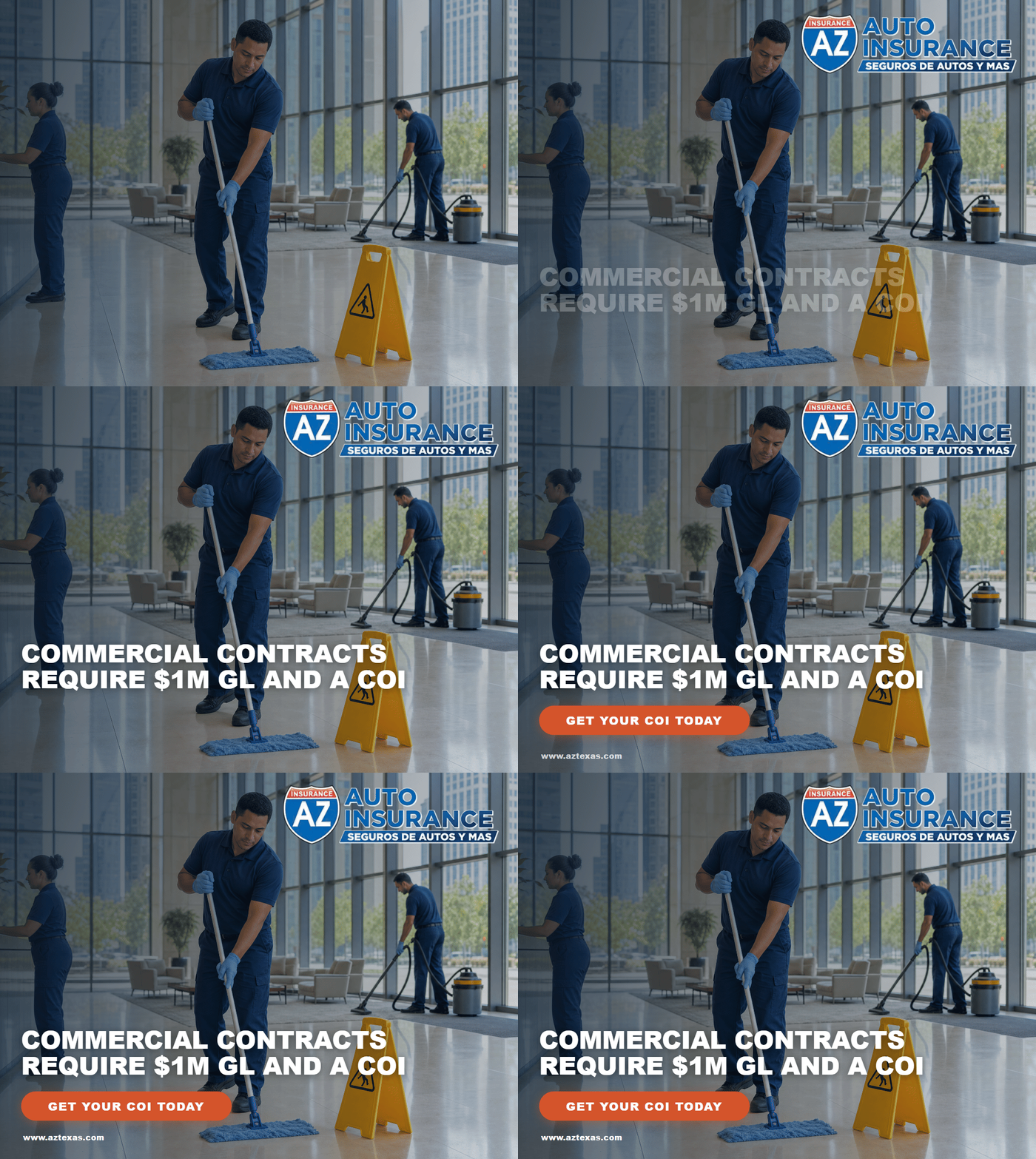
The first is bodily injury to a third party. You mop a lobby, a tenant walks across it before it dries, slips, and breaks a wrist. That is a textbook general liability claim, and slip and fall is the single most common loss in the cleaning industry. The second is property damage to someone else's property. Your crew knocks a client's monitor off a desk, scratches a hardwood floor with the wrong pad, stains a carpet with a chemical, or breaks a piece of art while dusting. General liability is what pays for the things you accidentally break or damage on the job.
There is also a third, quieter coverage inside a general liability policy: personal and advertising injury, which protects you against claims like libel, slander, or copyright issues tied to your marketing. It rarely comes up for a cleaning business, but it is part of what you are buying. For the full picture of how the policy is built, our complete breakdown of general liability coverage walks through every piece.
What Commercial Clients, HOAs, and Property Managers Actually Require
This is the part that wins or loses you contracts, so it is worth getting precise. When a commercial account asks for "insurance," they are almost always asking for a specific stack of things.
A $1,000,000 per occurrence and $2,000,000 aggregate limit. This is the standard across office buildings, retail centers, HOAs, and property management firms in the Houston market. Per occurrence means the most the policy pays on any single incident. Aggregate means the most it pays across the whole policy year. Some larger commercial accounts and government contracts require higher, $2,000,000 per occurrence, but $1M/$2M is the baseline most cleaning businesses are asked for.
Additional insured status. The client wants their own company named on your policy as additional insured. In plain terms, that extends your liability coverage to protect them too if something your crew does leads to a claim against the building owner or manager. Most carriers add this with an endorsement. It is one of the most common reasons a contract gets held up, because the owner forgot to ask the agent for it.
A certificate of insurance, or COI. This is the one page document that proves you actually carry the coverage. The client, the property manager, or the HOA board will ask for it before you start, and they will often want a fresh one each year. If you have never pulled one, our guide on getting a certificate of insurance the same day in Houston explains exactly how it works and how fast you can have one in hand.
Sometimes a janitorial bond, and sometimes workers' compensation. Larger commercial and institutional accounts may also require a janitorial bond and proof of workers' compensation if you have employees. We cover the bond question in detail below, because it is the single thing cleaning owners confuse most.
The takeaway: when a contract says "provide insurance," you usually need general liability at $1M/$2M, an additional insured endorsement for that client, and a COI to prove it. Get all three lined up before the bid, and you look like the professional in the room.
General Liability vs a Janitorial Bond: They Are Not the Same Thing
Here is the confusion that costs cleaning businesses contracts. A client asks for "a bond," the owner buys general liability, shows up with a COI, and the client says it is not what they asked for. They are two separate products that cover two separate problems.
General liability covers accidents: injuries to others and damage you cause to their property. If your crew floods a server room or a customer slips on your wet floor, general liability responds.
A janitorial bond, more precisely a janitorial service bond, covers theft. It protects the client if one of your employees steals money or property while working in their space. Because cleaning crews work after hours, alone, with keys and access to offices and homes, commercial clients often want this protection on top of liability. A bond is not insurance for you. It is a guarantee to the client, and if a claim is paid, you typically have to repay the bond company.
Many commercial contracts in Houston ask for both: general liability for accidents and a janitorial bond for theft. Knowing the difference, and showing up able to provide both, is a quiet signal to a property manager that you have done this before. To go a level deeper on why a personal policy will never satisfy these requirements, see the difference between personal and commercial insurance.
What General Liability Does NOT Cover for a Cleaning Business
Knowing the gaps is how you avoid a nasty surprise mid contract. General liability is broad, but it is not everything.
Your own crew's injuries. If your employee throws out their back moving a desk or slips on their own wet floor, that is workers' compensation, not general liability. Texas does not force most private employers to carry workers' comp, but many commercial cleaning contracts do.
Your own equipment and supplies. A stolen floor buffer, a vacuum that gets damaged, your chemicals and gear. That is equipment coverage or a business owner policy, not general liability.
Theft of a client's property by your staff. That is the janitorial bond described above.
Your work vehicles. The van your crew drives between sites is covered by commercial auto, not your general liability or your personal car policy. If your crews drive to jobs, read why Houston businesses need commercial auto before starting any job.
Damage to client data or systems. If your business handles client information, cyber liability is a separate consideration.
For most cleaning companies, the right answer is general liability as the foundation, then a janitorial bond and workers' compensation where contracts require them, and equipment coverage if you have invested in serious gear. Bundling general liability with property and equipment into a business owner policy is often cleaner and more affordable than buying each piece separately. Thinking through these layers up front is the heart of managing your business risks effectively.
Residential vs Commercial and Janitorial Cleaning: The Risk Is Different
Underwriters do not price every cleaning business the same way, and the difference comes down to where you work and what you touch.
Residential and light house cleaning sits at the lower risk end. You are in homes, working around belongings, and the main exposures are broken items and the occasional slip. Commercial and janitorial work carries more, because you are in larger spaces, often using floor care equipment, buffers, and stronger chemicals, frequently after hours, and serving clients whose own contracts and liability are bigger. Add specialized work like post construction cleanup, medical facility cleaning, or high rise window work and the risk profile, and the requirements, climb again.
None of this should scare you off. It simply means your policy should match the work you actually do. A maid service and a commercial janitorial company bidding on a hospital are two different conversations, and pricing your coverage to your real scope is exactly what a local agent does that an online form cannot.
How the Right Policy Wins You the Contract
Property managers and HOA boards in Houston are choosing between cleaning companies that look interchangeable on price. The one that shows up with insurance handled looks like the safe choice. Here is how to be that company.
Get your general liability bound at $1,000,000 per occurrence and $2,000,000 aggregate before you bid, not after you win. Ask your agent to add the client as additional insured the moment you have the contract name. And have a certificate of insurance ready to hand over, same day, so a slow turnaround does not cost you the account. Speed matters here more than cleaning owners expect, because a manager who needs a vendor on site Monday will simply call the next company on the list if your paperwork takes a week.
That is exactly where a walk in, local agent beats an online quote engine. Walk into any of AZ Insurance's 15 offices across Houston and Dallas, no appointment needed, and in many cases you walk out with a bound policy and a certificate of insurance the same day, with your client already named as additional insured.
Why Cleaning Companies in Houston Choose AZ Insurance
Most online platforms hand you one quote from one carrier and leave you to figure out the additional insured endorsement, the bond, and the COI on your own. For a cleaning business trying to land a contract this week, that is not enough.
AZ Insurance has been writing commercial policies in Houston since 2003. We compare across 8 carriers to find the one that prices cleaning and janitorial work most favorably, and we know which carriers handle additional insured endorsements and same day certificates without friction. We speak your clients' language too, with bilingual service in English and Spanish across all of our 15 offices across Houston and Dallas, so a Spanish speaking cleaning owner gets the same clear answers and the same fast paperwork.
If you are ready to get covered and win the bid, request a general liability insurance quote, or ask about a business insurance quote if you want general liability bundled with equipment and property coverage. Already insured but not sure your policy meets what your new contract requires? Request a free coverage review and we will check your limits, your additional insured status, and your COI against the contract before you sign it.
Frequently Asked Questions: General Liability for Cleaning Companies in Houston
Q: Is general liability insurance required for a cleaning business in Texas?
Texas does not legally require general liability for most cleaning businesses. In practice, almost every commercial client, HOA, and property management company in Houston requires it before you can work on their property, typically at a $1,000,000 per occurrence and $2,000,000 aggregate limit. If you do any commercial work, you effectively need it to operate.
Q: How much general liability coverage do commercial cleaning contracts require?
The standard requirement across office buildings, retail centers, HOAs, and property managers in Houston is $1,000,000 per occurrence and $2,000,000 aggregate. Some larger commercial accounts and government contracts require $2,000,000 per occurrence. Your contract will state the exact limit, and your agent can match it.
Q: What is the difference between general liability and a janitorial bond?
General liability covers accidents, meaning injuries to others and damage you cause to their property. A janitorial bond covers theft by your employees while working in a client's space. They protect against different things, and many commercial cleaning contracts in Houston require both. A bond is a guarantee to your client, not insurance for you.
Q: What is an additional insured endorsement, and why does my client want one?
An additional insured endorsement names your client, often the building owner or property manager, on your general liability policy so your coverage extends to protect them if your work leads to a claim against them. It is a standard contract requirement, added by your carrier with an endorsement, and a common reason a contract gets delayed when the owner forgets to request it.
Q: Can I get a certificate of insurance the same day for a cleaning contract?
Yes. At AZ Insurance, walk in clients can often receive a bound general liability policy and a certificate of insurance the same day, with the client named as additional insured, no appointment required. This is specifically valuable when a property manager needs proof of coverage before your crew starts.
Q: Does general liability cover my cleaning equipment if it is stolen or damaged?
No. General liability covers injuries and damage to other people and their property, not your own equipment. A stolen buffer or damaged vacuum is covered by equipment coverage or a business owner policy. Many cleaning companies bundle general liability with equipment and property coverage to cover both at once.
Related Articles
Sources: Texas Department of Insurance, Small Business Insurance Resources: tdi.texas.gov/consumer/smallbusiness.html and Commercial Insurance: tdi.texas.gov/commercial/index.html. General liability requirements described reflect common commercial contract terms in the Houston market and are general information, not a quote or legal advice. Your contract states your exact requirements.
Reviewed by AZ Insurance Agency, licensed in Texas, serving Houston since 2003. AZ Insurance compares quotes across 8 carriers to find the best fit for cleaning and janitorial businesses.
You landed a bid on an office building, an HOA, or a property management account, and somewhere in the paperwork came the line that stops a lot of cleaning business owners cold: "Provide proof of $1,000,000 in general liability insurance and name us as additional insured before your first day." If you have ever stared at that sentence wondering what it actually means and how fast you can get it handled, you are in the right place.
At AZ Insurance Agency, we have been writing general liability insurance for Houston cleaning companies, janitorial crews, and maid services since 2003. This guide explains exactly what general liability covers for a cleaning business, what it does not, what your commercial clients are really asking for, and how to walk into a contract with the paperwork already in hand.
Short answer: A cleaning business needs general liability insurance because almost every commercial client, HOA, and property manager in Houston requires it before you can step on site, usually at a $1,000,000 per occurrence and $2,000,000 aggregate limit, with their entity named as additional insured and a certificate of insurance (COI) on file. General liability covers the two things most likely to go wrong on a cleaning job: someone slipping on a wet floor, and damage to a client's property. It does not cover your own crew's injuries, your equipment, or theft of a client's belongings, which is where workers' compensation and a janitorial bond come in.
Key Takeaways
Texas does not legally require general liability for a cleaning business, but your commercial clients almost always do.
The standard requirement in Houston is $1,000,000 per occurrence and $2,000,000 aggregate.
Most contracts also ask you to name the client as additional insured and hand over a certificate of insurance before you start.
General liability and a janitorial bond are two different things, and many contracts want both.
General liability does not cover your own injuries, your equipment, or stolen client property.
AZ Insurance can often issue a bound policy and a same day COI so you do not lose the contract to a paperwork delay.
Why a Cleaning Business in Houston Needs General Liability Insurance
Cleaning looks low risk from the outside. In practice, your crew spends all day creating wet floors, moving furniture, handling chemicals, and working around other people's expensive property. Two exposures drive almost every claim a cleaning company ever files.
The first is bodily injury to a third party. You mop a lobby, a tenant walks across it before it dries, slips, and breaks a wrist. That is a textbook general liability claim, and slip and fall is the single most common loss in the cleaning industry. The second is property damage to someone else's property. Your crew knocks a client's monitor off a desk, scratches a hardwood floor with the wrong pad, stains a carpet with a chemical, or breaks a piece of art while dusting. General liability is what pays for the things you accidentally break or damage on the job.
There is also a third, quieter coverage inside a general liability policy: personal and advertising injury, which protects you against claims like libel, slander, or copyright issues tied to your marketing. It rarely comes up for a cleaning business, but it is part of what you are buying. For the full picture of how the policy is built, our complete breakdown of general liability coverage walks through every piece.
What Commercial Clients, HOAs, and Property Managers Actually Require
This is the part that wins or loses you contracts, so it is worth getting precise. When a commercial account asks for "insurance," they are almost always asking for a specific stack of things.
A $1,000,000 per occurrence and $2,000,000 aggregate limit. This is the standard across office buildings, retail centers, HOAs, and property management firms in the Houston market. Per occurrence means the most the policy pays on any single incident. Aggregate means the most it pays across the whole policy year. Some larger commercial accounts and government contracts require higher, $2,000,000 per occurrence, but $1M/$2M is the baseline most cleaning businesses are asked for.
Additional insured status. The client wants their own company named on your policy as additional insured. In plain terms, that extends your liability coverage to protect them too if something your crew does leads to a claim against the building owner or manager. Most carriers add this with an endorsement. It is one of the most common reasons a contract gets held up, because the owner forgot to ask the agent for it.
A certificate of insurance, or COI. This is the one page document that proves you actually carry the coverage. The client, the property manager, or the HOA board will ask for it before you start, and they will often want a fresh one each year. If you have never pulled one, our guide on getting a certificate of insurance the same day in Houston explains exactly how it works and how fast you can have one in hand.
Sometimes a janitorial bond, and sometimes workers' compensation. Larger commercial and institutional accounts may also require a janitorial bond and proof of workers' compensation if you have employees. We cover the bond question in detail below, because it is the single thing cleaning owners confuse most.
The takeaway: when a contract says "provide insurance," you usually need general liability at $1M/$2M, an additional insured endorsement for that client, and a COI to prove it. Get all three lined up before the bid, and you look like the professional in the room.
General Liability vs a Janitorial Bond: They Are Not the Same Thing
Here is the confusion that costs cleaning businesses contracts. A client asks for "a bond," the owner buys general liability, shows up with a COI, and the client says it is not what they asked for. They are two separate products that cover two separate problems.
General liability covers accidents: injuries to others and damage you cause to their property. If your crew floods a server room or a customer slips on your wet floor, general liability responds.
A janitorial bond, more precisely a janitorial service bond, covers theft. It protects the client if one of your employees steals money or property while working in their space. Because cleaning crews work after hours, alone, with keys and access to offices and homes, commercial clients often want this protection on top of liability. A bond is not insurance for you. It is a guarantee to the client, and if a claim is paid, you typically have to repay the bond company.
Many commercial contracts in Houston ask for both: general liability for accidents and a janitorial bond for theft. Knowing the difference, and showing up able to provide both, is a quiet signal to a property manager that you have done this before. To go a level deeper on why a personal policy will never satisfy these requirements, see the difference between personal and commercial insurance.
What General Liability Does NOT Cover for a Cleaning Business
Knowing the gaps is how you avoid a nasty surprise mid contract. General liability is broad, but it is not everything.
Your own crew's injuries. If your employee throws out their back moving a desk or slips on their own wet floor, that is workers' compensation, not general liability. Texas does not force most private employers to carry workers' comp, but many commercial cleaning contracts do.
Your own equipment and supplies. A stolen floor buffer, a vacuum that gets damaged, your chemicals and gear. That is equipment coverage or a business owner policy, not general liability.
Theft of a client's property by your staff. That is the janitorial bond described above.
Your work vehicles. The van your crew drives between sites is covered by commercial auto, not your general liability or your personal car policy. If your crews drive to jobs, read why Houston businesses need commercial auto before starting any job.
Damage to client data or systems. If your business handles client information, cyber liability is a separate consideration.
For most cleaning companies, the right answer is general liability as the foundation, then a janitorial bond and workers' compensation where contracts require them, and equipment coverage if you have invested in serious gear. Bundling general liability with property and equipment into a business owner policy is often cleaner and more affordable than buying each piece separately. Thinking through these layers up front is the heart of managing your business risks effectively.
Residential vs Commercial and Janitorial Cleaning: The Risk Is Different
Underwriters do not price every cleaning business the same way, and the difference comes down to where you work and what you touch.
Residential and light house cleaning sits at the lower risk end. You are in homes, working around belongings, and the main exposures are broken items and the occasional slip. Commercial and janitorial work carries more, because you are in larger spaces, often using floor care equipment, buffers, and stronger chemicals, frequently after hours, and serving clients whose own contracts and liability are bigger. Add specialized work like post construction cleanup, medical facility cleaning, or high rise window work and the risk profile, and the requirements, climb again.
None of this should scare you off. It simply means your policy should match the work you actually do. A maid service and a commercial janitorial company bidding on a hospital are two different conversations, and pricing your coverage to your real scope is exactly what a local agent does that an online form cannot.
How the Right Policy Wins You the Contract
Property managers and HOA boards in Houston are choosing between cleaning companies that look interchangeable on price. The one that shows up with insurance handled looks like the safe choice. Here is how to be that company.
Get your general liability bound at $1,000,000 per occurrence and $2,000,000 aggregate before you bid, not after you win. Ask your agent to add the client as additional insured the moment you have the contract name. And have a certificate of insurance ready to hand over, same day, so a slow turnaround does not cost you the account. Speed matters here more than cleaning owners expect, because a manager who needs a vendor on site Monday will simply call the next company on the list if your paperwork takes a week.
That is exactly where a walk in, local agent beats an online quote engine. Walk into any of AZ Insurance's 15 offices across Houston and Dallas, no appointment needed, and in many cases you walk out with a bound policy and a certificate of insurance the same day, with your client already named as additional insured.
Why Cleaning Companies in Houston Choose AZ Insurance
Most online platforms hand you one quote from one carrier and leave you to figure out the additional insured endorsement, the bond, and the COI on your own. For a cleaning business trying to land a contract this week, that is not enough.
AZ Insurance has been writing commercial policies in Houston since 2003. We compare across 8 carriers to find the one that prices cleaning and janitorial work most favorably, and we know which carriers handle additional insured endorsements and same day certificates without friction. We speak your clients' language too, with bilingual service in English and Spanish across all of our 15 offices across Houston and Dallas, so a Spanish speaking cleaning owner gets the same clear answers and the same fast paperwork.
If you are ready to get covered and win the bid, request a general liability insurance quote, or ask about a business insurance quote if you want general liability bundled with equipment and property coverage. Already insured but not sure your policy meets what your new contract requires? Request a free coverage review and we will check your limits, your additional insured status, and your COI against the contract before you sign it.
Frequently Asked Questions: General Liability for Cleaning Companies in Houston
Q: Is general liability insurance required for a cleaning business in Texas?
Texas does not legally require general liability for most cleaning businesses. In practice, almost every commercial client, HOA, and property management company in Houston requires it before you can work on their property, typically at a $1,000,000 per occurrence and $2,000,000 aggregate limit. If you do any commercial work, you effectively need it to operate.
Q: How much general liability coverage do commercial cleaning contracts require?
The standard requirement across office buildings, retail centers, HOAs, and property managers in Houston is $1,000,000 per occurrence and $2,000,000 aggregate. Some larger commercial accounts and government contracts require $2,000,000 per occurrence. Your contract will state the exact limit, and your agent can match it.
Q: What is the difference between general liability and a janitorial bond?
General liability covers accidents, meaning injuries to others and damage you cause to their property. A janitorial bond covers theft by your employees while working in a client's space. They protect against different things, and many commercial cleaning contracts in Houston require both. A bond is a guarantee to your client, not insurance for you.
Q: What is an additional insured endorsement, and why does my client want one?
An additional insured endorsement names your client, often the building owner or property manager, on your general liability policy so your coverage extends to protect them if your work leads to a claim against them. It is a standard contract requirement, added by your carrier with an endorsement, and a common reason a contract gets delayed when the owner forgets to request it.
Q: Can I get a certificate of insurance the same day for a cleaning contract?
Yes. At AZ Insurance, walk in clients can often receive a bound general liability policy and a certificate of insurance the same day, with the client named as additional insured, no appointment required. This is specifically valuable when a property manager needs proof of coverage before your crew starts.
Q: Does general liability cover my cleaning equipment if it is stolen or damaged?
No. General liability covers injuries and damage to other people and their property, not your own equipment. A stolen buffer or damaged vacuum is covered by equipment coverage or a business owner policy. Many cleaning companies bundle general liability with equipment and property coverage to cover both at once.
Related Articles
Sources: Texas Department of Insurance, Small Business Insurance Resources: tdi.texas.gov/consumer/smallbusiness.html and Commercial Insurance: tdi.texas.gov/commercial/index.html. General liability requirements described reflect common commercial contract terms in the Houston market and are general information, not a quote or legal advice. Your contract states your exact requirements.
Latest Blogs

Buying a Car in Houston? What Insurance You Need Before You Drive Off the Lot

Landscaping Insurance in Houston: The Three Gaps Your Personal Policy Leaves Open

A Storm Claim Cannot Raise Your Texas Home Insurance Rate. A Broken Pipe Can.

A Storm Hits Before Your Renewal: The Texas Claim Timeline, and the New Right You Have in 2026

Your Roof Before the Storm: The Four Things to Check on Your Policy While You Still Can

Commercial Property Insurance Coverage Explained: What's Protected and What's Not
Let A-Z Auto Insurance Help You Find Affordable Coverage
Connect with our experienced team today & get reliable, affordable insurance designed around your needs.
Contact Us!
Let A-Z Auto Insurance Help
You Find Affordable Coverage
Connect with our experienced team today & get reliable, affordable insurance designed around your needs.
Contact Us!
Let A-Z Auto
Insurance Help You
Find Affordable Coverage
Connect with our experienced team today & get reliable, affordable insurance designed around your needs.
Contact Us!
Let A-Z Auto Insurance Help
You Find Affordable Coverage
Connect with our experienced team today & get reliable, affordable insurance designed around your needs.
Contact Us!
Latest New & Blogs
Latest New & Blogs
Related Blog Posts
Related Blog Posts
A Storm Claim Cannot Raise Your Texas Home Insurance Rate. A Broken Pipe Can.
Texas law protects weather claims from rate increases and nonrenewal. The claims that count against you are the everyday ones. Here is the exact line.
A Storm Claim Cannot Raise Your Texas Home Insurance Rate. A Broken Pipe Can.
Texas law protects weather claims from rate increases and nonrenewal. The claims that count against you are the everyday ones. Here is the exact line.
A Storm Claim Cannot Raise Your Texas Home Insurance Rate. A Broken Pipe Can.
Texas law protects weather claims from rate increases and nonrenewal. The claims that count against you are the everyday ones. Here is the exact line.
A Storm Hits Before Your Renewal: The Texas Claim Timeline, and the New Right You Have in 2026
The deadlines your Texas insurer must meet on a storm claim, the appraisal right added for 2026, and what a claim does to your renewal in Fort Bend.
A Storm Hits Before Your Renewal: The Texas Claim Timeline, and the New Right You Have in 2026
The deadlines your Texas insurer must meet on a storm claim, the appraisal right added for 2026, and what a claim does to your renewal in Fort Bend.
A Storm Hits Before Your Renewal: The Texas Claim Timeline, and the New Right You Have in 2026
The deadlines your Texas insurer must meet on a storm claim, the appraisal right added for 2026, and what a claim does to your renewal in Fort Bend.
Your Roof Before the Storm: The Four Things to Check on Your Policy While You Still Can
Four things to check on your Texas homeowners policy before a storm: settlement basis, deductible percentage, roof age schedule, and cosmetic damage.
Your Roof Before the Storm: The Four Things to Check on Your Policy While You Still Can
Four things to check on your Texas homeowners policy before a storm: settlement basis, deductible percentage, roof age schedule, and cosmetic damage.
Your Roof Before the Storm: The Four Things to Check on Your Policy While You Still Can
Four things to check on your Texas homeowners policy before a storm: settlement basis, deductible percentage, roof age schedule, and cosmetic damage.
A Storm Claim Cannot Raise Your Texas Home Insurance Rate. A Broken Pipe Can.
Texas law protects weather claims from rate increases and nonrenewal. The claims that count against you are the everyday ones. Here is the exact line.
A Storm Hits Before Your Renewal: The Texas Claim Timeline, and the New Right You Have in 2026
The deadlines your Texas insurer must meet on a storm claim, the appraisal right added for 2026, and what a claim does to your renewal in Fort Bend.